

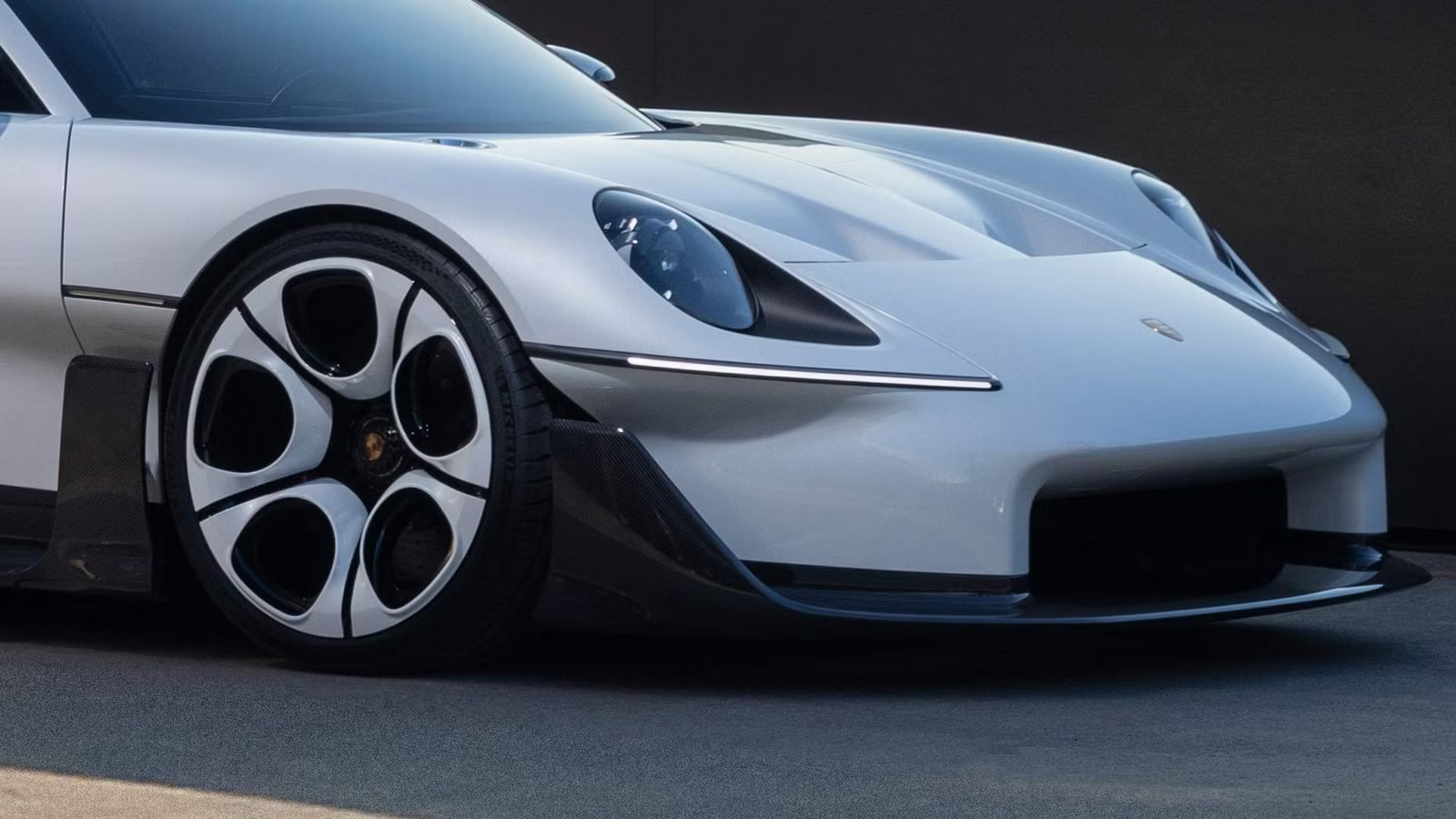
This is the future of Porsche design. The Mission S is a look at the next generation of the brand’s styling, though unsurprisingly, it’s not that different from what’s on sale now.
However, it also represents a new model, not just a show car – one that will sit above the 911 in the company’s lineup and let it play against a whole new field of competitors like McLaren and Ferrari.
This Is Porsche’s New Moonshot
Porsche Mission SPorsche
The Mission S is a new mid-engine flagship supercar and, yes, it will become a regular production model, not just a one-off. The company’s execs are likening it to a new version of the iconic 550 Spyder, including making the choice to debut the new car on the same New York City pier where the 550 was first photographed back in 1953.
References to the 550 Spyder are more than just lip-service. Porsche describes the Mission S as a “deliberate return to the core values of sports car engineering.” The same values that went into the 550 Spyder way back when.
Naturally, it also shares some design elements inside – like the lines through the dash and doors that are meant to make you feel like you’re sitting deep inside the car. Porsche might be stretching this, though, because it describes the seatbelt buckles and adjustment controls as being part of the “motorsport DNA” of the car.
The company calls it a return to sports car engineering, but almost none of that engineering is part of today’s presentation. Porsche isn’t talking about the engine, other than to confirm that it will have one. There’s not much about the chassis, either, other than to say that it will carry the engine in the middle.
Is There Anything New In This Retro Design?
For now, the Mission S is all about design and all the retro design elements that Porsche has packed into it. Considering this car is meant to showcase a new design language, there are plenty of old design elements to be found. The Torpedo fenders have been a Porsche design cue since the very beginning, and the Mission S continues that. The fenders, and the round headlights, are classic 911, but it doesn’t stop there.
The flat front end is 911 GT1-inspired. It’s not the only part of the car that is, because Porsche has also used the GT1 to help shape the “car in a car” look at the rear. On the GT1, the need to maintain regular production panels but fit a wider track and tires drove the look. Here, it’s entirely cosmetic.
Behind the rear wing, the roofline is meant to remind you of the 959. We’re not sure we see it, but Porsche’s designers do. The cooling fan poking out of the rear glass is a 917-inspired detail, and the wheels are taken from the 928, showing that even unloved Porsches are worthy of modern attention.
Porsche says the car is designed to focus on the driver. Here, that means angling the controls toward the driver and a digital rev counter that moves closer depending on the drive mode. Instead of a traditional center screen, the car has a retractable MagSafe phone mount. You’re meant to use your phone for navigation or information, and there’s no passenger display, either.
CarBuzz Insight – Why This Matters:
Porsche Mission SPorsche
Porsche has made it clear it wants to extract more money from every customer, and the 911 can only get so expensive before that stops working. That’s the real driving force behind this new car, one that will chase top-tier Ferrari and McLaren cars instead of occupying the strange middle ground where the 911 lives.
Unlike the 918, Carrera GT, and other limited-run Porsches, the company says this will be its first “permanently available super sports car.” When will it show up for real? For now at least, the company isn’t saying. But it’s part of Porsche’s big 2035 plan, so sometime between now and then is a good (if broad) place to start.
