

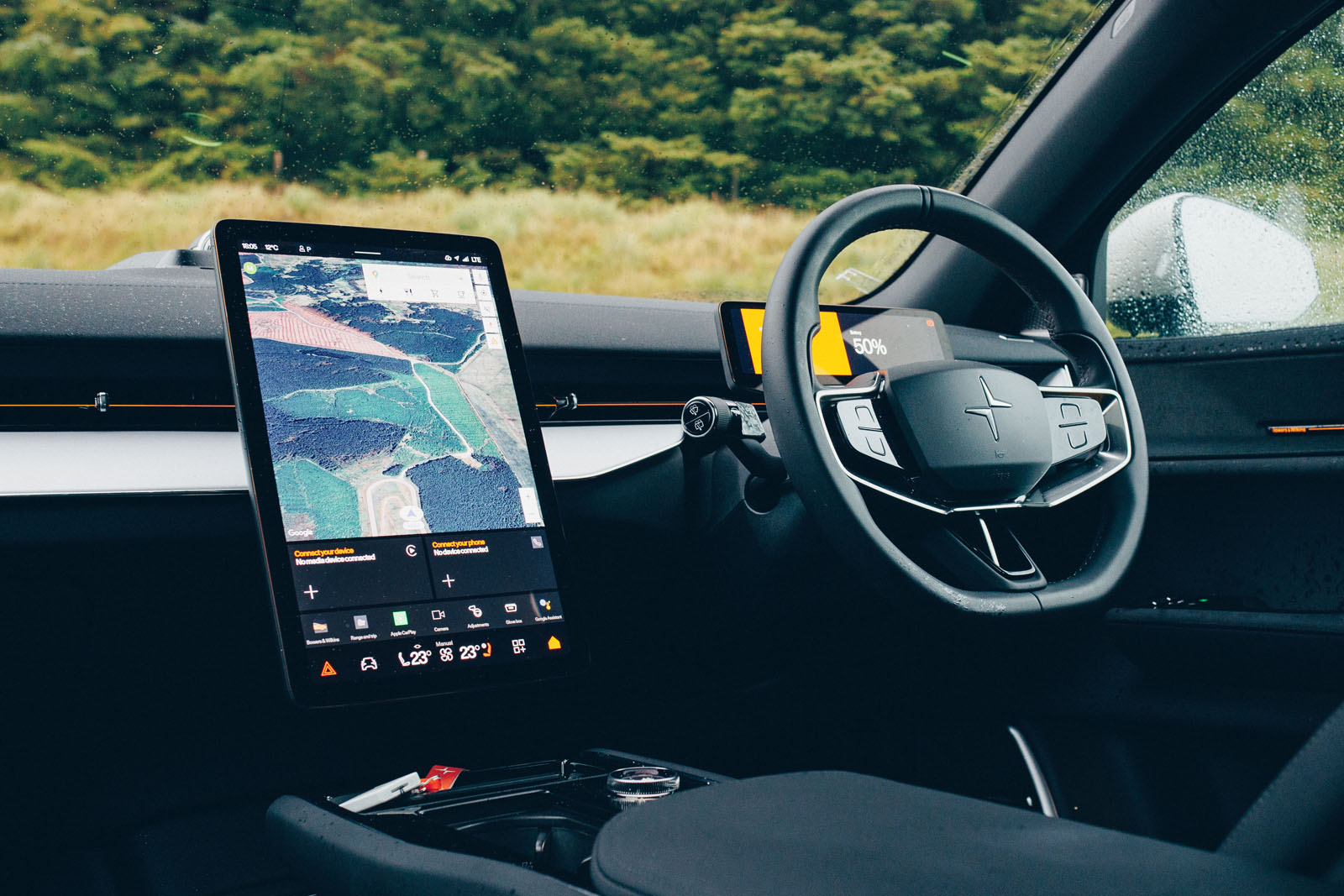
“We’re very open-minded,” he explained. ‘We’re not religious here in terms of saying ‘this is how it was to be’. Customer feedback is overwhelmingly clear: they want buttons back. So we will bring buttons back.”
This approach extends to rapidly identifying and addressing shortcomings and glitches in Polestar’s cars, such as the well-documented issues with the digital key’s proximity function on early 3s.
Lohscheller claimed the company’s constant dialogue with owners enables it to quickly devise a fix for affected cars and ensure it won’t be a problem on models that follow.
“In terms of Polestar 3, we really took those things very much on board, very seriously, and integrated it in the model-year 2026 car,” he said. “This will be a major, major improvement.
“We have many over-the-air updates to fix things as quickly as possible, because quality is the highest priority.
“We have a car parc of 240,000, so our customers are super close to us and they tell us the good and the bad things. And of course both matter a lot, and we want to react as quickly as we can.”
As with many other brands, Polestar is also working to ensure its ADAS are as intuitive as possible to operate and helpful rather than inhibitive – another area in which real-world feedback is aiding development.
“People are super-interested in that. It doesn’t go away,” Lohscheller said about the evolution of ADAS in Polestar’s cars.
He said customers are telling Polestar to “give us some features to use which do help” and that he believes all ADAS “should work flawlessly”.
The company is thus prioritising the optimal operation of existing systems before looking ahead to more advanced self-driving technology.
“I don’t think we have people saying ‘we want level-four [autonomy] tomorrow’,” Lohscheller noted.
