

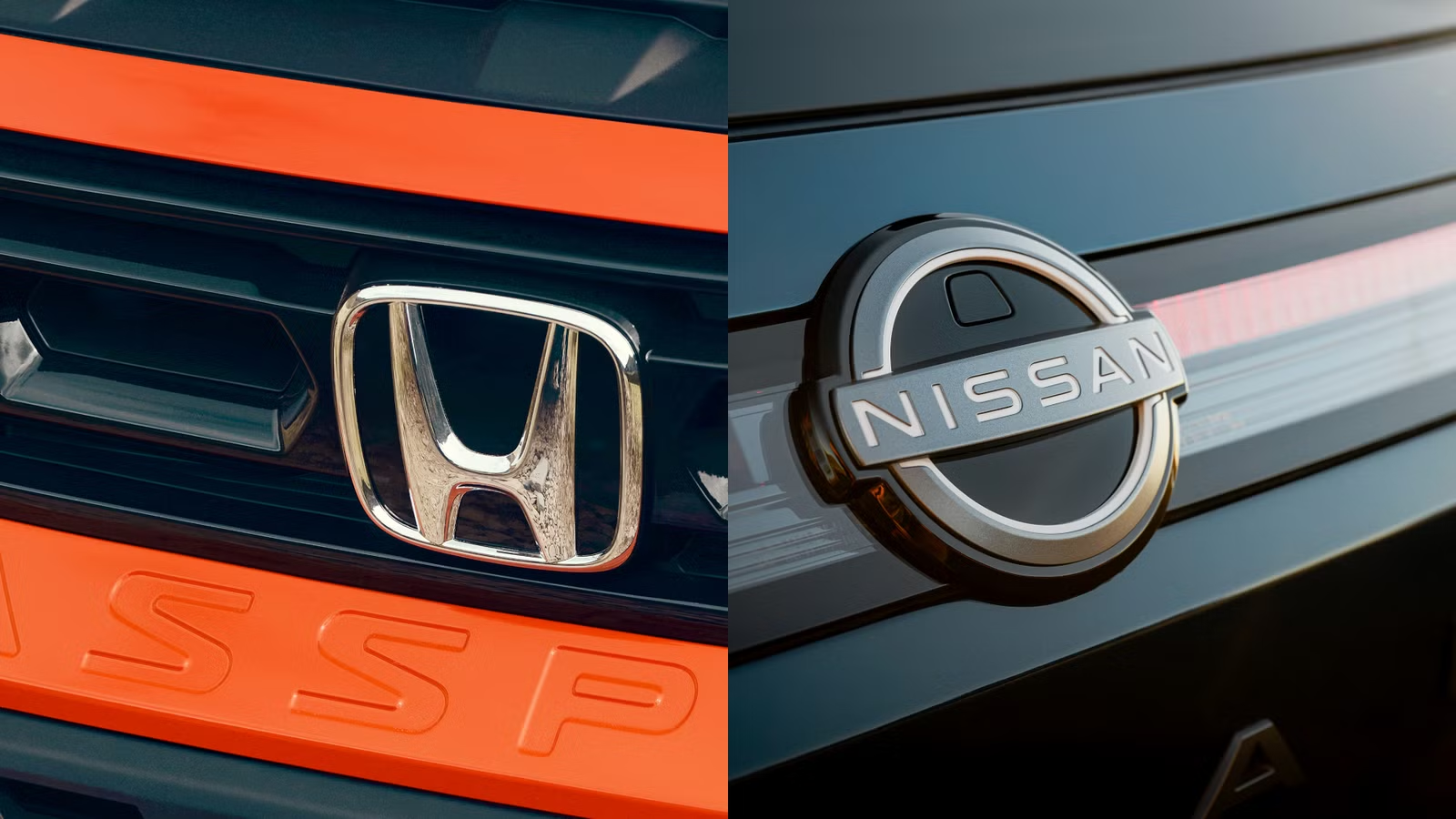
Honda and Nissan announced plans for a potential merger back in December 2024, but the deal was already dead in the water by February 2025. Apparently, the power dynamic would’ve leaned heavily in Honda’s favor and Nissan was having none of that, so plans to reach any sort of agreement quickly fell through. As it turned out, though, the two could still be friends.
Even if an outright merger was off the table, the automakers kept looking for ways to collaborate on a smaller scale. More details have emerged over time, and it eventually became clear that joint software development was one of the main points discussed at the negotiating table. There was talk of shared hardware, too, but it wasn’t until recently that Honda and Nissan reached a solid agreement.
Stronger Together, But Only In Some Ways
The Honda Prologue and the Nissan Rogue.Honda/Nissan
We already knew the auto giants sought to co-develop shared electronic control units and operating systems since late July. That partnership is now ready to get underway, according to an official press release from August 31, which also sheds a bit more light on what it will mean in practice. And with Nissan owning a 24% equity stake in Mitsubishi, the latter is also likely to reap the rewards of teaming up with Honda.
Their joint development efforts will focus on software-defined vehicles (SDVs) to a great extent, and concrete implementation is expected for the fiscal year 2029. Nissan’s own tech will sit at the core of their shared ECUs and the operating systems running on them, all optimized with extensive input from Honda.
And when you put things into perspective, it actually makes more sense for the companies to collaborate at this level instead of seeking out a fully-fledged merger. Both of them have been going through a rough patch as of late, with Honda reporting its first annual loss since 1957 earlier this year after pulling the plug on its EV ambitions.
On the other hand, Nissan is still hemorrhaging billions and scrambling to get its act together in a desperate attempt to stay afloat. Their agreement allows each company to address its own financial woes independently, while also providing some much-needed relief in these difficult times.
So, What’s In It For Nissan And Honda?
Honda Nissan LogoHonda/Nissan/CarBuzz
By teaming up with one another, the Japanese automakers will benefit from a considerable reduction in R&D costs, which should be of great help given their struggles. And with new car technologies getting more and more expensive to develop, the deal appears to have been struck at just the right time.
The end customer might end up paying less for better technologies, too, while Honda and Nissan can work together to catch up with Tesla and Chinese companies in the SDV space. Faster innovation, a more competitive stance against market leaders, and improved cost efficiency resulting from economies of scale – that’s essentially what it all boils down to.
CarBuzz Insight – Why This Matters:
2026 Nissan Sentra SR interiorTom Murphy / CarBuzz / Valnet
In today’s economy, most manufacturers have no choice but to adapt if they want to weather the storm, and working together seems like a very reasonable way to do just that. The benefits of their shared expertise will likely extend to buyers in the form of reduced costs and improved quality, so this partnership between Nissan and Honda might turn out to be a win for everyone involved. We’ll have to just wait and see how things play out in the coming years.
