

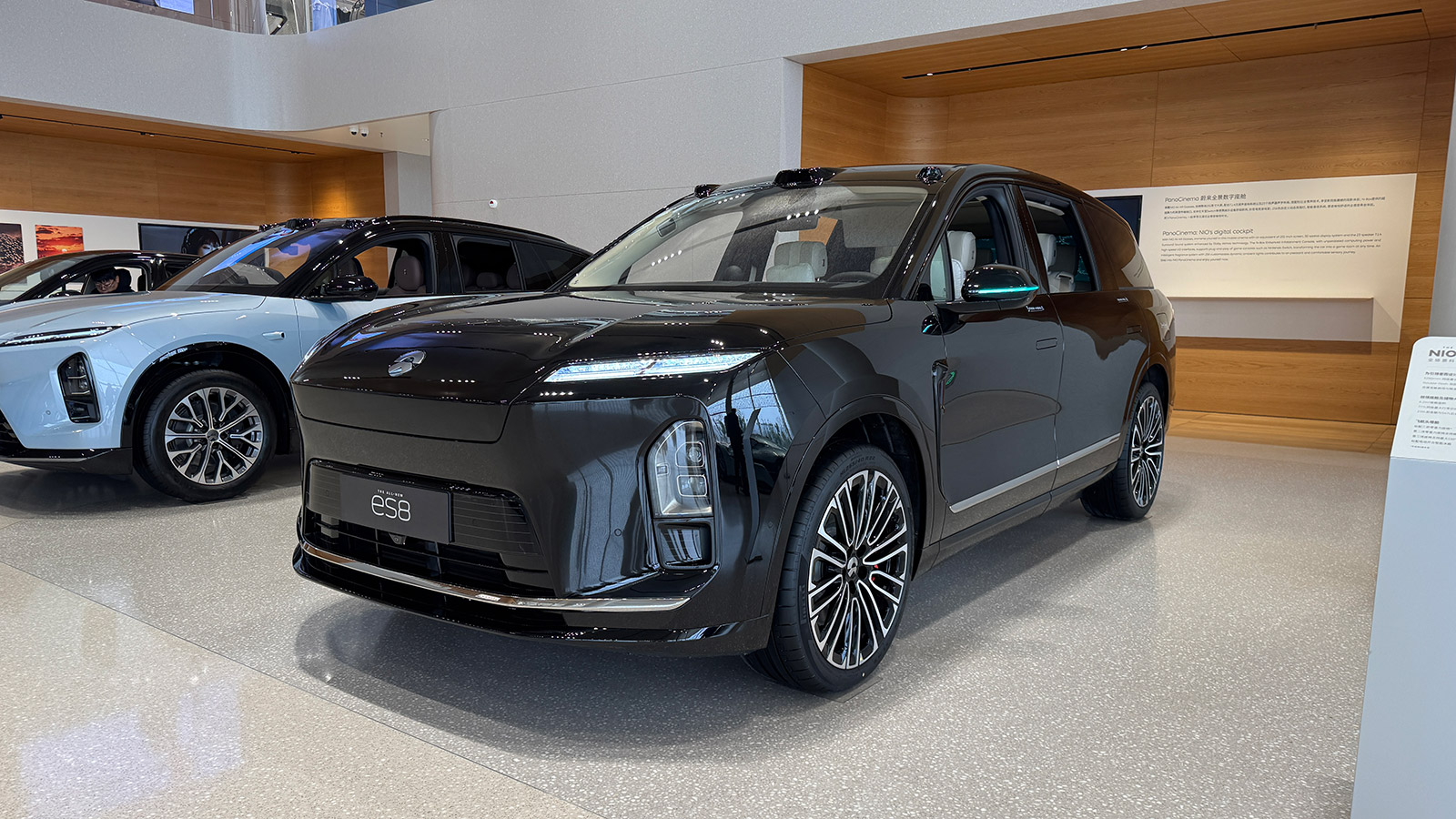
A third-generation ES8 on display at Nio’s F2 plant in Hefei, Anhui, in January 2026. Credit: CnEVPost
- The Nio ES8’s NPS reached 85.3, the highest among China’s all-electric models, and is the core pillar of the Nio brand’s recommendation score.
- 57.3% of owners placed their order right after experiencing the vehicle, without comparing any other model.
The exceptionally high owner loyalty that Nio Inc’s (NYSE: NIO) third-generation ES8 has built since its launch is a key reason behind the SUV’s (sport utility vehicle) strong sales, according to a new survey.
The all-new ES8 scored 83.9 on post-delivery product satisfaction, well above the industry average of 70.8, according to a survey released Tuesday by Chinese auto market research firm Land Roads.
The ES8 came in 37.7, 34.1 and 32.6 points above the industry average on energy replenishment, lighting and the smart cockpit respectively, making these the areas where the vehicle most exceeded owners’ expectations in real-world use.
On brand health, which gauges owner loyalty, the Nio brand posted an NPS (Net Promoter Score) of 81.9 in the first half of 2026, ranking first among China’s new energy vehicle (NEV) brands.
The ES8’s NPS reached 85.3, the highest among China’s all-electric models, and is the core pillar of the Nio brand’s recommendation score, Land Roads said.
More notable is the recommendation fulfillment rate, which measures whether owners have actually recommended the vehicle to others. The Nio brand stood at 74.2%, first in the industry, with ES8 owners going further at 75.2%.
The typical Nio ES8 buyer is an affluent family user in their 30s with children, according to the survey.
Third-generation ES8 owners average 36.8 years old, with those aged 30-40 accounting for 60.9%.
Some 90.2% of owners are married, with one-child households making up 55.2% and households with two or more children 21.7%.
Households average 3.5 people living together and traveling together. Families with preschool-age children account for 44.5%, and those with primary or secondary school children 47.3%.
These buyers are considerably wealthier than the market average. Owners’ households earn an average of 686,000 yuan ($101,010) a year and spend an average of 287,000 yuan.
Professionally, they come largely from information technology, manufacturing, finance and retail, and hold positions as business owners, partners or managers at various levels.
Travel is their top spending priority, followed by children’s education, dining and cars.
ES8 buyers take an unusually short path to a decision. Owners compared just one other model on average, the survey report said, reflecting mature purchasing judgment and a clear sense of their own needs and product choices.
Some 57.3% placed their order right after experiencing the vehicle, while another 35.0% limited their comparisons to all-electric models.
Those who did shop around mainly weighed the ES8 against flagship large SUVs from brands including Aito, Zeekr and Li Auto (NASDAQ: LI), but no single model was cross-shopped by more than 10%, indicating the absence of a highly concentrated direct rival.
Cabin space was the strongest draw at 44.8%. Among the final reasons for purchase, the interior ranked first at 32.2%, followed by the brand at 30.8%.
The ES8 is bought mainly by replacement and additional-purchase customers, with trade-ins accounting for 50.3% and additional purchases 39.9%.
Among trade-ins, luxury brands accounted for 41.7%, startup brands 36.1%, and swaps within the Nio brand 16.7%.
These buyers made their previous vehicle purchase an average of 58.5 months ago, shorter than the industry’s replacement cycle of about eight years.
Some 72.1% of replacement and additional-purchase buyers still have another vehicle in use at home.
In other words, most buyers are not waiting until their vehicle visibly ages before replacing it, but are seeking an upgrade in space, comfort and the all-electric experience.
The ES8’s strong sales have reshaped the structure of China’s SUV segment. From January to August 2025, the large SUV market was dominated by plug-in hybrids and extended-range models, which together held more than 80%, while all-electric models accounted for less than 10%.
By the first half of 2026, the all-electric share had risen to 42%, with the ES8 alone accounting for 24%, Land Roads noted.
The third-generation ES8 was launched on September 20, 2025, initially with three-row versions only, starting at 406,800 yuan including the battery pack.
On July 9 this year, Nio launched the five-seat ES8, starting at 382,800 yuan with the battery included.
Notably, Land Roads conducted the survey before the five-seat ES8 went on sale, and the sample covers only six- and seven-seat owners.
Still, the report said some three-person households chose three-row versions for the larger body and cargo capacity rather than the third row itself.
As of July 22, cumulative deliveries of the third-generation ES8 had topped 130,000 units in 305 days.
The model delivered 10,286 units in July, up 14.68% from June and back above the 10,000 mark.
Nio ES8 Monthly Deliveries 2024-2026
Month
2024
2025
2026
January
615
446
17,658
February
414
479
11,271
March
802
514
16,255
April
773
539
13,028
May
937
292
11,475
June
882
839
8,969
July
822
1,090
10,286
August
857
87
September
766
2,812
October
747
6,716
November
572
10,705
December
1,001
22,276
Nio ES8 monthly deliveries
2024
2025
2026
($1 = 6.7917 yuan)
