

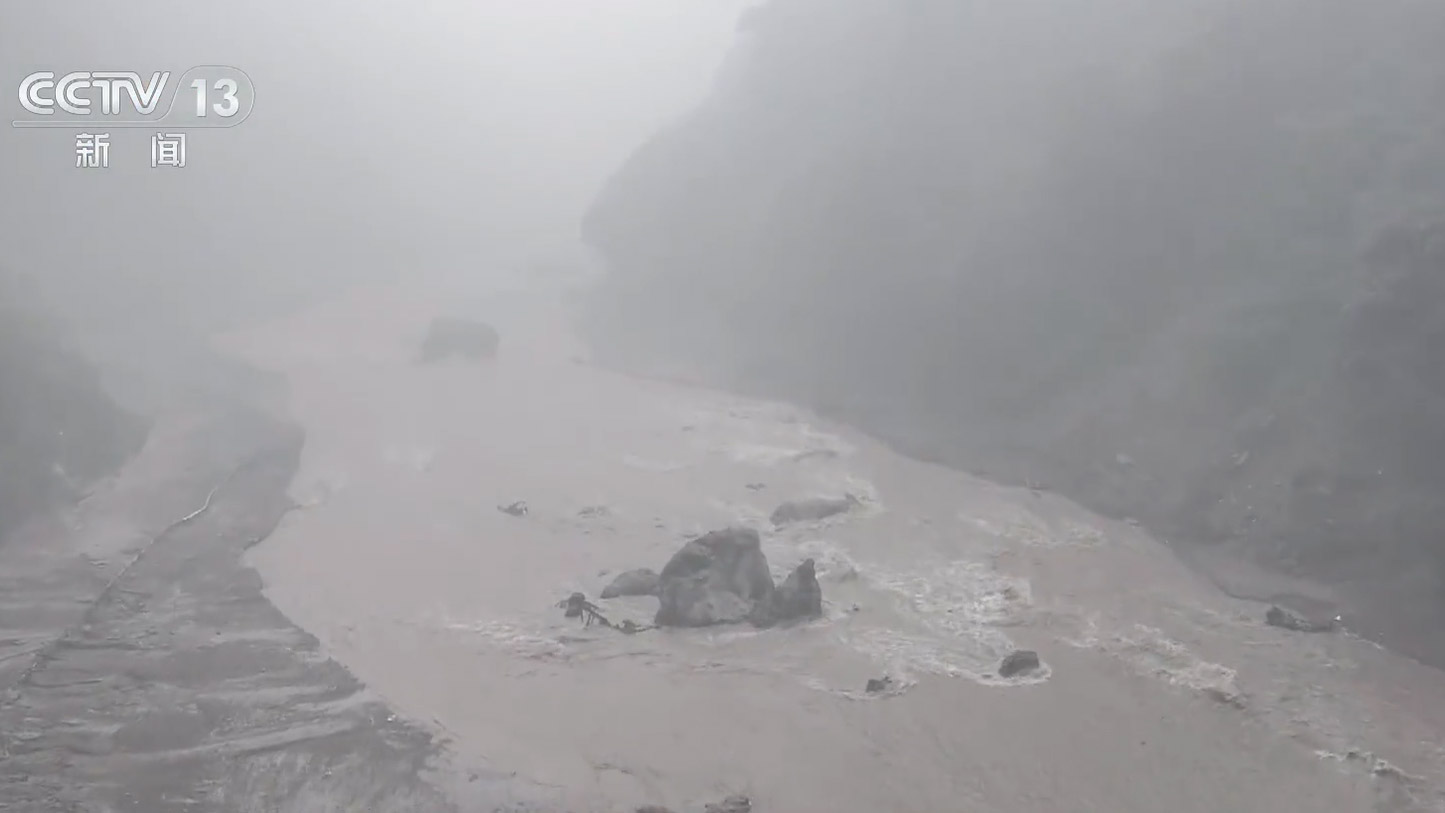
A CCTV video screenshot shows muddy floodwater and debris sweeping through a mountain valley near Gyirong Port in Xizang after the August 26, 2026 mudslide. Credit: CCTV
- The 3 companies have committed a combined 22 million yuan ($3.24 million) for emergency relief, temporary resettlement and post-disaster reconstruction.
- As of 8:00 am on August 27, the disaster had killed 3 people and left 558 missing, with rescue efforts continuing.
Nio Inc (NYSE: NIO), BYD (HKEX: 1211) and Xiaomi (HKEX: 1810) have committed a combined 22 million yuan ($3.24 million) in aid through charitable foundations and other channels for areas affected by the mudslide in Gyirong, Xizang.
The funds will mainly be used for emergency relief, temporary resettlement and post-disaster recovery and reconstruction.
Nio said on Friday that the company and the Nio User Charity Foundation donated 2 million yuan through the China Charity Federation.
The company said it would continue to monitor relief and reconstruction efforts in Gyirong. It will also coordinate with charitable organizations and other rescue groups through its Nio Climate Action Initiative.
The BYD Charity Foundation said on Thursday that it donated 10 million yuan in cash to the China Charity Federation for emergency relief, temporary resettlement and post-disaster reconstruction.
The Xiaomi Foundation said the same day that it had allocated 10 million yuan in disaster-relief reserve funds to support emergency assistance, temporary resettlement and reconstruction in Gyirong and other affected areas.
Xiaomi said it would coordinate with charitable organizations and other groups based on local needs to continue relief operations.
A high-altitude glacier collapsed in Nepal at around 10:30 am on August 26. The ice avalanche swept up glacial debris along its path, creating a high-speed debris flow that developed into a mudslide and struck the Gyirong border port in Shigatse, Xizang autonomous region.
A CCTV graphic compares Gyirong Port before and after the August 26, 2026 mudslide and maps the debris-flow channel and affected area in Xizang. Credit: CCTV
As of 8:00 am Beijing Time on August 27, rescuers had found 2 survivors, Xinhua reported. The disaster had killed 3 people and left 558 missing, including 260 foreign nationals.
China’s National Commission for Disaster Prevention, Reduction and Relief and the Ministry of Emergency Management have activated a Level II national disaster relief emergency response. Shigatse has launched a Level I natural disaster relief emergency response and established a command center.
Rescue teams are continuing to search for missing people, treat the injured and shelter affected residents. Local authorities are also strengthening monitoring and early-warning measures to guard against secondary disasters.
Xinhua cited experts at the Ministry of Natural Resources as estimating that the ice-avalanche debris flow traveled at about 50 meters per second and affected an area stretching more than 20 kilometers. Such disasters occur infrequently on the Qinghai-Xizang Plateau, but carry significant impact and leave little time for warning.
($1 = 6.7840 yuan)
