

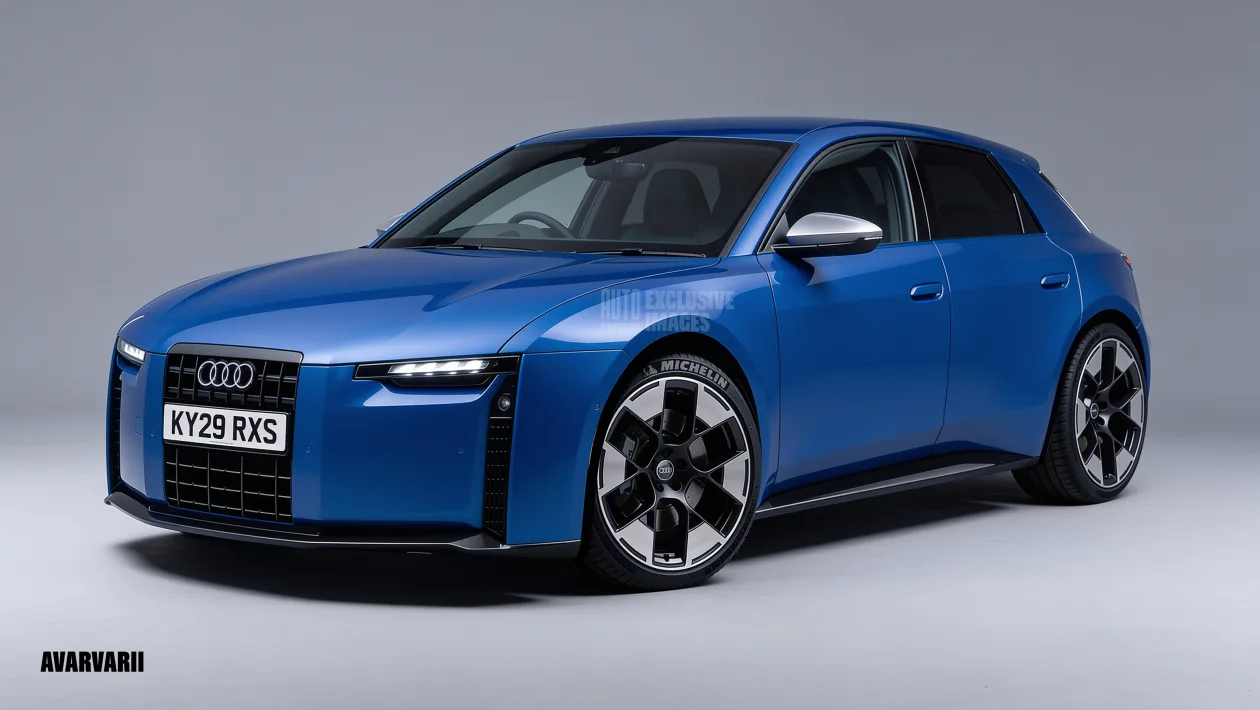
The digital interfaces will need to live within a technological ecosystem that’s already in place, especially with the firm’s new and expensive curved display that’s been integrated into the fresh Q3, Q4 and the existing A3. Audi is yet to confirm whether this unit will be integrated into the next A3 or if it will adopt a new solution.
But despite the company’s desire to reduce the digital real estate in its new models, buyers of this class of car will still expect such tech alongside more physical controls, so we expect a pair of large displays will remain.
Platform and practicality
Of course, the new A3’s design ambition will be limited by its fundamental structure. It will join other revised MQB-based C-segment models in the wider VW Group including a new Volkswagen Golf, Skoda Octavia and SEAT Leon. So while Audi will have some say in the fundamental proportions and volumes, it will ultimately be limited by the aspects shared between it and its cousins.
This plan gained renewed focus following recent news of the VW Group’s plan to rationalise its model spread and development programmes. But the A3’s importance to European markets should see its current development plan remain largely intact. Interior space will be close to that of the existing car as a result, but the current proportions are well suited to buyers in this class. A3s already have a good amount of space inside for five, including a decent boot capacity – and we expect this to continue.
Petrol hybrid engines to lead
Combustion engines will still play a central role, but as in the next Golf and Leon, hybridisation will be the key new factor. As it stands, though, VW’s plug-in hybrid system in its current compact MQB models is one of the most efficient on the market, so we don’t expect to see radical improvement in raw numbers.
Advertisement – Article continues below
