

The Drive 🤝 your inbox. Every weekday
The Daily Brief wraps up the biggest stories and our exclusive reporting on the auto industry and car culture.
Historic storms are becoming depressingly commonplace, and infrastructure needs to keep up (even when no one wants to take responsibility for it). In 2024, Hurricane Helene washed portions of Interstate 40 on the Tennessee/North Carolina border into the Pigeon River, severing one of the main transportation corridors between the two states and a lifeline in this rural part of the country. The road, which carried 26,000 vehicles a day before the storm, is now being rebuilt better than before.
This video from the YouTube channel BuildWitt documents the project to not only rebuild I-40, but ensure that it can withstand a 500-year flood like the one that knocked it out in 2024. Helene dramatically raised the level of the river running next to the road, which eroded the base of the roadway (the technical term for this is “scouring”) and dropped it straight into the river. Instead of cars and trucks, this time it was the road itself that went on a trip.
BuildWitt via YouTube
Key to preventing a repeat of this is a wall made from 800,000 yards of roller-compacted concrete (RCC) that will deflect any future deluges, ensuring they don’t have a chance to eat away at the road’s foundation. It’s built in steps that go from 30 feet wide at the base to 10 feet wide at the top, where it dovetails with the bottom of the roadway surface. The RCC is teamed with an interlocking pipe pile (IPP), consisting of about 400,000 linear feet of 36-inch steel pipe driven into the ground to form an outer wall that will be the first line of defense against floodwaters.
While this is being worked on, two lanes of the existing highway remain open to traffic. They’re supported by a 290,000-square-foot soil-nail wall, which is exactly what it sounds like. Giant steel nails are driven into the hillside, keeping the earth under tension so it stays in place.
Inside America’s Biggest Emergency Highway Project
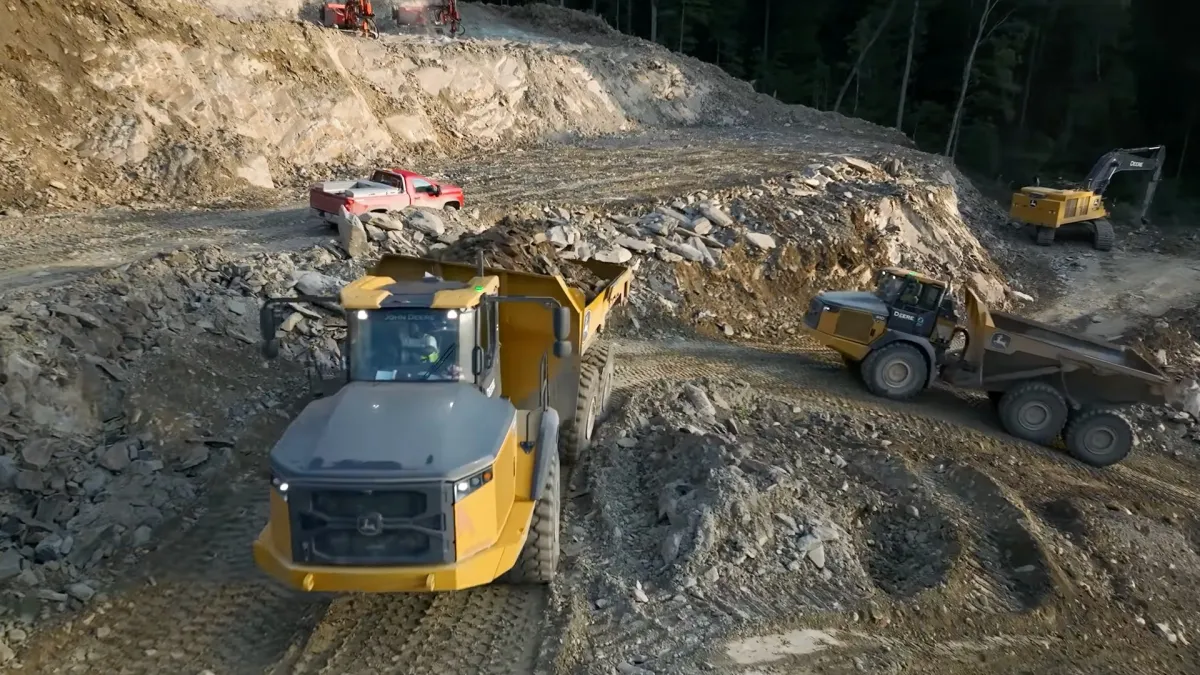
Getting the materials to the job site presented its own challenge. The section of I-40 that’s being replaced is in the middle of a gorge far from other roads and infrastructure. The RCC wall needed over a million yards of rock, which would normally be trucked in from nearby quarries. Because there were no nearby quarries, the North Carolina state government allowed a temporary quarry to be built specifically for the project. Building that, as well as concrete-mixing plants and a haul road along the river, took a year by itself. All of this temporary infrastructure will be removed once the job is completed.
Unlike the concrete used to make your swimming pool, the RCC is poured into dump trucks and then takes a roughly 25-minute ride to the site. It’s then poured onto forms via a Rube Goldbergian conveyor system, and flattened by rollers like ones used for pavement. That’s why it’s called roller compacted concrete. During the summer, when the video was filmed, this was done at night because the cooler temperatures keep the concrete from setting up too quickly. It’s a yearlong process that will undo mere days of destruction, but hopefully it won’t have to be repeated.
Add The Drive as a preferred source on Google to see more of our reporting.
Stephen has always been passionate about cars, and managed to turn that passion into a career as a freelance automotive journalist. When he’s not handling weekend coverage for The Drive, you can find him looking for a new book to read.
