

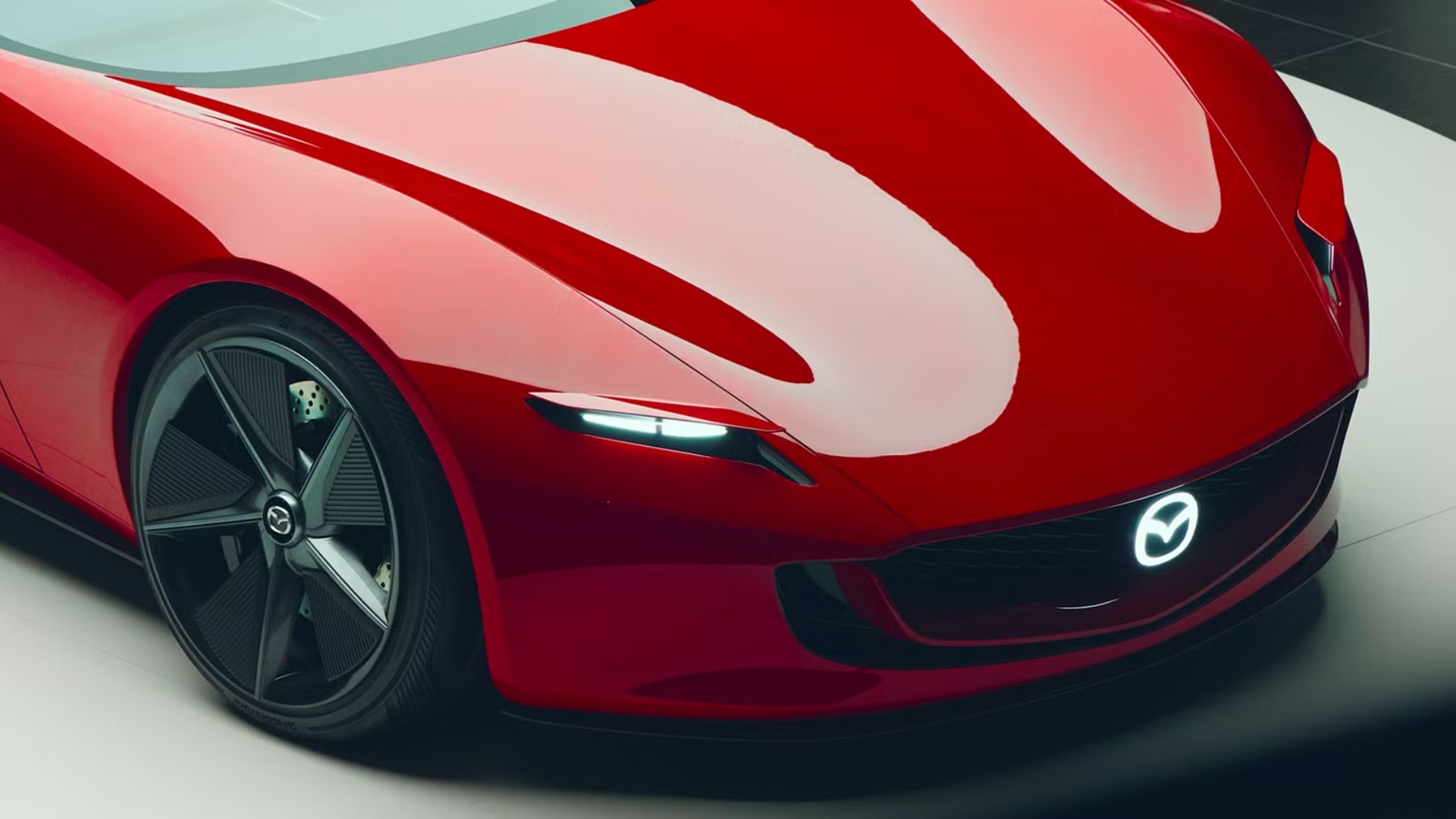
This is your first look at the next-generation Mazda MX-5 Miata… or is it? CarBuzz has just found a patent that focuses on a front-engine rear-drive sports car chassis, and a second patent that discusses crash structures of a car. Both show bones that we hope will make the car as good as the four generations of Miata (and three of RX-7) that came before it.
But, they both show something very, very strange. This car has butterfly doors. Yes, butterfly door. That has us wondering if this actually is a next-gen Miata, or something a little more spicy. Let’s dive in for a closer look.
Mazda Is Planning Sports Car Magic, Once Again
Mazda patent drawingsMazda / CarBuzz
The two patents don’t wear a Miata label, but there are only two possibilities here. The drawings clearly show a small convertible car with a longitudinal four-cylinder engine. We know Mazda is planning a new MX-5, and it will be the final one with a proper gas engine. We also know that Mazda wants to build the Iconic SP concept car, and it’s going to be tough to do that with the oft-promised and rarely delivered rotary engine.
First up is one that focuses on the hinge pillar – the part that supports the windshield frame and the door hinge – and the upper front suspension mount. In the background of the patent, the problem Mazda is looking to solve here is one of chassis rigidity. The engineers want to tie the suspension forces into the ultra-strong hinge pillar, but a front-engine rear-drive car puts too much distance in the middle to do it effectively.
The best way to make that tie, according to Mazda’s engineers, is with butterfly doors. Look at the patent drawing, which CarBuzz has superimposed on the SP (above) and you can see that the line of the hinges is a nearly 45-degree angle. The angle helps bring the pillar closer to the shock tower, which makes it stronger, but it also means the door has to open up. Mazda refers to this as “a flip-up side door, in which a door rear portion is displaced outward and upward like a scissor door or a butterfly door when the door is opened.”
So the next Mazda sports car could end up with Lambo doors, not for show, but to make the car an even better sports car. But the question we’re asking ourselves is this: do butterfly doors really work on a convertible like the Miata?
Braces Help Transfer Load With Minimal Weight Gain
Mazda patent drawingsMazda
The other two main parts of the invention are parts Mazda calls bracing reins. They’re two very simple-looking structural components (highlighted in orange) that help to transfer load from the suspension mounting into the hinge pillar, adding strength and rigidity, letting the suspension do its job with minimal extra weight.
Last but not least is what Mazda is calling an “apron frame.” It’s effectively a strut brace that is stamped metal, not tubes or bars. It links the front corners back through to the firewall like a big horseshoe, adding rigidity with minimal weight.
The second patent focuses mostly on the crash structure. It describes how the frame design will work to transfer collision forces into the firewall and sills, and even to the rear of the vehicle to protect occupants. It’s important if you’re in a crash, but there’s nothing glamorous here beyond another mention of the butterfly doors.
CarBuzz Insight – Why This Matters:
2025 Mazda MX-5 Miata RFIan Wright/CarBuzz/Valnet
Mazda’s MX-5 has always been a serious sports car, even in the mildly silly-looking third-generation. The company’s efforts to keep it as light now as it was in 1987 are amazing, and these patents give some insight into what the company will do to keep it good going forward.
But a Miata with butterfly doors? It’s almost blasphemy. However, Mazda did show off a design exactly like this with the Iconic SP concept of 2023. Its window surround looks just like this patent. So either Mazda is building the Iconic SP as a conventional engined car to accompany Miata in the sports car realm, or the next Miata is going to look a lot like the SP. Both of these, by the way, are wonderful options.
Patent filings do not guarantee the use of such technology in future vehicles and are often used exclusively as a means of protecting intellectual property. Such a filing cannot be construed as confirmation of production intent.
Source: US Patent & Trademark Office
