

UPDATE: 2026/09/04 4:30 EST BY ROGER BIERMANN
Additional MX-6e Filings, And New MX-7e Filing
This article has been updated with new information about the MX-6e and a subsequent trademark filing for MX-7e.
Mazda hasn’t sold a sports coupe since the rotary-powered RX-8 bowed out for the 2012 model year – and even it technically had four doors. The brand’s last two-door, fixed-roof offering was the RX-7, which left production in the United States for the 1995 model year but continued until 2002 in Japan. Before that, there was the MX-6, which ran for two generations during the late 1980s and 1990s.
Now, trademark filings found by CarBuzz suggests the company might bring back the name.
The Mazda MX-6e
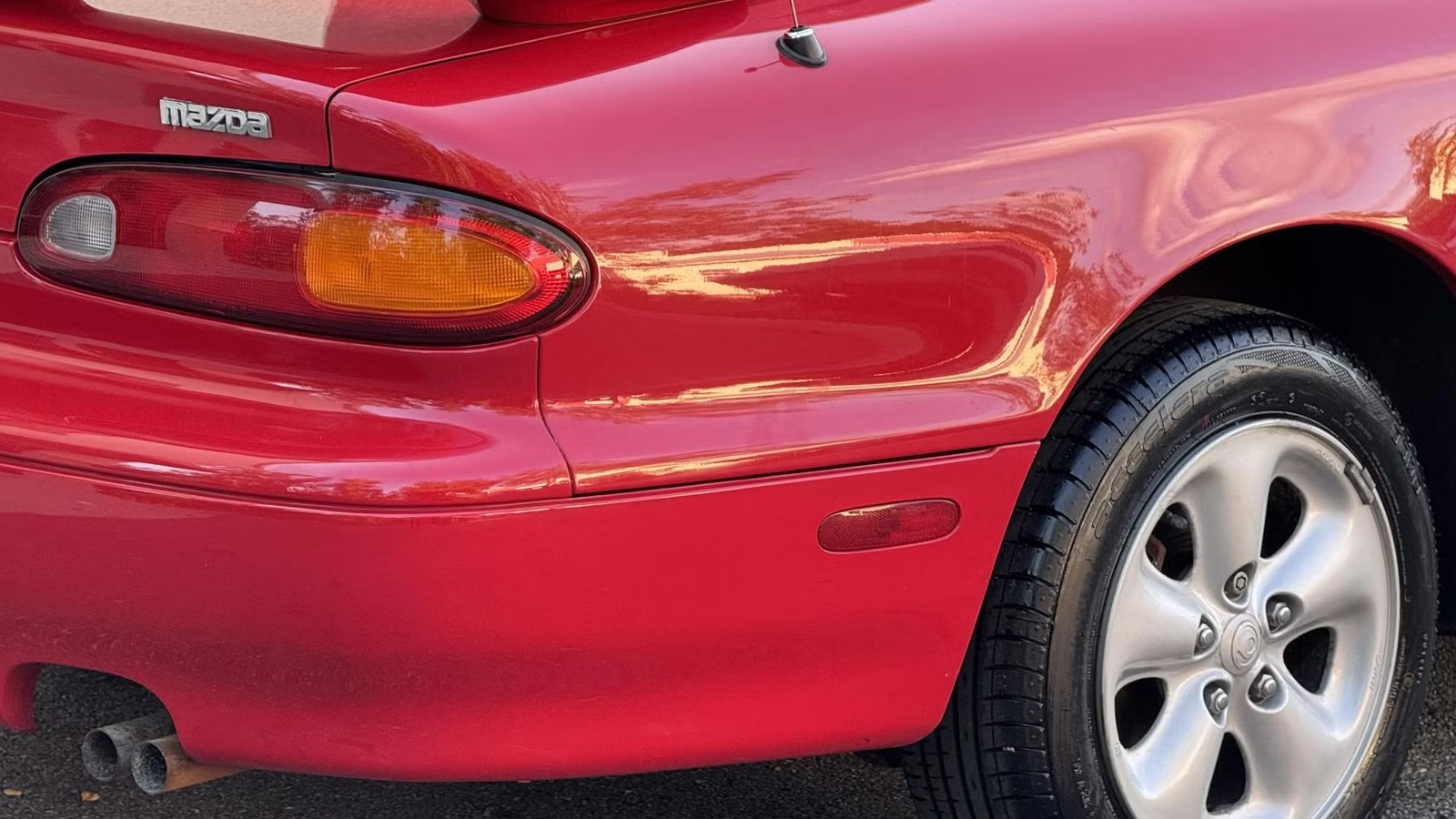
1992 mazda mx-6Mazda
Mazda filed a trademark for “MX-6e” with the office in Germany on August 26, 2026. It’s specifically registered under a classification for land vehicles, which obviously includes automobiles. Filing in Germany lets the application apply to the full European Union. A second filing has also been uncovered in Peru for the same name, and as of September 2, 2026, MX-6e has also been filed with the USPTO.
The timing of the application is interesting because it comes long after Mazda made filings for other models with an “e” suffix. In February 2025, the automaker submitted a flurry of paperwork for similar ideas, including “Mazda 3e,” “Mazda 2e,” and “CX-5e.” In 2024, it filed for “CX-6e” and “Mazda 6e,” and those two models are now on sale in some European markets as electric versions of the respective models
CarBuzz couldn’t find MX-6e filings in other regions, including the United States and Japan. The situation makes sense because the company isn’t prioritizing EVs in its current lineup in either of these markets.
What Could A New MX-6 Be?
In 1993, Mazda shifted its marketing focus to the new MX-6… and the 700-hp four-rotor MX-6 racing car was born.Mazda
From what CarBuzz can find, this filing for MX-6e is the only application in major regions from Mazda for a new “MX” prefix vehicle since applying for MX-30 in 2019. However, last year, Mazda submitted a patent for chassis bracing with drawings depicting a front-engine, four-cylinder rear-wheel-drive sports coupe with butterfly doors. Correlation is not causation, but the timing potentially connects these two undertakings.
The original MX-6 had a tangential connection to the Ford Mustang. In the 1980s, Mazda and Ford were closely aligned, and a team within the Blue Oval came up with an idea to use a new, shared front-wheel-drive platform as a replacement for the Mustang. The idea didn’t come to fruition, but the project got far enough for Ford to launch the Probe in 1989. Meanwhile, Mazda used the same underpinnings to create the 1988 MX-6. While they shared a chassis and some engine choices, the two vehicles looked nothing alike, including the Probe sporting pop-up headlights and the MX-6 using fixed units.
Both the MX-6 and Probe received second generations, and they continued to share a chassis. The second-gen MX-6 arrived for the 1993 model year sporting a svelte, heavily sculpted coupe body. The top engine option was Mazda’s quick-revving 2.5-liter KL-DE V6 making 164 horsepower and 160 pound-feet of torque. A hotter tune of the same engine in Japan made 200 hp. It lasted until 1997, and the closest successors other than the RX-8 have been the retractable hardtop variants of the Miata.
MX-7e Trademark Suggests Something New
Mazda MX-7e trademark could be applied to production version of the Iconic SP.Mazda/CarBuzz
After the initial MX-6e filing, CarBuzz has also uncovered a trademark filing for MX-7e, filed with the Peruvian intellectual property authorities.
MX-7e
While MX-6 has been used in the past, the MX-7 nameplate hasn’t, so this is an entirely new name for the brand. The ‘e’ suffix points to electrification, while the ‘MX’ prefix stands for ‘Mazda eXperimental’ and has been used in the past for models that break new ground, like the MX-3, MX-5, MX-6, and MX-30.
The number ‘7’ might just follow the order of previous models, but we’d be remiss not to correlate a link with the RX-7, which earned the ‘R’ in its name from its rotary engine. A sports car operating in the same segment with an electrified powertrain — maybe like the range-extender rotary in the Iconic SP concept — could leverage the ‘X-7′ part of the name to tug at enthusiasts’ heartstrings.
CarBuzz Insight – Why This Matters:
A new trademark filing and a patent application are hardly enough to confirm that a vehicle is under development. Still, it’s fun to dream about the company building a new sports coupe. If it’s like earlier versions of the MX-6, it would have tiny rear seats that could fit kids or cramped adults, making it a better all-year daily driver than a Miata.
Trademark filings do not guarantee the use of such nomenclature in future vehicles and are often used exclusively as a means of protecting intellectual property. Such a filing cannot be construed as confirmation of a production-bound application.
Source: EUIPO, INDECOPI
