

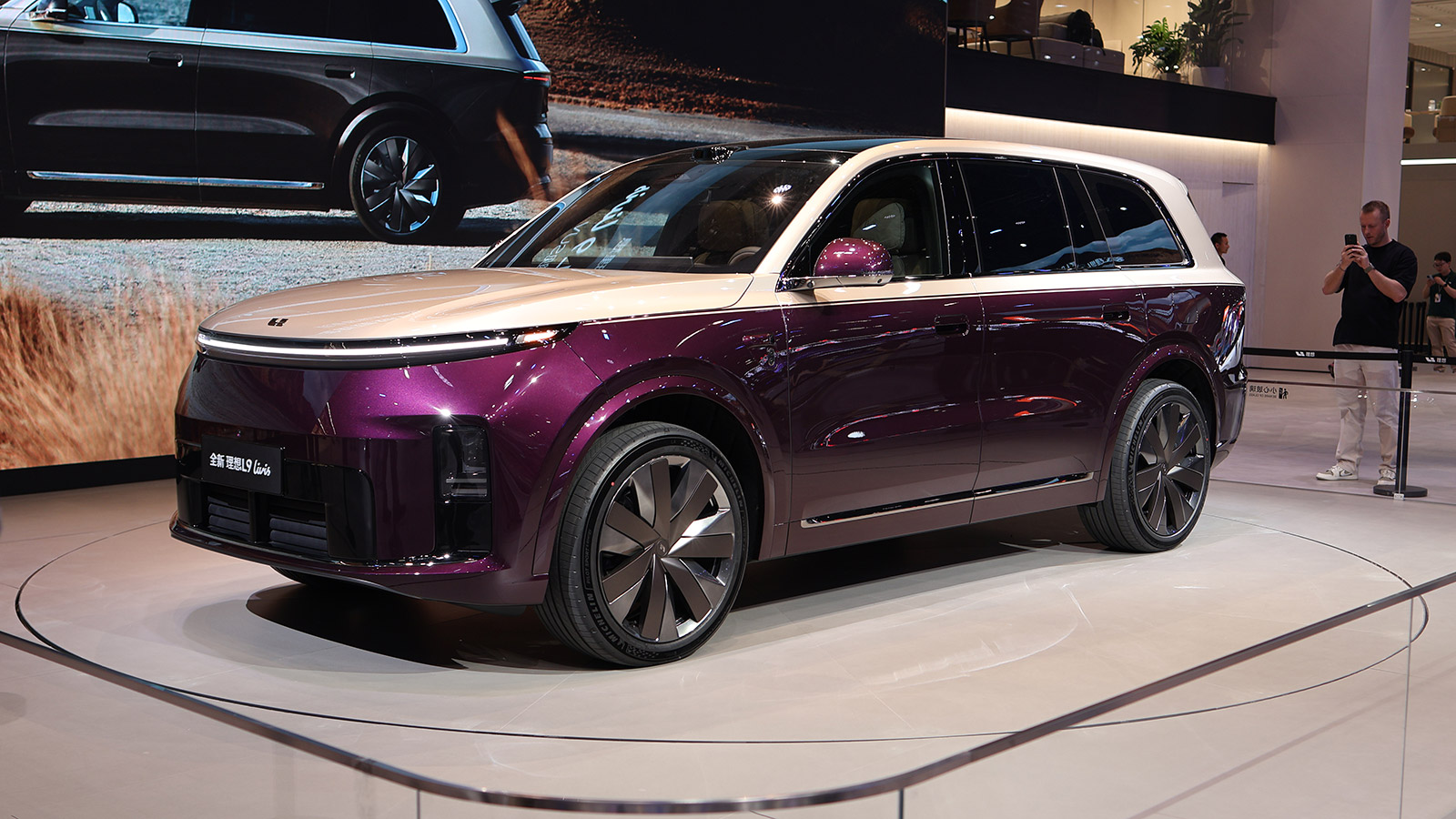
A Li L9 Livis is displayed at the Beijing Auto Show in April 2026. Credit: CnEVPost
- Li Auto posted a second-quarter net loss of 1.7 billion yuan, while revenue fell 15.1% year-on-year to 25.7 billion yuan.
- Gross margin rose 3.1 percentage points from the first quarter to 11.0%, but remained 9.1 percentage points below its year-earlier level.
Li Auto (NASDAQ: LI) remained in the red in the second quarter, although its performance improved from the first quarter.
The company said on Wednesday that its second-quarter net loss was 1.7 billion yuan ($251 million), compared with net income of 1.1 billion yuan a year earlier. The loss narrowed by about 26% from 2.3 billion yuan in the first quarter.
Second-quarter revenue was 25.7 billion yuan, down 15.1% year-on-year but up 11.7% from the first quarter. Revenue from vehicle sales fell 16.7% year-on-year to 24.1 billion yuan.
Li Auto attributed the decline in vehicle sales revenue to lower deliveries and a decrease in average selling prices due to changes in its product mix.
The company delivered 98,330 vehicles in the second quarter, down 11.5% year-on-year but up 3.4% from the first quarter. The result was in the upper half of its guidance range of 95,000 to 100,000 vehicles.
Li Auto Quarterly Deliveries 2024-2026
Quarter
2024
2025
2026
Q1
80,400
92,864
95,142
Q2
108,581
111,074
98,330
Q3
152,831
93,211
Q4
158,696
109,194
Li Auto quarterly deliveries
2024
2025
2026
Vehicle margin recovered to 9.4% from 6.1% in the first quarter, but remained well below the 19.4% recorded a year earlier.
Overall gross margin rose to 11.0% from 7.9% in the first quarter, compared with 20.1% a year earlier.
Second-quarter gross profit fell 53.3% year-on-year to 2.8 billion yuan, although it increased 56.9% from the first quarter. The improvement from new products was not yet enough to offset pressure from sales volumes and pricing.
Operating expenses fell 2.0% year-on-year to 5.1 billion yuan. The company still posted an operating loss of 2.3 billion yuan, compared with operating income of 827 million yuan a year earlier.
Cash flow improved. Operating cash flow turned to a net inflow of 15 million yuan in the second quarter, compared with a net outflow of 6.1 billion yuan in the first quarter.
Free cash flow remained negative at 1.3 billion yuan, but narrowed sharply from negative 7.4 billion yuan in the first quarter.
Li Auto had 87.5 billion yuan in cash reserves at the end of June, down 6.8 billion yuan from the end of March.
The company also spent HK$2.1 billion and $150.9 million on share repurchases in Hong Kong and the US, respectively, during the second quarter. As of the earnings release date, it had used about $631.5 million of its $1 billion buyback program.
Li Auto guided for third-quarter deliveries of 95,000 to 100,000 vehicles, representing year-on-year growth of 1.9% to 7.3%.
Its revenue guidance was 26.6 billion yuan to 28.0 billion yuan, representing a year-on-year change ranging from a decline of 2.8% to growth of 2.3%.
The midpoint of the guidance implies that third-quarter deliveries will be broadly flat from the second quarter. The company is counting on refreshed battery electric vehicle models, the Li L6 and the upcoming Li i9 to improve its product mix.
CFO Tie Li expects margins to expand further in the second half as higher-priced Livis variants contribute more sales and refreshed battery electric vehicle models and the Li i9 enter the market.
However, if its full-year delivery target of about 490,000 vehicles remains unchanged, Li Auto would need to deliver about 196,500 to 201,500 vehicles in the fourth quarter, leaving it facing significant sales pressure.
Li Auto’s CEO said the next-generation Mega MPV will feature an interior distinct from all the company’s other models.
($1 = 6.7829 yuan)
