

The Drive 🤝 your inbox. Every weekday
The Daily Brief wraps up the biggest stories and our exclusive reporting on the auto industry and car culture.
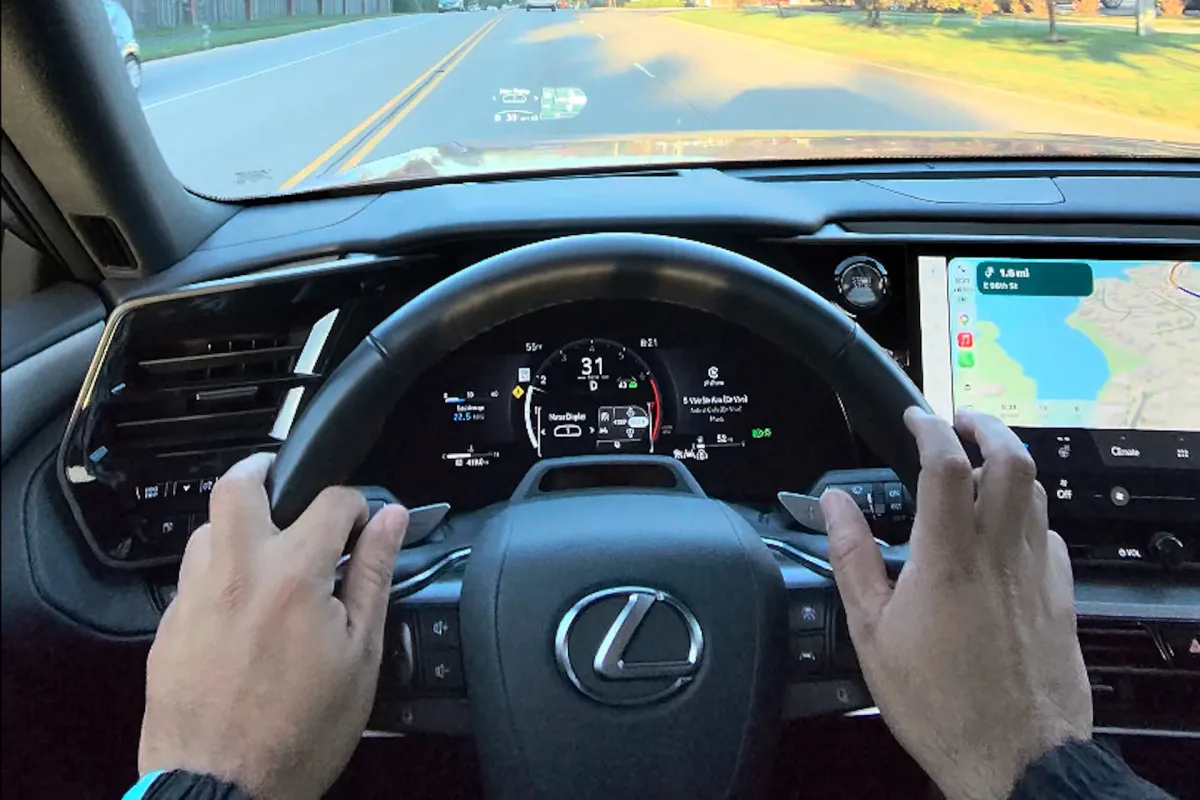
I don’t often find one thing about a car so egregious that I write a standalone blog about it, but this one really deserves it. I’ve been driving a 2026 Lexus TX350 for a few days, and I was immediately blown away by how quiet and refined it is—even by Lexus standards. Even the four-cylinder turbo and eight-speed automatic are a gem and drive as smoothly as a BMW straight-six. And then, I tried to use the buttons on the steering wheel. Then the real nightmare began.
I know we’ve written about this here—my friend Andrew Collins did last year—and certainly at other publications, but I feel like it is my job to get this out into the world so I can hopefully keep some innocent bystanders from buying a car they’ll hate. And let me tell you, they will hate this. No subset of people out there could possibly be okay with this, and if you think about Lexus’ demographic, I can’t even believe this system made it into production. Old folks would probably pull their hair out or stop driving their cars entirely rather than learn to use these, and that’s understandable.
I’ve made the video above so you can better understand what I’m talking about, but here’s a written summary too:
Lexus calls these “Touch Sensor” controls, and they exist to give you multiple functions from one button. In this case, about eight functions across four buttons per cluster, and there are two clusters: one on the left and one on the right. This means eight buttons total and sixteen possible functions. Kapish?
So far, things aren’t insultingly complex, since other cars do this, and one solid execution that comes to mind is the Land Rover Defender, which has a spinning dial you can click down to unlock additional functions. It works. A bad example is Volkswagen, with its dumb window-switch selectors to toggle between front and rear windows. Anyhow, the problem here isn’t so much having fewer buttons for more functions as it is how you interact with them.
These touch sensors are extremely sensitive, and all you have to do to send the system into a frenzy and pull up a menu in your gauge cluster is brush your finger across them. I’ve done this while turning the wheel to park or make a sharp turn, and the next thing I know, a screen pops up in front of me (dash and HUD), asking me if I want to change tracks or customize my gauges or something else I can’t even read, because as soon as I move my finger again, the whole thing disappears. The system relies on both very light pressure on the button and you swiping your finger across the little pad to bring up these prompts, and each time your finger moves, you have to pay attention to the screen in front so you know what prompts are showing. Are you operating the sound system or resetting your fuel economy? Who knows?! And good luck doing this while driving on a bumpy road, because the thing is super sensitive.
The other side of the steering wheel does the same, but even worse, that pad handles the cruise control settings, and I’ve literally stopped using cruise control on the highway because it’s a nightmare to set up. Plus, it takes my eyes off the road for so long to dial it in that it’s downright unsafe.
No amount of time in this car would ever make me get used to it or, let alone, grow to like it. I hope Lexus ditches this like yesterday. The entire point of steering wheel controls is to be quick-access, easy to read and understand at a glance, and safe. This is none of those things.
Touch sensors aside, the TX350 is a lovely SUV.
Email the author at jerry@thedrive.com
Add The Drive as a preferred source on Google to see more of our reporting.
As deputy editor, Jerry draws on a decade of industry experience and a lifelong passion for motorsports to guide The Drive’s short- and long-term coverage.
