

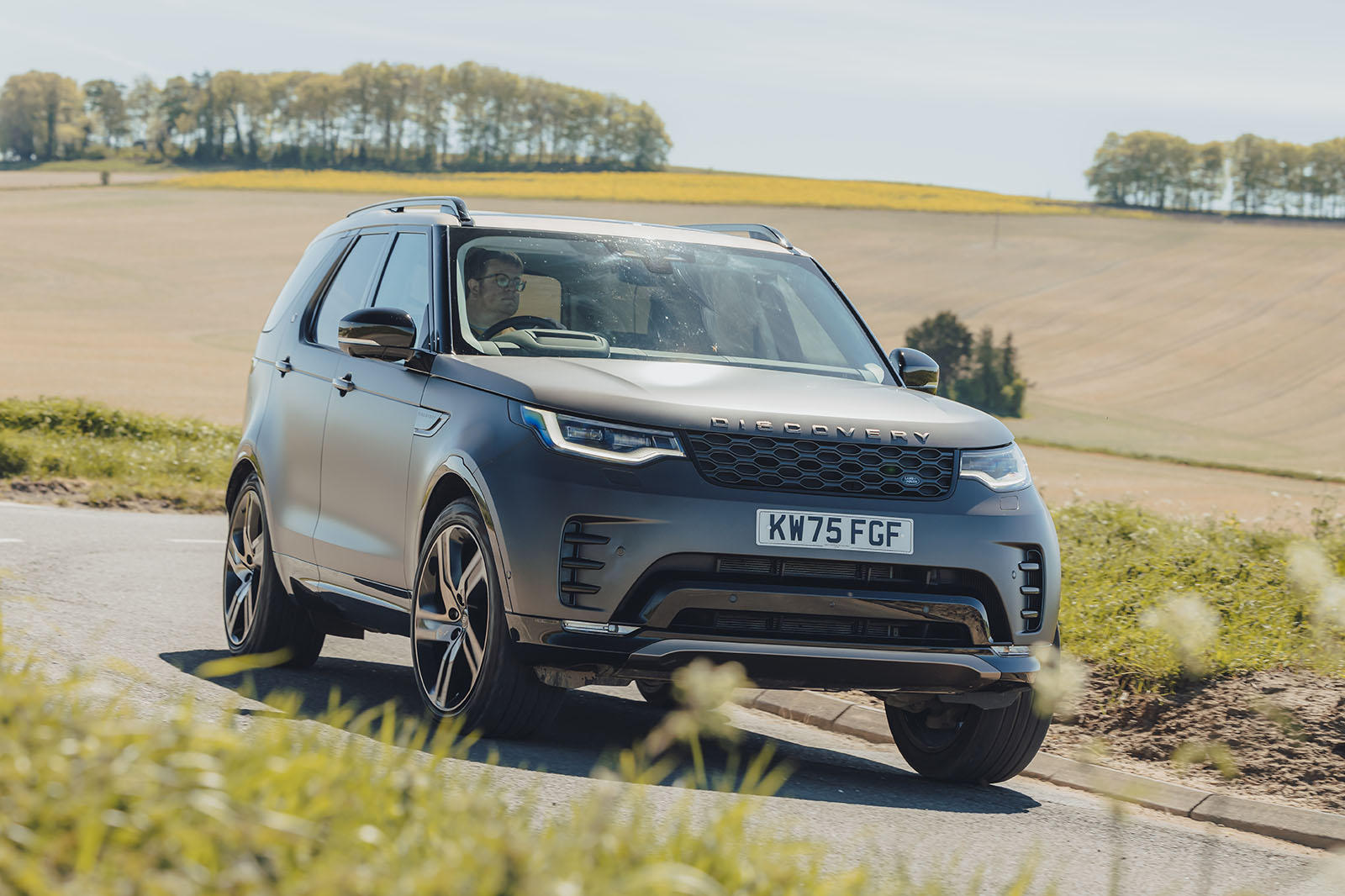
Ever since the Discovery 3 of 2004, this car has had a reputation for seven-seat passenger carrying that surpasses most other full-size SUVs. The Discovery 5 developed that further in 2016 via an extended wheelbase, and by arming itself with a remotely operable ‘intelligent seat fold’ system that, via an app on your phone, lets you electrically lower, raise and configure the five rearmost seats before even unlocking the car.
Not all versions get the electric third row that enables this, but our test car did; and the system makes preparing for particular trips and loads very easy. As a bonus, it allows you to remotely fold all five rear headrests down via the multimedia screen, which clears your rear view very effectively when travelling only one- or two-up.
Outright passenger accommodation and comfort are excellent. Up front, the Tempest offers captain-style chairs with individual drop-down armrests, and generous space at the wheel.
The second-row chairs are split 60:40 and slide fore and aft as well as reclining electrically, so even taller adults will find plenty of room.
A Volvo XC90 offers 30mm more second-row leg room, according to our tape measure, but also 30mm less head room, which is the likely result of the Discovery’s ‘stadium’ seating layout and stepped roofline.
In row three, the Land Rover beats the Volvo for passenger space pretty resoundingly (by 80-110mm on leg room, and 40mm on head room). There’s even space for a 6ft 2in adult to travel fairly comfortably in the rearmost seats of the Discovery. JLR also includes Isofix child-seat anchorages.
In the boot, a motorised flip-up interior tailgate is combined with other useful storage and retention features. The 1137-litre load capacity here (to the roof, and up to the second-row seatbacks) again trumps the long-time rival Volvo (1045 litres).
The driver climbs up into a classically high, Land Rover-typical ‘command’ driving position and settles in behind an unpretentiously large, four-spoke steering wheel. The front seats are very comfortable and widely adjustable while the control layout is simple, functional and easy to get on with.
JLR’s Range-Rover-brand cars have lately lost their physical HVAC and drive mode secondary controls, getting a sleeker and more reductive interior ambience as a result, but relying on their touchscreens to take up the slack. However, the Discovery, like the Defender, has kept its various knobs and dials, which undoubtedly makes it more straightforward to operate.
It offers lots of practical features, too: a really deep storage cubby under the sliding cupholders, a slimmer one behind the ventilation dials, good-sized twin gloveboxes, and a cooler in the armrest cubby deep enough for 500ml bottles.
