

Related
Lamborghini’s CEO Makes His Position Clear
Front three-quarters shot of the Lamborghini Lanzador Concept.Lamborghini
Lamborghini CEO Stephan Winkelmann didn’t mince words. Speaking to CNBC after Ferrari’s Luce reveal drew widespread criticism, Winkelmann said canceling the Lanzador and pivoting to plug-in hybrid electric vehicles was “the right way to go” for Lamborghini. His reasoning was direct: customers aren’t ready for a fully electric Lamborghini.
The Lanzador had been positioned as Lamborghini’s first pure EV—a 2+2 grand tourer concept unveiled in 2023 that was intended to reach production. Killing it wasn’t a quiet internal decision; it was a public course correction, and Winkelmann is now framing it as prescient. With the Urus, Huracán successor, and Revuelto all running some form of electrified V-8 or V-12 hybrid architecture, Lamborghini’s near-term roadmap stays combustion-anchored. The brand isn’t abandoning electrification entirely—but it is refusing to let it replace the engine.
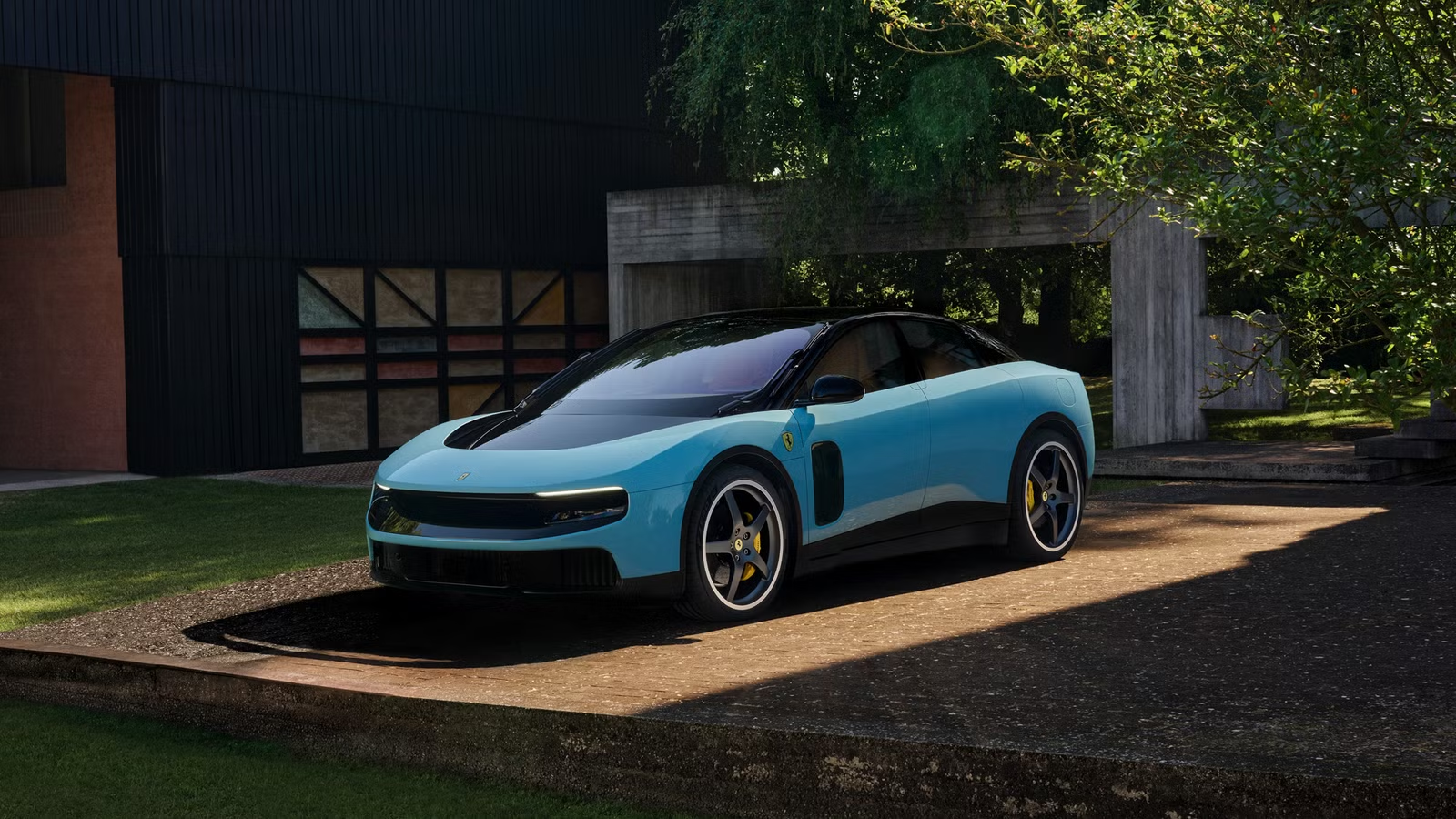
What Went Wrong With the Ferrari Luce
Ferrari revealed the Luce as its first fully electric production car, with pricing rumored to start at roughly $640,000. The reception was harsh almost immediately. Critics and enthusiasts pointed to the design, and, more fundamentally, to what the car isn’t: a Ferrari that sounds like a Ferrari.
The Luce reportedly takes an unusual approach to the sound issue, forgoing the synthetic V12 engine noise some expected in favor of something described as stranger. That decision landed poorly. For a brand whose identity is inseparable from the shriek of a high-revving naturally aspirated engine, silence or a manufactured substitute reads as a betrayal to a significant portion of the buyer base. Ferrari’s stock dropped following the reveal. The CEO subsequently went public to defend the car, saying customer interest is strong and orders are accumulating. Whether that holds as the initial backlash settles remains to be seen.
Two Brands, One Lesson—And The Rest Of The Industry Is Watching
2026 Lamborghini Temerario exterior in motionLamborghini
What makes this moment significant isn’t just one brand’s stumble. It’s the convergence. Lamborghini read the room early and pulled back. Ferrari pressed ahead and is now managing the fallout. Together, they’ve produced a case study in how difficult it is to electrify a supercar brand without alienating the people who define it.
The supercar buyer is not the mainstream EV buyer. They are not weighing charging infrastructure or total cost of ownership. They are paying for an experience: the visceral, tactile, auditory event of a large-displacement engine at full cry. That experience is extraordinarily hard to replicate with electrons, and both brands are now learning that lesson in public. Other manufacturers in the halo segment—McLaren, Aston Martin, Pagani—will be watching closely. The Luce’s reception and Lamborghini’s retreat give every one of them reason to think carefully before committing to a fully electric flagship.
Lamborghini’s pivot looks shrewd right now, but the story isn’t finished. Emissions regulations in Europe and the UK will eventually force the issue, and hybrid architectures can only buy so much time. What this week has confirmed is that the supercar community has a voice—and it’s loud enough to move billion-dollar product strategies. The V-8 and V-12 aren’t dead yet.
Explore supercar EV shifts: subscribe to our newsletter
Source: CNBC
