

Launch control is a fascinating piece of automotive tech. By monitoring wheel slip, the system can limit power to make sure a car can accelerate from a stop as quickly as possible. At the drag strip, the system guarantees a perfect launch to achieve an even quicker time.
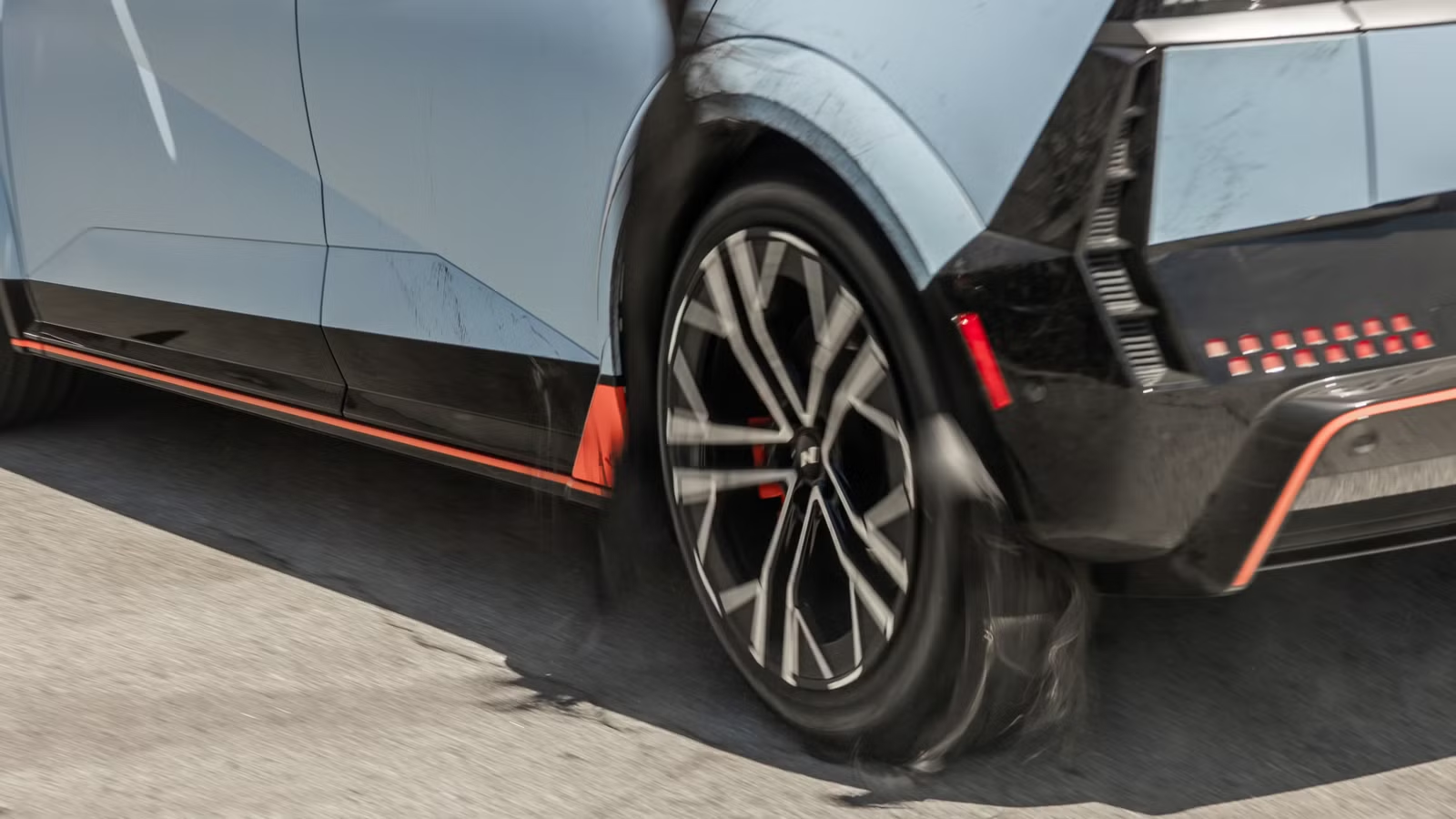
Hyundai RN24 driftingHyundai
CarBuzz found a recently filed patent from Hyundai that shows an interesting idea for making launch control even better, notably on its electric vehicles where instant-on torque is always a challenge to handle. The company’s idea is to monitor road conditions and adjust torque output for perfect acceleration runs.
An Even Hotter Hyundai
Hyundai Launch Control PatentHyundai / WIPO
As Hyundai describes things, the motors in an electric vehicle are able to produce torque more quickly than a model with an internal combustion engine. The situation means that the company can’t use the same launch control method for EVs and combustion applications.
For sporty electric vehicles, the company concedes that acceleration times are a major marketing point. The patent notes, “the techniques and capabilities that maximize acceleration during launching are recognized as indicators of high performance.”
Related
The Car Feature That Changed Our Perspective On Performance Figures Forever
More power always means more speed, right? Not if you can’t put any of that down. Which makes launch control the 8th wonder of the world
Hyundai’s idea is to use “an audio, video, and navigation (AVN) system” to determine the road’s grip level. The launch control would adjust torque output based on grip conditions to maximize acceleration. It would be a three-stage system. The first part would monitor the driver’s inputs into the accelerator and brake pedal. Then, the system would apply pre-motor torque, and finally, a “boost control mode” would activate when the driver releases pressure from the brake pedal.
Depending on the road conditions, the system would adjust the amount of wheel slip when launching. However, the driver would also be able to select the level of grip between High, Medium, and Low settings.
Making The Experience More Exciting
Hyundai Launch Control PatentHyundai / WIPO
In addition, Hyundai has an idea that might turn off some purists. The patent mentions tying this system to a sound controller. The tech would create a “virtual engine sound volume according to the virtual engine speed and output the determined virtual engine sound volume through a speaker.” The company says the sound would be similar to a combustion engine running at “5,500 to 6,000 revolutions per minute,” according to the filing. The result would be a sound like an engine bouncing off a rev limiter.
Hyundai Ioniq 5 N Essential on TrackHyundai
A driver needs to know this system’s status. A display on the instrument cluster would instruct the driver about how to use the launch control. Alternatively, the patent says the tech could be “forcibly activated without separate driver manipulation” to increase off-the-line acceleration in some conditions.
Find more Hyundai vehicles in our Marketplace
Shop Now
To prevent damaging the components, if the driver activates the launch control system but doesn’t take off in a certain period of time, the tech turns off automatically. There would also be a cooldown timer that would prevent a person from launching repeatedly, as another method to prevent mechanical wear and tear. Plus, the system would include temperature sensors for monitoring the motors. If the components are too hot, the launch control wouldn’t operate.
Related
One Of The Hyundai Ioniq 5 N’s Coolest Features Is About To Get More Realistic
The electric soundscapes everyone has raved about are cool, but what if they were more representative of the powertrain’s behavior?
Like with any patent, it’s not clear whether Hyundai actually plans to put this tech into production. The idea seems sound, and no one buying a performance car is going to complain about a quick zero to 60 mph time. We look forward to seeing what the automaker does with this idea.
Patent filings do not guarantee the use of such technology in future vehicles and are often used exclusively as a means of protecting intellectual property. Such a filing cannot be construed as confirmation of production intent.
Source: US Patent & Trademark Office
