

It seemed inevitable that a shift in demand for battery-electric vehicles would impact the sales mix for other modes of propulsion in the US, especially in certain regions where BEVs had been surging in popularity. Since federal tax credits for EVs were eliminated last year, even Americans who really wanted to buy one have struggled to account for the extra $7,500 to seal the deal.
Plummeting EV sales led to the departure from the US market of at least a dozen slow-selling EVs this year, from the Ford F-150 Lightning, Hyundai Ioniq 6, and Nissan Ariya to the Volvo EX30, Volkswagen ID.4, and Honda Prologue. So where do consumers turn if they want to do right by the environment but can’t afford an EV? The obvious choice is hybrids, preferably without a plug, based on the latest sales data.
2026 BMW 5 Series Hybrid rearJared Rosenholtz/CarBuzz/Valnet
While Hybrids Surge, BEVs Improve In California
Automotive News reports that in California, the country’s undisputed No.1 market for BEVs, hybrids outsold them in the first half of this year after four years of BEVs firmly in the lead. While EVs accounted for 16% of first-half new-vehicle registrations (137,430 units) in the Golden State, hybrids made up 22% of new registrations (191,000 vehicles), according to the California New Car Dealer Association.
Zero-emission vehicle registrations in California dropped 25% through June of this year, compared to first-half 2025, but the dealer association noted that the slide in BEV sales in California may be subsiding. While federal tax credits were still in place, BEVs made up 24.9% of vehicle sales in California, but that share plummeted to 13.8% percent in the first quarter of this year. The rebound is reflected in second-quarter registrations, which climbed to 17.8%.
2025 Hyundai Elantra HybridHyundai
Lots Of Options For Topping 47 MPG
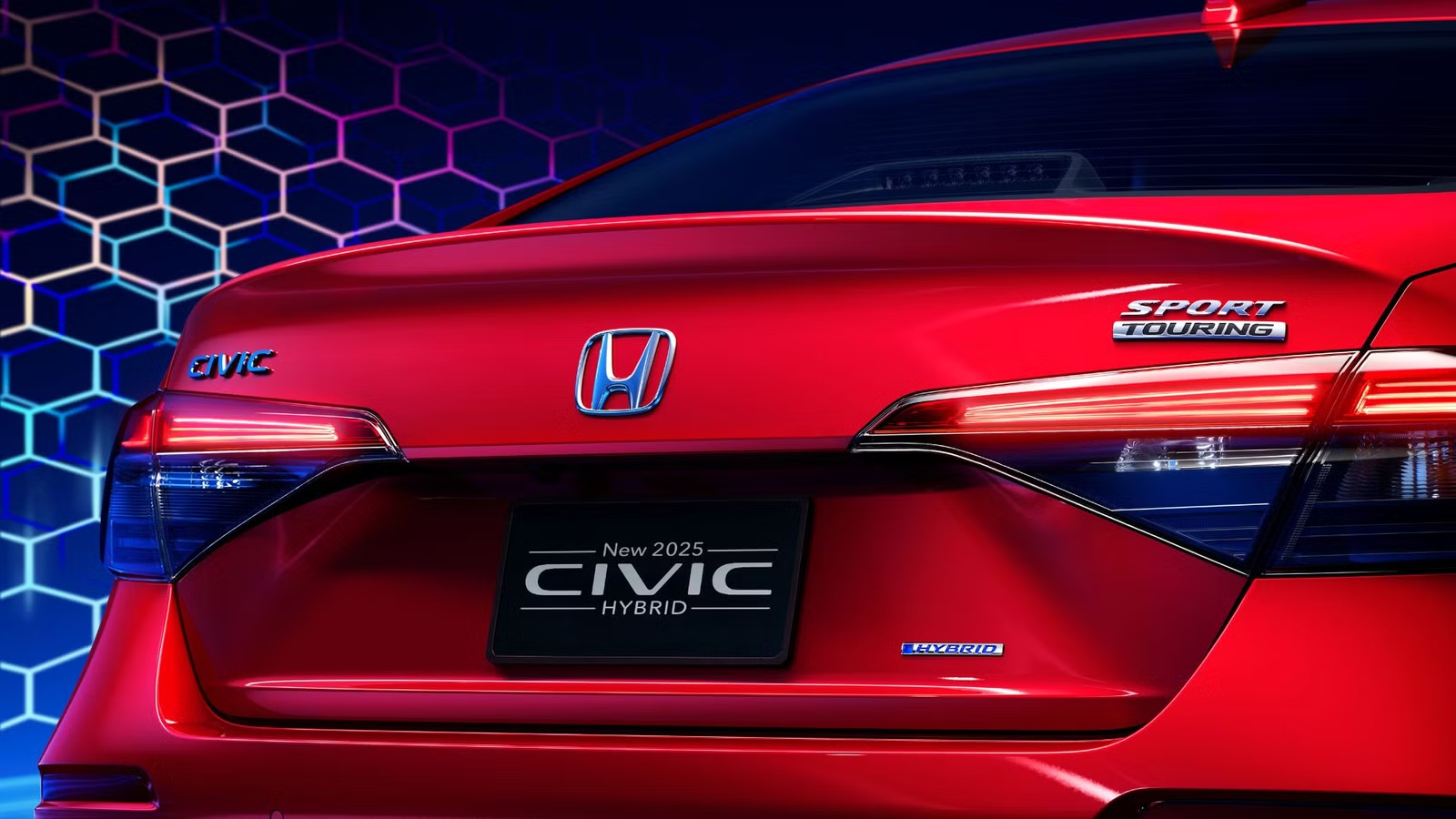
It’s easy to understand why hybrids would be surging in popularity in California, where the state average for a gallon of regular gasoline is $5.65 per gallon. While the average EPA rated fuel economy for a car in the US is about 25 mpg, there are several hybrids rated above 47 mpg, including the Toyota Prius, Camry, and Corolla, Hyundai Elantra and Sonata; Kia Niro; and Honda Civic. And the hybrid sales uptick is happening without California incentives for conventional hybrids. Meanwhile, the state offers incentives for certain PHEVs and first-time EV buyers.
Plug-in hybrids can offer an even greater fuel-economy advantage than standard hybrids, so long as the owner plugs in at home each night. If so, many PHEVs can log about 35 miles of all-electric range, without ever burning a drop of gasoline. And here’s a fun quiz for you: Which model sold more units in California in the first half, the Tesla Model Y or Toyota Camry Hybrid? You might be surprised to learn that even without a federal tax credit, the Model Y was the most popular car in California, with 54,327 registrations. The Camry was No.2 by a wide margin, with 33,523.
2024 Toyota Camry Hybrid ExteriorToyota
CarBuzz Insight – Why This Matters
With so many BEV models disappearing from showrooms, it’s hard to imagine a significant recovery in sales for the short term, both in California and nationwide. Toyota, Honda, Hyundai, and Kia are the key mainstream brands selling full hybrids in the US, while German luxury brands BMW, Porsche, and Mercedes-Benz are leaning more heavily on plug-in hybrids. Detroit automakers General Motors, Ford, and Stellantis are also working on new hybrids to come. We’ll be curious to see if the Tesla Model Y can maintain its sizable sales lead in California for the next 12 months, but the fact that America’s biggest EV market has taken a step backwards proves much of the demand was driven by financial incentives, not a market preference for EVs.
Source: Automotive News
