

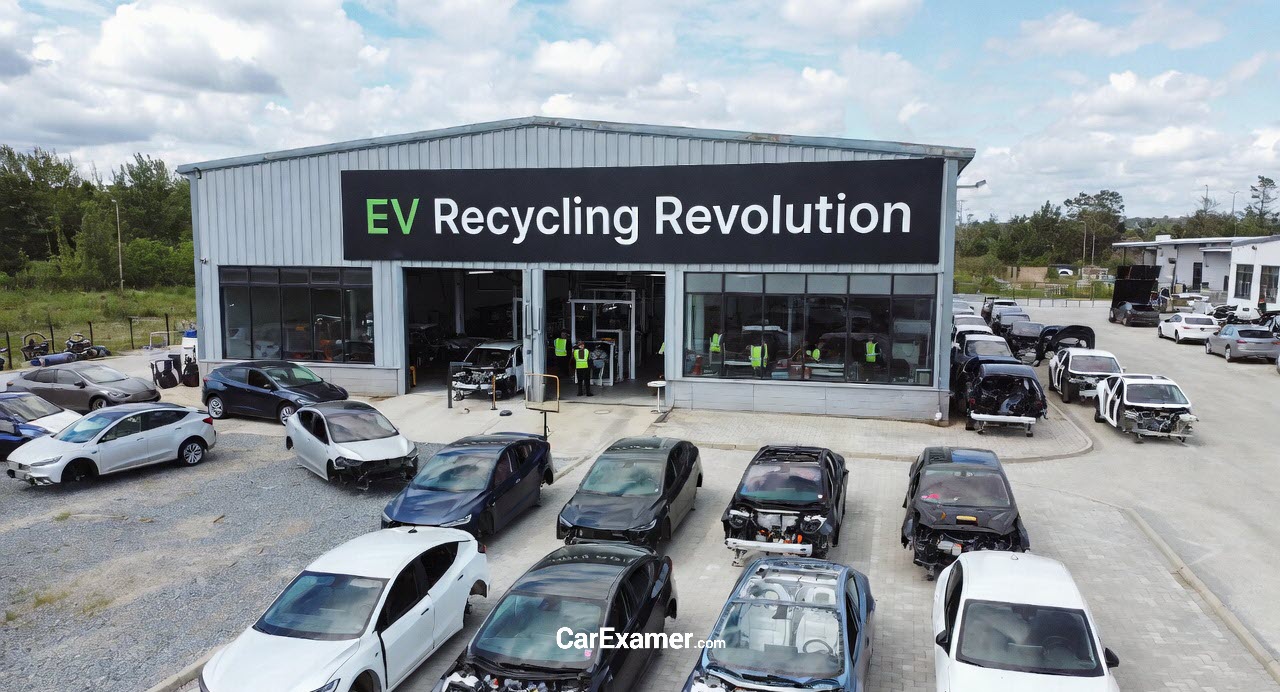
EV Recycling Revolution Electric vehicles (EVs) promise a cleaner future – fewer emissions, less noise, and a break from fossil fuels. But there’s a less glamorous side to that story: the challenge of what happens after those cars are built. Batteries age. Electronics fail. Components become obsolete faster than regulators can write rules. In this silent gap between ambition and reality, a new revolution is taking shape – one not led by automakers or tech giants, but by dismantlers, recyclers, and parts resellers. They’re the people quietly ensuring that the EV transition doesn’t become another wave of industrial waste but leads to EV recycling. It’s not the sleek world of marketing campaigns or factory tours. It’s warehouses, workshops, and digital platforms that give electric vehicles their second life. And it’s reshaping the meaning of “sustainability” faster than most people realize.
The EV Paradox: Clean Drive, Dirty Supply Chain
On paper, electric cars are the cleanest form of transportation we’ve ever had. No tailpipe emissions, no fuel tanks, no oil changes. But step back to the manufacturing stage, and the picture changes.
Producing a new EV battery pack can emit up to 9 tons of CO₂, depending on the materials and energy mix. Mining lithium, nickel, and cobalt requires massive energy and leaves environmental scars that don’t vanish with an “eco” label. Add in the electronics – control units, sensors, inverters, and cooling systems – and suddenly, an EV’s early carbon footprint is front-loaded rather than spread across its lifespan.
The only way to offset that impact is to make EVs last longer – not just through extended use, but through reuse. And that’s where the used-parts ecosystem steps in. Every recovered module, motor, or inverter keeps valuable materials in circulation. Every reused part delays the need for new production, which means less mining, less shipping, and less waste.
The irony is that the sustainability promise of electric mobility depends on an industry that most people never see: the network of dismantlers and recyclers reclaiming those parts one vehicle at a time.
How Dismantlers Are Rewriting the Rules
In the world of combustion engines, dismantling was straightforward. Drain fluids, pull parts, sell what works. With EVs, the job is more like surgery.
Batteries can’t be punctured, dropped, or even stored incorrectly. Motors contain rare-earth magnets that must be removed with specialized tools. High-voltage systems can’t be handled without certification. The risks are real – but so are the rewards.
Across Europe, advanced dismantling centers are building new protocols for EV teardown. Cars arrive with data tags that detail battery chemistry, production year, and software version. Technicians isolate the powertrain, test each module’s voltage and health, and log everything digitally. Components that pass inspection are either sold directly or stored for reuse in other vehicles.
A growing share of those parts now re-enter the market through transparent online systems. Marketplaces like Ovoko allow dismantlers to list verified components – from battery cooling plates to control electronics -complete with donor details and compatibility data. For workshops experimenting with EV conversions or replacements, this is gold. They can find OEM parts that match precisely without relying on manufacturer distribution chains.
It’s not just about cost. For many independent repairers, these parts are the only way to keep older EVs on the road. Automakers still treat EV components as proprietary secrets, limiting access to diagnostics and spare parts. Dismantlers fill that void with real-world experience and inventory that wouldn’t otherwise exist.
Batteries, the New Frontier
No component defines the future of car recycling more than the lithium-ion battery. It’s heavy, hazardous, and expensive – and it’s the single biggest obstacle to making EVs truly circular.
Batteries degrade over time. After eight to twelve years, most no longer hold enough charge for full driving range. Traditionally, that would mean disposal. But dismantlers and energy companies are discovering new uses for “retired” packs.
One solution is second-life storage. Used EV batteries are repurposed into stationary energy systems – powering homes, warehouses, or even solar farms. The chemistry is the same, the use case different. A battery that’s 70% as strong as it once was is still more than capable of storing renewable energy.
Another solution lies in modular repair. Instead of replacing entire packs, technicians now swap individual cells or modules. By harvesting healthy modules from other vehicles, they can extend battery life for years at a fraction of the cost. It’s recycling before recycling – a smart form of cannibalization that saves both money and emissions.
The numbers are promising. Studies from the Fraunhofer Institute estimate that up to 80% of a used EV battery’s components can be recovered or reused under optimal conditions. As processes mature, the goal is to hit 95%. What was once a liability is becoming an asset – and the dismantling sector is leading the way.
When Circular Economy Meets Code
The hardest challenge in EV reuse isn’t physical – it’s digital. Many key components are locked behind software. An inverter from one Tesla won’t work in another without factory authorization. A motor controller may require cloud-based verification to initialize.
This software dependency creates new bottlenecks. Independent repairers can test and replace hardware but are blocked from activating it electronically. That’s where the “right to repair” movement intersects with the circular economy. Without access to digital keys and calibration tools, the dream of reuse stops at the login screen.
Regulators are beginning to notice. The EU’s upcoming Sustainable Products Regulation will force automakers to provide data access and traceability for critical components, including EV batteries and control modules. It’s a small but powerful step toward fairness one that acknowledges sustainability isn’t possible without repairability.
In the meantime, the dismantling industry is building its own knowledge base. Each teardown adds data – on compatibility, firmware versions, and safe reuse methods. Over time, this collective intelligence could become the open-source counterpart to manufacturer secrecy. In a sense, dismantlers are reverse-engineering the future of sustainability one car at a time.
The Quiet Revolution
The world celebrates shiny new factories and futuristic concepts, but the real environmental progress is happening in quieter places. It’s happening when a dismantler salvages a drive inverter instead of scrapping it. When a small workshop replaces a damaged battery module instead of ordering a new pack. When a second-life energy project lights up a rural community using cells from retired EVs.
The public rarely sees these wins, but they’re the foundation of a circular automotive economy. Reuse isn’t glamorous, but it’s efficient – and efficiency is what sustainability truly needs. Automakers are slowly catching up. Some now partner with recyclers and parts marketplaces to meet carbon-reduction targets. Others are exploring buyback programs for used batteries, turning what used to be waste into recurring value. But most of the innovation still comes from the edges – independent actors who saw a problem and fixed it without waiting for permission.
The EV revolution won’t succeed through new technology alone. It will succeed through better habits – the kind that keep materials moving, cars lasting, and waste shrinking.
Behind every electric car quietly humming on the highway is a chain of unseen contributors: dismantlers, recyclers, mechanics, and data-driven marketplaces ensuring the circle stays unbroken.
They may not appear in marketing brochures, but they’re the real architects of sustainable mobility.
Buying a used VW. Buying used vauxhall, BMW, Jaguar, Ford, Volvo, Range rover, Bentley, Aston Martin, Porsche, Ferrari, Lamborghini, Maserati, Hyundai, Tesla, Honda, Pagani
