
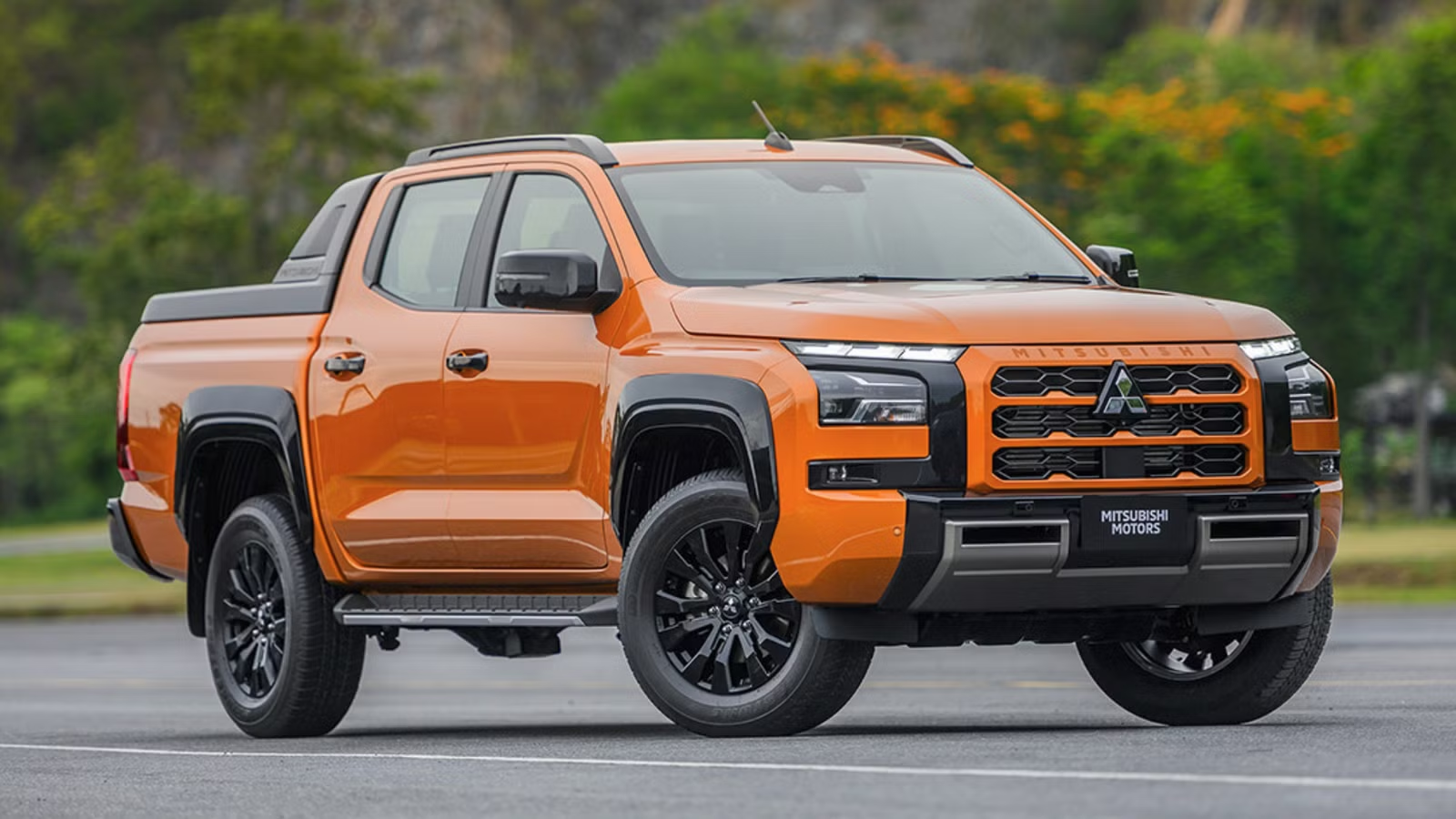
Honda’s three-way collaboration with Nissan and Mitsubishi, established in 2024, will bear its first fruit via a new truck. As predicted earlier this month, the brand that’s better known for the Civic and Accord will begin selling a version of the body-on-frame Mitsubishi Triton pickup to establish a stronger footing in certain markets in Southeast Asia and other parts of the world.
The new pickup will arrive within a couple of years, and it might also be accompanied by a rebadged Honda wearing the Mitsubishi logo on its nose.
The Triton Will Be Honda’s First Body-On-Frame Vehicle In Decades
In a statement from the company, Honda said that its version of the Triton will borrow a lot of source material from Mitsubishi, including the robust ladder frame and one-ton payload capacity that are very important to customers in Southeast Asia. Currently, Honda doesn’t offer any vehicles with body-on-frame construction in the Association of Southeast Asian Nations (ASEAN) region, and the company thinks that the rebadged truck will help it establish a stronger footing in markets like Singapore, Indonesia, the Philippines, and Malaysia.
The pseudo-Triton will be Honda’s first body-on-frame machine since the second-generation Passport left the US market in 2002 and only its fifth overall. The first- and second-gen Passport were based on the Isuzu Rodeo. That automaker also donated its P’up/Faster truck to create the Thai-market Tourmaster, while the Trooper became the Acura SLX luxury SUV. Honda also marketed the Land Rover Discovery–based Crossroad during the company’s brief flirtation with Rover.
Close
What Does Mitsubishi Get Out Of The Deal?
The partnership will give Mitsubishi greater production capacity at its factory in Thailand where the Triton is built. That move will bring increased profitability to the sometimes-beleaguered Japanese car brand, which has faced insolvency in the past and is currently suffering from a disillusioned dealer network in the United States. The added production (and theoretically, added sales) of the Honda Triton derivative will give Mitsubishi better profit margins and allow Honda to enter a new segment relatively quickly.
Both companies came to the decision to jointly market the Triton pickup following a 2024 agreement (which also included Nissan) to explore “complementary supply.” Basically, where it makes sense for two or all three parties, Honda, Mitsubishi, and Nissan will either rebadge or jointly develop vehicles, giving each automaker a little more market flexibility and defraying vehicle development costs somewhat.
Complementary supply could also work for Mitsubishi and Nissan by giving them access to Honda’s lineup. We could see the latter automaker opening up additional production for its teensy, non-US-market WR-V crossover, which could finally give Mitsubishi a replacement for its aged Outlander Sport. It’s also possible that the three companies could jointly develop an entirely new vehicle or collaborate on powertrain technolgies and advancements. That said, only the Honda-badged Triton has been announced, and anything else is pure conjecture.
Base Trim Engine
3.5L V6 ICE
Base Trim Transmission
9-speed automatic
Base Trim Drivetrain
All-Wheel Drive
Base Trim Horsepower
280 HP @6000 RPM
Base Trim Torque
262 lb.-ft. @ 4700 RPM
Base Trim Fuel Economy (city/highway/combined)
18/24/21 MPG
Infotainment & Features
8 /10
CarBuzz Insight – Why This Matters:
We’ve heard rumors for a few months now of Honda introducing a new body-on-frame vehicle – perhaps based on the forthcoming Nissan Xterra SUV – but the Triton tie-up is the first actual confirmation of that speculation. It now means that all three companies will offer a version of the truck, as Nissan’s global-market Navara is also based on the Mitsubishi-designed platform and powered by Mitsubishi’s own turbodiesel engines.
The odds of a Honda Triton making it to America are probably pretty slim, since it has nothing to do with existing Nissan or Mitsubishi products already sold here. But it’s possible that the company will soon introduce a super-sized SUV, potentially with a ladder frame, to court customers who’ve outgrown their Pilots.
Source: Honda
