

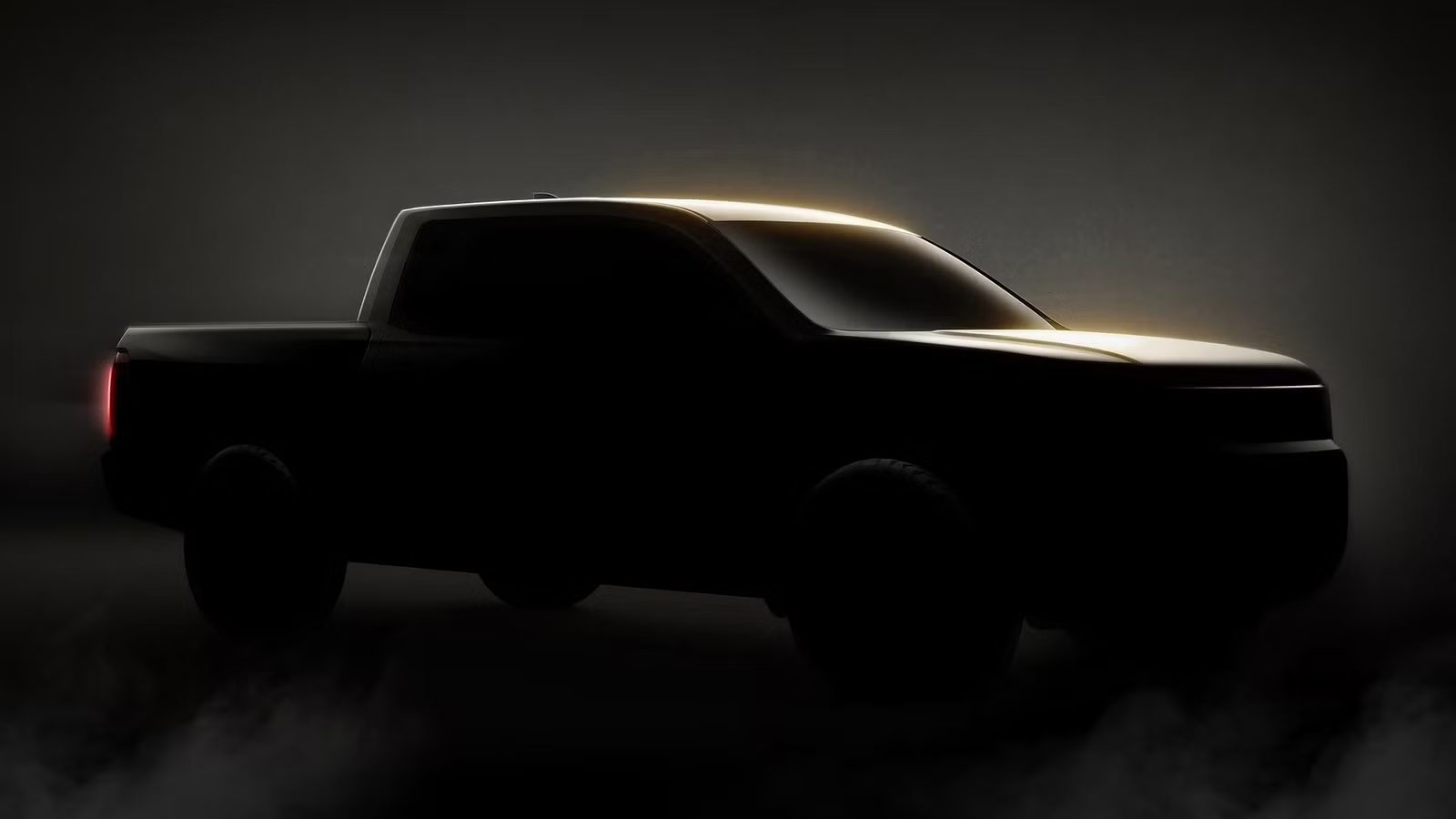
The Honda Ridgeline sold nearly 50,000 units in the US last year, a respectable result in the competitive midsize pickup segment. The compact truck segment, however, faces far less competition and seems tailor-made for Honda’s expertise with unibody vehicles. At the moment, theFord Maverickalone accounts for most of the sales in the segment, leaving room for another contender. Recent trademark activity suggests Honda may be exploring exactly that, potentially paving the way for a compact pickup of its own.
Could The Ridgeline Get A Smaller Sibling?
2025 Honda Ridgeline Trailsport front 3/4 angle in blue while drivingHonda
Honda has filed a trademark application for the Tideline name with Australia’s intellectual property office. The application was submitted on July 29 and covers use on automobiles. At present, no corresponding filing appears to have been made with the United States Patent and Trademark Office or similar agencies in other major markets.
Of course, a trademark filing is no guarantee of a production vehicle. Automakers routinely register names simply to prevent rivals from using them. Still, Tideline is unusually specific, and its similarity to the Ridgeline name suggests there may be more to it. At the very least, Honda could be considering a second pickup, or perhaps a concept vehicle that previews a potential design direction. The name also evokes images of the coast, hinting at a lifestyle-focused design aimed at surfers and other active buyers.
2024 Honda Ridgeline rear 3/4 angle in blue while driving through waterHonda
The timing is also notable. In July, Honda released a teaser image of a third-generation Ridgeline due later this decade. Production of the current Ridgeline is scheduled to end in December, and the teaser points to a boxier, more conventional truck design for its successor. That should help attract more traditional pickup buyers while potentially creating room in the lineup for a smaller, lifestyle-oriented sibling.
Ford Already Wrote The Playbook
Dynamic shot of the 2026 Ford MaverickFord
Ford has already demonstrated that there’s plenty of demand for compact pickups. The Maverick tallied roughly 155,000 US sales last year, making it one of Ford’s standout success stories. The only other player in the segment is the Hyundai Santa Cruz, which managed about 25,500 sales over the same period. Reports have even suggested the Santa Cruz could leave production earlier than originally planned due to its relatively low demand.
If Honda does decide to enter the compact pickup segment, it would do well to study what Ford got right with the Maverick. The truck combines styling that appeals to traditional pickup buyers with road manners familiar to crossover owners. Ford also made practicality a priority, offering a hybrid option and useful features such as bed tie-down points, pre-threaded mounting holes for accessories, lockable side storage compartments, and an available 110-volt outlet delivering 400 watts for worksites and campsites alike.
2026 Honda CR-V TrailSport Hybrid driving front 3/4 angle in greenHonda
The CR-V compact SUV could provide an ideal foundation for a Honda compact pickup, much as the Ridgeline shares its underpinnings with the Pilot. Honda already has a suitable hybrid power plant in the CR-V, pairing a 2.0-liter four-cylinder with the company’s two-motor hybrid system. The setup generates 204 horsepower and 247 pound-feet of torque, giving it a healthy advantage in output over the Maverick’s hybrid powertrain while also delivering the efficiency buyers in this segment expect.
CarBuzz Insight – Why This Matters
Honda’s failed EV strategy, combined with ongoing complications from US tariffs, contributed to the automaker postingits first-ever lossearlier this year. Honda now appears to be taking a more measured approach, sticking with internal-combustion engines while expanding its range of new hybrid models. That makes a compact, electrified pickup an especially compelling idea.
A CR-V-based truck with hybrid power could capitalize on one of the market’s few underserved segments without the costs and risks associated with a full EV. With the Ford Maverick still facing limited competition, such a vehicle could provide Honda with a timely new growth opportunity.
Sources: IP Australia
