

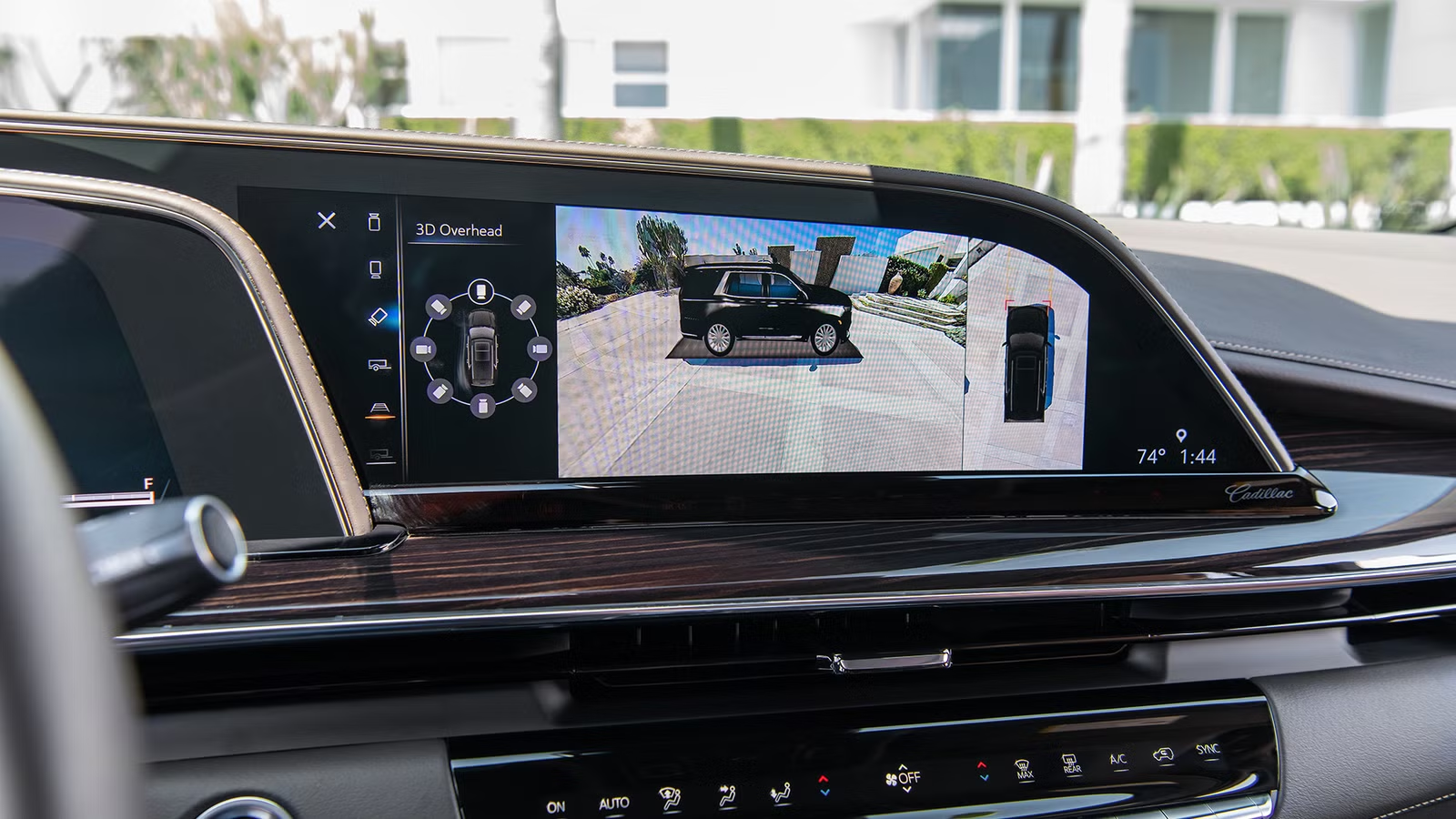
Engineers at GM have come up with a new idea for improving what a vehicle can see around it. Picture the top-down view that a 360-degree surround camera can generate, but then combine the images from the cameras on your vehicle with the cameras on the vehicles around you. That’s a bigger, more detailed look, and it could be important for tech like self-driving cars.
Teamwork Could Make The Autonomous Dream Work
Chevrolet Super Cruise modeChevrolet
A recently published GM patent describes what the automaker calls a “collaborative perception system,” and it uses it to create a “cooperative perception map.” Those descriptions summarize it well, because it relies heavily on inter-vehicle collaboration.
Autonomous vehicles rely on huge amounts of data to know their location, where they are going, and what is around them. Naturally, they have sensors to help do that, including LiDar and radar, as well as ultrasonic sensors and cameras with machine vision. They also have maps and previous laser scans of areas.
But even with all of those combined, an autonomous vehicle can’t see everything. It has blind spots for objects that are hidden, like behind other cars, as well as for objects that might not look to a computer like they are about to move, but a human can identify.
Related
Cruise Robotaxis Are Back – But You Can’t Hitch A Ride In One
GM has charged up its Cruise Bolt AVs to test out its newest self-driving car tech.
One way to solve that problem is to have every vehicle in a location working together to make a new map. Your car can’t see beside that parked car at the curb, but if its cameras could “show” your car the hidden side, your car would be safer and more effective.
Data Sharing Is Both Impressive And Terrifying
Volvo’s Pilot Assist driving suite comprises a multitude of collision avoidance systems, including adaptive cruise control with following distance assist.Volvo
Sharing that data, though, is hard. GM’s patent describes a long list of problems like bad connections, jamming, interference, and even just the differences in perception between the cameras and sensors of two brands or models.
Vehicle-to-vehicle connections are unreliable, but using a connection to cell towers or even satellites is more reliable and more secure. So this new idea relies on cloud computing, and all the vehicles sending their signals to one or more central networks.
Instead of the car trying to figure out what’s missing or recalibrate data from another car, it’s all done by central computers. Enough cars send their data to a central computer, and now you have a near-real-time bird’s-eye view of the area where you’re driving. For automakers or whichever company hosts the data, they’ll have a real-time view of most of the world. And they’ll also have all kinds of data on what car is where, whose car is where, you get the idea.
The patent dives into how the networking, connections, and the data would be managed. It covers multiple methods for handling those complex challenges, but that part is exceptionally dull.
Related
GM May Have Found A Way For Self-Driving Cars To Predict The Future
The new patent is ingenious, and could make cars safer and smarter than ever.
Your vehicle wouldn’t store or receive the whole world’s map, though. Instead, GM describes it as limited to a 50-75 meter range around the vehicle. That’s enough to give it a massive world view without overwhelming the data stream of the vehicle or its memory and processing abilities.
We’d love that expanded view for vehicles we actually drive. Imagine finding a parking space from the edge of a crowded lot, or even before turning in! But as this patent stands, the tech is aimed at self-driving cars, presumably one where a driver isn’t already sitting behind the wheel. The self-driving arena seems to get all the big tech and the big research dollars when it comes to patent development these days.
Patent filings do not guarantee the use of such technology in future vehicles and are often used exclusively as a means of protecting intellectual property. Such a filing cannot be construed as confirmation of production intent.
Source: US Patent & Trademark Office
