

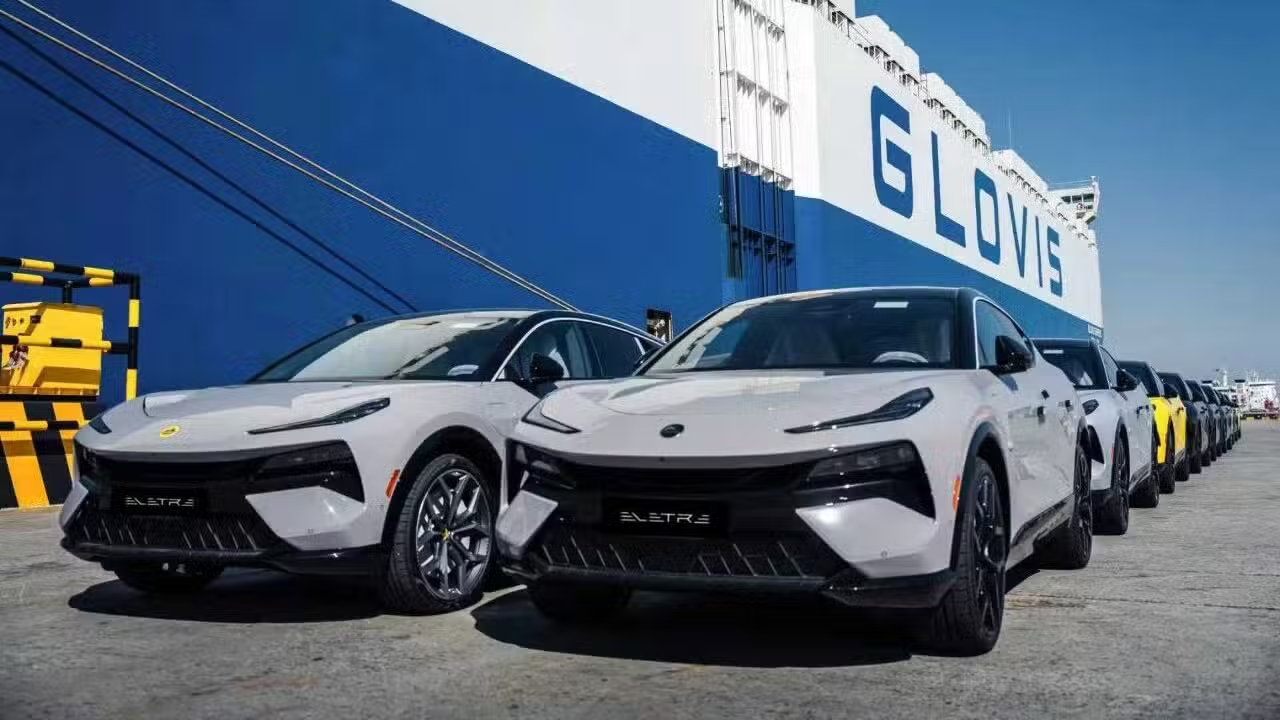
Lotus announced on May 7 that the first batch of 18 Eletre vehicles had been loaded onto a ship bound for Canada. Credit: Lotus
- Lotus EVs will arrive in Canada next month, with a ceremony planned when the cars are delivered in Montreal.
- They will be the first China-made vehicles under the 49,000-unit annual quota deal between Canada and China.
Electric vehicles (EVs) from Geely Holding Group’s Lotus brand will arrive in Canada next month, China’s ambassador to Canada Wang Di told Reuters on Friday.
The vehicles will be the first Chinese-owned and manufactured cars sold in Canada under the EV-for-canola tariff deal struck between Canada and China, Reuters noted in a report on Saturday.
Under the agreement, Canada will allow up to 49,000 Chinese EVs to enter its market each year at a most-favored-nation tariff rate of 6.1%.
“Geely EVs will be arriving in Canada next month and they will be holding a ceremony when the cars are delivered in Montreal,” Wang said.
Lotus said on May 7 that the first 18 Eletre vehicles had been loaded onto a ship and set sail for Canada. The company called itself the first premium EV brand to complete certification and ship fully assembled vehicles after Canada lowered tariffs on Chinese cars.
As of the first quarter of 2026, Lotus had established six authorized dealership outlets in Canada. The company plans to expand that to 12 within the year.
In the Reuters interview, Wang said other Chinese brands such as Chery (HKEX: 9973) and BYD (HKEX: 1211) were coordinating with Canadian government agencies to complete the necessary steps before shipping.
Canadian officials had previously said that some vehicles arrived earlier so the companies could conduct testing in Canada, the Reuters report noted.
“I hope in autumn this year, the truly, genuinely other Chinese brand EVs will complete the procedures and get into the Canadian market,” Wang said through an interpreter.
BYD executive vice president Stella Li recently told Reuters the company would likely start sales next year.
US-based Tesla has already imported China-made vehicles into Canada, the report noted.
Canada also hopes to attract joint ventures and investment into its domestic EV supply chain. Wang said Chinese EV makers were interested in setting up joint ventures, but would first focus on building sales and gauging market demand.
Canada is weighing how to allocate a low-tariff quota for 49,000 China-made EVs to prevent a single automaker from dominating the market.
