

EVs like the Tesla Model 3 aren’t any more likely than gasoline-powered cars to catch fire – in fact, it’s gassers that are more prone to flare-ups – but handling an electric battery that’s undergoing thermal runaway is a lot tricker than simply emptying a chemical fire extinguisher under the area. In fact, EV fires involve so many dangerous fumes and chemicals that one firefighter says you shouldn’t do anything except call 9-1-1 and get far away immediately.
Counter-Intuitive Advice
That advice comes from the YouTuber and fire safety expert Patrick Durham, better known by his handle StacheD Training. His profession as a consultant and safety advocate often leads him to some pretty sketchy situations, where he helps people learn how to reduce fire risks and handle flare-ups safely. But one thing he says a novice shouldn’t touch is an electric car suffering from a thermal runaway event. He describes the problem, using a recent fire in an auto shop as a prime example.
2011 smart fortwo Electric Drive Front Angle ViewDaimler AG
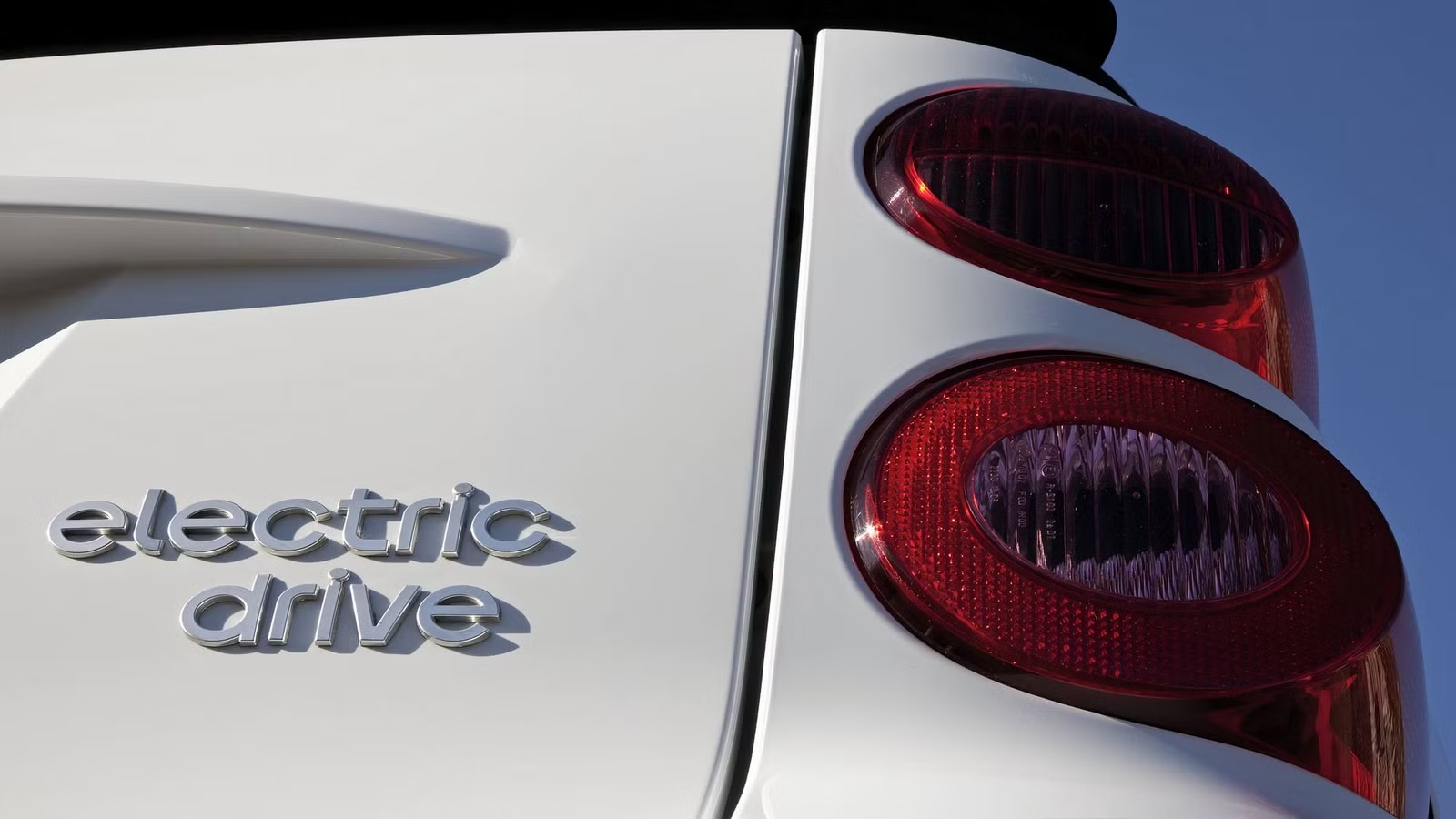
The car in question is a Smart ForTwo Electric Drive, a supermini EV with a comparatively tiny 16.5-kilowatt-hour lithium-ion battery. But despite its compact energy unit, there are still hundreds of pounds of chemicals and metals in there that contain lots of burning potential. When a fire breaks out under the car, one shop employee runs for a fire extinguisher, but as he begins to empty the dry foam and CO2 at the battery, the flames somehow get even worse. After a few moments, the fire tamps down, but it comes back just as eagerly again and again.
What Causes An EV Fire?
EV batteries are manufactured with a robust exoskeleton to keep the chemicals and metals inside from becoming damaged, and through the normal course of use, those batteries need to expand and contract a bit, with vents on the outside allowing gases to escape. In the event of a severe accident, however, the pro firefighter explains that if the battery chassis is compromised and some of those cells are damaged, the chemicals inside can start reacting with one another without any kind of regulation, heating up in a phenomenon known as thermal runaway.
Toyota Prius Hybrid battery packToyota UK
Once you see those first licks of flame coming from under your car, you might be tempted to do as the shop tech did and grab a fire extinguisher, but remember those vents that help batteries stay healthy in normal circumstances? In a fire, they work overtime to try to ditch excess heat, and spraying anything across them literally fans the flames higher, as can be seen in the video. Worse still for everyone in the vicinity, it also circulates dangerous smoke and chemical gas around.
Tesla Cybertruck IIHS crash testYouTube/IIHS
What Should You Do In An EV Fire?
Durham sums up the best advice for an EV fire very succinctly: “If It’s in thermal runaway, you run away.” The expert says that due to the sheer volume of combustible materials inside a battery, even one as small as the Smart Electric Drive in question, it’s all but impossible to tamp down the flames without them coming back again and again, especially as those uncontrolled chemical reactions continue deep inside the cells where no fire extinguisher could reach them.
Durham says to call the fire department immediately and let those with appropriate experience and training handle the blaze. Although the pros will have to contend with the same hidden chemicals, they also have the protective equipment needed to prevent inhaling those fumes, allowing them to stabilize the rest of the shop and prevent the fire from spreading while they work.
Related
China Wants To Make EV Battery Fires A Thing Of The Past
Like leaded gasoline or carburetors.
CarBuzz Insight – Why This Matters:
Thermal runaway is a rare event in an EV, but it’s still important to know how such a chemical-driven fire might be different from the average combustibles you might encounter in the garage or under the hood. While a fire extinguisher can be a literal lifesaver in an internal combustion car, it’s largely ineffective (and potentially dangerous) when used on an EV battery fire. Again, just don’t try it. Call the fire department immediately and get to safety.
Source: StacheD Training on YouTube
