

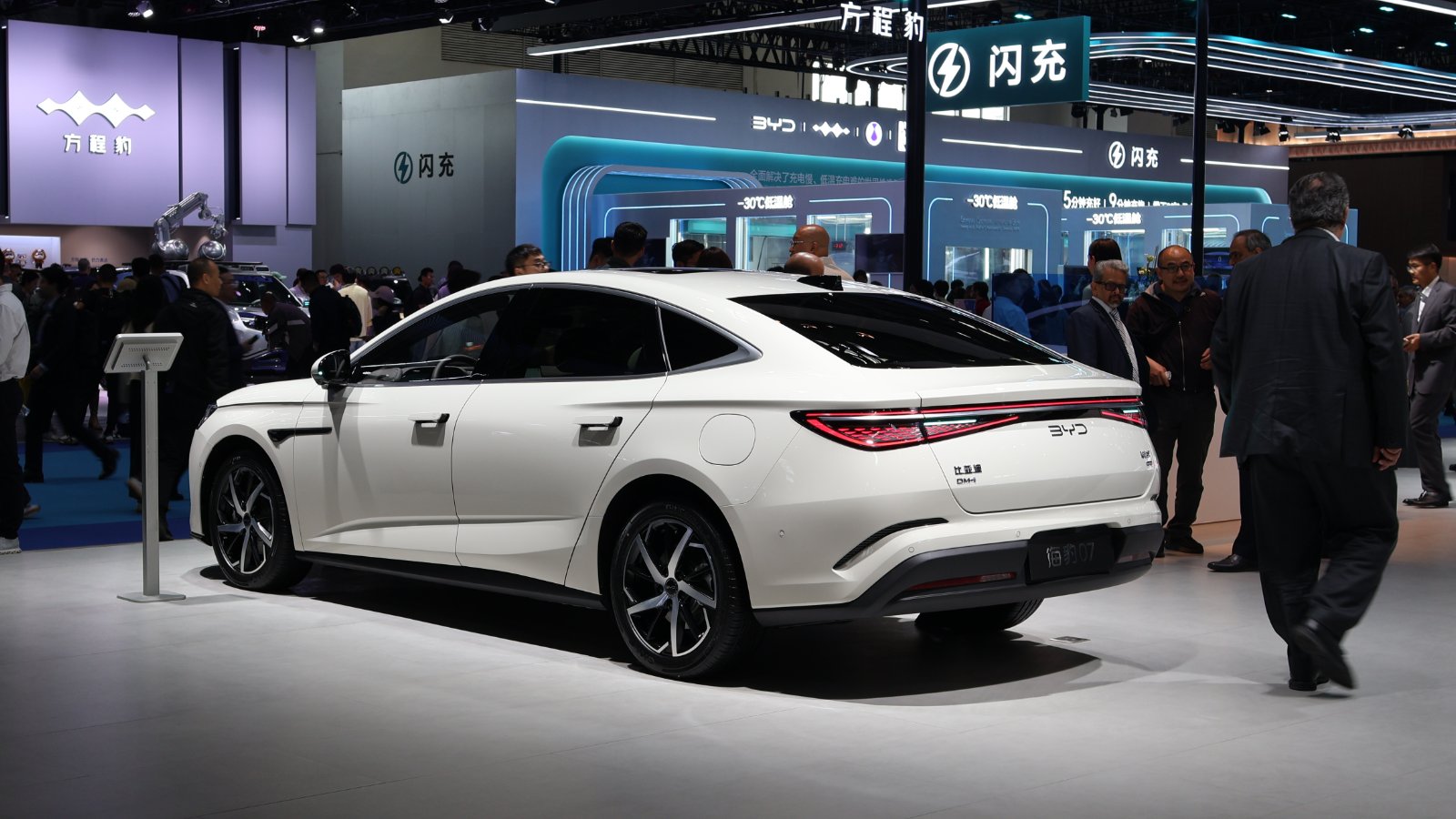
A BYD Seal 07 DM-i plug-in hybrid sedan on display at the Beijing Auto Show in April 2026. Credit: CnEVPost
- The EU is seeking a negotiated deal to limit imports of China-made hybrids and may raise tariffs if no agreement is reached.
- EU imports of hybrid vehicles from China rose from 3,800 in October 2024 to 50,000 in July 2026.
The European Union is asking China to voluntarily limit hybrid vehicle exports to its market or face potentially higher tariffs, the Financial Times reported on Thursday.
The request highlights how the EU is broadening its trade pressure to hybrids after imposing additional tariffs on China-made battery electric vehicles (BEVs), as Europe’s auto industry faces layoffs.
The EU hopes China will ease trade friction by voluntarily curbing exports. An EU official said the bloc would act if China did not restrict shipments, with the aim of “stopping deindustrialisation,” according to the report.
Rapid growth in hybrid imports is a key factor driving the EU to consider further action. Pressure on the bloc to act is intense after imports of Chinese hybrids hit a high in the second quarter, the report said, citing a person familiar with the matter.
EU imports of hybrids from China rose from 3,800 in October 2024 to 50,000 in July 2026, while average prices fell, the Financial Times noted.
The EU imposed anti-subsidy duties on China-made BEVs in October 2024. Those vehicles face tariffs of up to about 45%, while hybrids are subject to a 10% tariff.
Since then, Chinese BEV shipments to the EU have grown modestly, while hybrid imports have surged, making them a new focus of the auto trade dispute.
Several reports this year have suggested the EU was considering additional tariffs on Chinese hybrids, though no such measures have materialized.
Autos are part of a broader EU effort to rebalance trade with China. The bloc is also asking Beijing to exercise restraint in exports of products including chemicals and to buy more European goods, the Financial Times report said.
In June, the EU called for “tangible results” in reducing its trade deficit with China by October. The 2 sides have been discussing market access through the EU-China Trade and Investment Consultations (TIC) forum.
European Commission president Ursula von der Leyen said on Wednesday that the EU’s trade deficit with China, at about €1 billion a day, had reached a tipping point. The bloc would use the tools at its disposal to rebalance the relationship, she said.
EU trade commissioner Maroš Šefčovič was scheduled to speak with Chinese Commerce Minister Wang Wentao on Thursday and is expected to visit Beijing in the second week of October, the report said.
The EU hopes voluntary export restraints could encourage Chinese automakers to invest more in Europe or partner with local manufacturers, echoing earlier moves by Japanese carmakers, the Financial Times reported, citing people familiar with the matter.
Germany and France are also moving toward a consensus on tougher action against China, the report said. The European Commission, meanwhile, hopes to negotiate an agreement on export restraints.
The potential restrictions come as overseas markets provide crucial support for growth in China’s auto industry.
China exported 1.01 million vehicles in August, up 65.3% from a year earlier, according to the China Association of Automobile Manufacturers (CAAM).
New energy vehicle (NEV) exports totaled 526,000, up about 130% year-on-year and accounting for roughly 52.1% of total vehicle exports that month, according to data compiled by CnEVPost.
Those figures cover China’s worldwide exports, rather than shipments to the EU alone. Domestic NEV sales fell 4.6% year-on-year over the same period, underscoring the importance of overseas demand to the industry’s growth.
The new guidelines call on automakers to avoid frequent, steep overseas price changes and respect local dealers’ pricing autonomy.
