

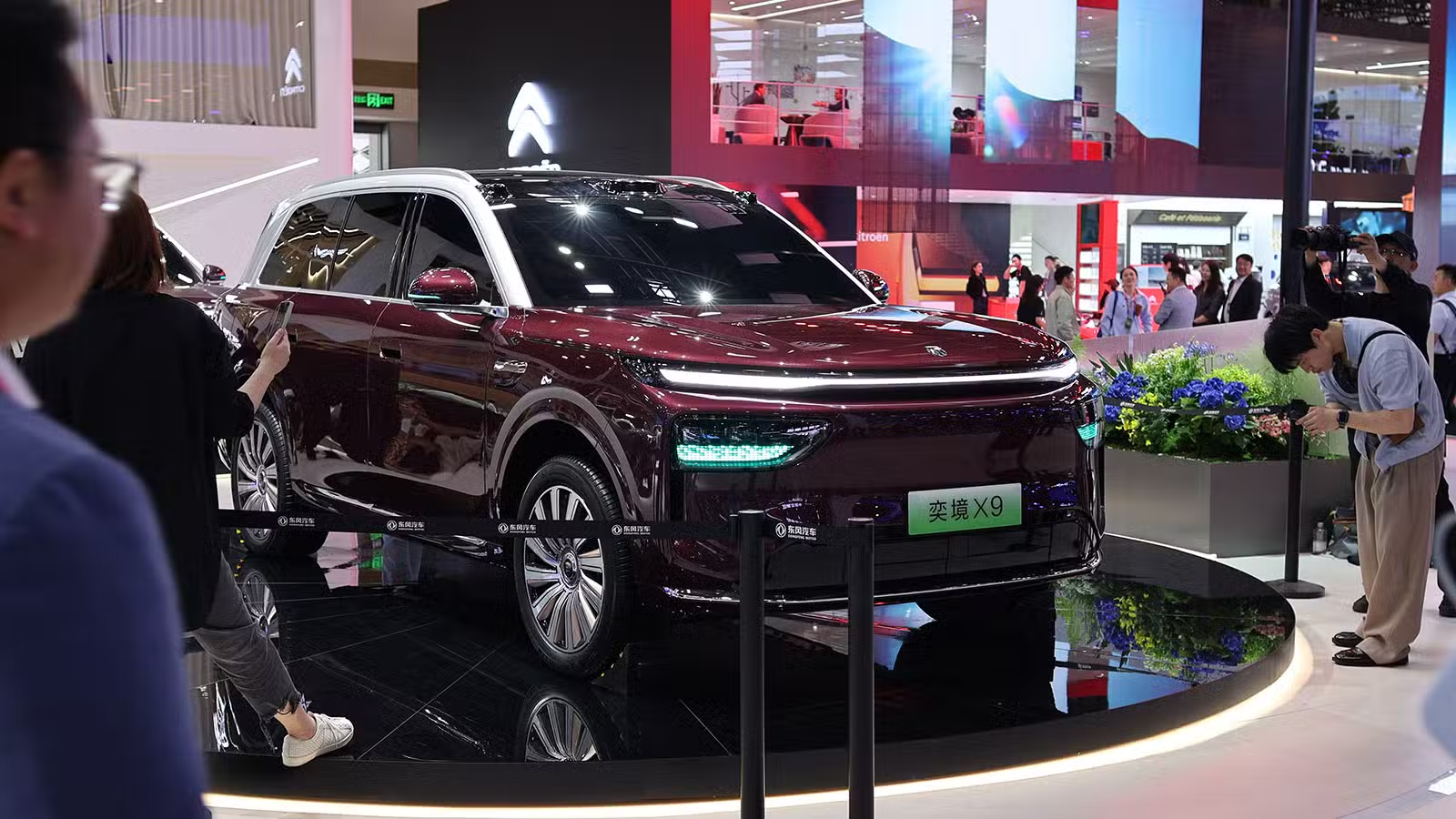
A Dongfeng Epicland X9 full-size SUV on display at the Beijing Auto Show in April 2026. Credit: CnEVPost
- CPCA secretary general said China’s current tax system places no constraints on NEV weight or power, failing to curb the trend toward larger vehicles and excessive power.
- Cui said the current trend of NEVs growing larger is “extremely bad” and leads to a waste of resources.
Cui Dongshu, the secretary general of the China Passenger Car Association (CPCA), called for China to use tax and energy-consumption management measures to curb the growing trend of new energy vehicles (NEVs) getting larger.
The current trend of NEVs growing larger is “extremely bad” and results in a waste of resources, while the existing fiscal and tax system lacks effective constraints on it, Cui said at a monthly automotive data analysis briefing on Wednesday.
In the past, combustion-engine automakers were cautious about developing large SUVs (sport utility vehicles), mainly because they were constrained by displacement-based taxes — models with a displacement above 2.5 liters are subject to a 25% levy, Cui said, according to a report by Yicai.
By contrast, current NEVs face the same tax standards regardless of their body weight or power performance. This fails to curb the tendency toward larger vehicles and excessive power, he said.
Cui suggested that China should establish a standard system for economy vehicles to encourage car purchases by ordinary people, while using tax and energy-consumption management measures to guide and constrain vehicle bloating.
This is not the first time Cui has called for reform of China’s automotive tax system. Earlier last month, he proposed setting up a statutory road-usage tax based on mileage and vehicle weight to address the structural imbalance caused by declining fuel tax revenue.
Because they are fitted with power batteries, NEVs generally weigh more than combustion-engine vehicles of the same class, which leads to greater actual wear and tear on roads, Cui wrote at the time.
Cui’s latest remarks come as China’s auto industry faces an increasingly severe case of vehicle “obesity.”
State broadcaster CCTV reported last month that the average curb weight of new passenger cars in China had risen to 1,704 kilograms in 2024, an increase of nearly 400 kilograms from 2012.
To stand out in fierce market competition, many automakers have made driving ranges of 800 kilometers or even 1,000 kilometers a core selling point. This means vehicles must be equipped with enormous power battery packs weighing seven to eight hundred kilograms, CCTV cited an industry expert as saying.
Automaker executives have also taken note of the trend. William Li, founder and CEO of Nio Inc (NYSE: NIO), said last month that reducing the weight of NEVs is a systematic undertaking that requires tremendous courage.
When vehicle development enters its final sprint, the cost of shaving off each kilogram of weight is about 1,000 yuan ($147), Li said.
Cui’s call comes as NEVs accelerate their adoption in the Chinese market. Data released by the CPCA on Wednesday showed that China’s NEV retail penetration rate came in at 62.8% in June, up 9.5 percentage points year on year and remaining near a historic high.
Making EV models lighter requires courage, Nio founder William Li said.
($1 = 6.8006 yuan)
