

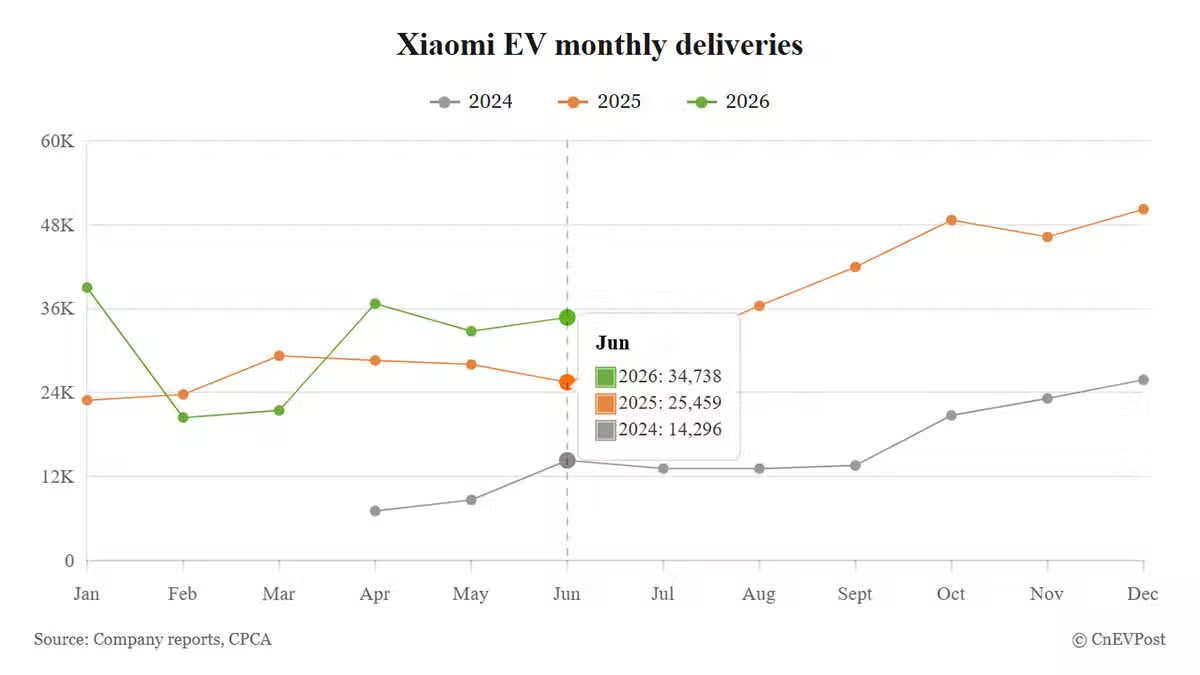
Xiaomi EV Monthly Deliveries 2024-2026
Month
2024
2025
2026
January
22,897
39,002
February
23,728
20,414
March
29,244
21,440
April
7,058
28,585
36,702
May
8,630
28,013
32,759
June
14,296
25,459
34,738
July
13,120
30,452
August
13,111
36,396
September
13,559
41,948
October
20,726
48,654
November
23,156
46,249
December
25,815
50,212
Xiaomi EV monthly deliveries
2024
2025
2026
- Xiaomi EV’s June deliveries rose 36.45% year-on-year and 6.04% from the previous month, marking the third consecutive month above the 30,000-unit mark.
- Deliveries of the YU7 SUV jumped 63.97% from the previous month, ending five straight months of sequential decline.
Xiaomi’s (HKEX: 1810) electric vehicle (EV) unit Xiaomi EV delivered 34,738 vehicles in June, up 36.45% from the same period last year, according to data released by the China Passenger Car Association (CPCA) on Wednesday.
The monthly delivery figure rose 6.04% from May, marking the third consecutive month that Xiaomi EV has topped 30,000 units.
Xiaomi had previously offered a rough disclosure on July 1 that its June deliveries continued to exceed 30,000 units, and the CPCA report provided the specific figures and model breakdown.
In the first half of this year, Xiaomi EV delivered a cumulative 185,055 vehicles, up 17.18% from the same period last year, according to data compiled by CnEVPost.
Performance diverged notably at the model level.
The YU7 SUV (sport utility vehicle) delivered 14,324 units in June, a sharp increase of 63.97% from May. This rebound ended five consecutive months of sequential decline for the model.
The YU7’s recovery may have benefited from Xiaomi’s product expansion in late May. The company launched a new base version of the YU7 on May 21, starting at 233,500 yuan ($34,340), significantly lowering the barrier to entry.
On the same day, Xiaomi also rolled out the high-performance YU7 GT, starting at 389,900 yuan.
The all-electric SUV, powered by a 990 hp dual-motor system, clocked a lap time of 7 minutes 22.755 seconds at Germany’s Nürburgring Nordschleife, becoming the fastest production SUV on the track.
In the first half of this year, the YU7 delivered a cumulative 104,559 units, currently serving as the pillar of Xiaomi’s sales.
Xiaomi YU7 Monthly Deliveries 2025-2026
Month
2025
2026
January
37,869
February
20,196
March
13,558
April
9,876
May
8,736
June
2,234
14,324
July
6,042
August
16,548
September
22,369
October
33,662
November
33,729
December
39,089
Xiaomi YU7 monthly deliveries
2025
2026
By contrast, the pressure on the SU7 sedan continued. The model delivered 20,414 units in June, down 12.10% year-on-year, marking the ninth consecutive month of year-on-year decline. Its deliveries also fell 15.02% from May.
Xiaomi SU7 Monthly Deliveries 2024-2026
Month
2024
2025
2026
January
22,897
1,133
February
23,728
218
March
29,244
7,882
April
7,058
28,585
26,826
May
8,630
28,013
24,023
June
14,296
23,225
20,414
July
13,120
24,410
August
13,111
19,848
September
13,559
19,579
October
20,726
14,992
November
23,156
12,520
December
25,815
11,123
Xiaomi SU7 monthly deliveries
2024
2025
2026
In the first six months of this year, the SU7 delivered a cumulative 80,496 units, down sharply by 48.30% from the same period last year, underscoring the significant pressure the model has faced during its product transition.
Strong delivery performance is critical to Xiaomi’s auto business. The company’s innovation segment posted an operating loss of 3.1 billion yuan in the first quarter.
Xiaomi has set a full-year delivery target of 550,000 units for 2026, up about 34% from roughly 410,000 vehicles in 2025.
Based on the first-half pace of 185,055 units, Xiaomi has completed only about 34% of its annual target. To achieve the goal, its average monthly deliveries in the second half would need to reach around 60,000 units, far above current levels.
New products may provide a boost. Xiaomi EV officially announced the new name “Sky Nomad” on Wednesday, calling it “a new name about space and living,” but has yet to clarify whether it is a standalone brand or a new product lineup.
Earlier reports said the name would be used for Xiaomi’s first extended-range SUV. This full-size extended-range electric vehicle (EREV) is scheduled to go on sale in the second half of 2026 and will compete head-on with Li Auto (NASDAQ: LI) and Huawei-backed Aito.
A list of access changes released by China’s Ministry of Industry and Information Technology (MIIT) on June 10 showed that Xiaomi EV has been approved to produce extended-range electric passenger vehicles at its Beijing plant.
Leapmotor, Nio and Xpeng each set their highest monthly delivery record so far this year in June.
($1 = 6.8006 yuan)
