

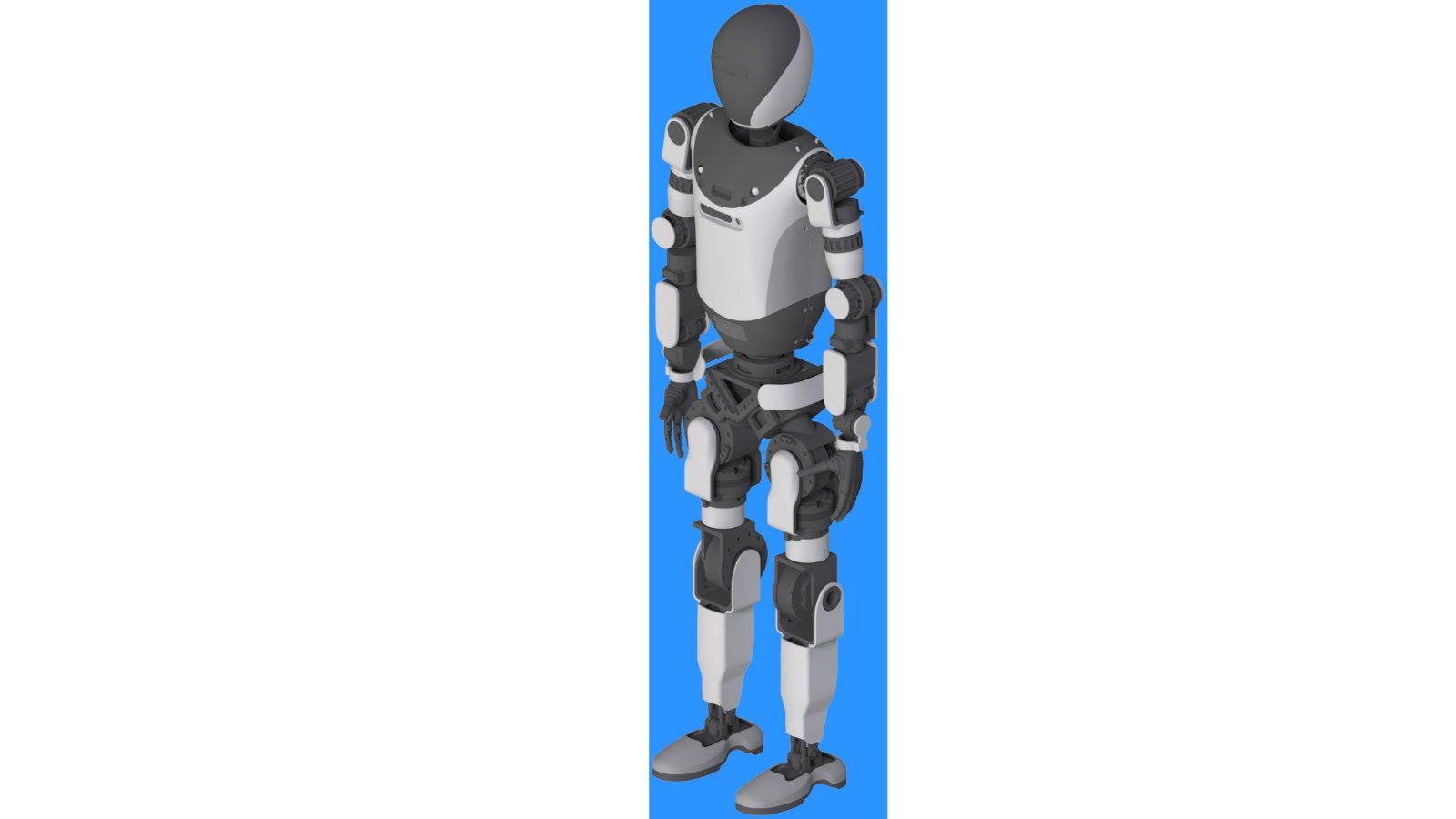
- Patent images show a bipedal humanoid robot designed for service, education and industrial applications.
- BYD previously confirmed plans to unveil a humanoid robot in August, but has yet to formally introduce the product.
A design patent held by BYD (HKEX: 1211) has revealed the appearance of its humanoid robot, offering fresh clues to the Chinese automaker’s robotics ambitions.
China’s National Intellectual Property Administration published the design patent for an embodied intelligent robot on Friday, naming BYD as the patent holder.
The patent images show a robot with 2 arms, 2 legs and articulated fingers. It has an oval-shaped head with a dark face, while light-colored panels cover parts of its torso and limbs.
The images also show joints at the shoulders, elbows, hips and knees, with some mechanical structures exposed around the waist and legs. The upright design has roughly human proportions.
The design is intended for an intelligent robot capable of walking, balancing and interacting, with potential applications in service, education and industrial settings, according to the patent description.
The patent covers the robot’s appearance and does not establish its performance, progress toward mass production or whether the eventual product will adopt the same design.
BYD had previously outlined an earlier debut. On July 28, the company confirmed to the China Securities Journal that it planned to unveil a humanoid robot in August at Di Space, its science and technology exhibition and experience venue.
As of October 9, however, BYD has yet to formally unveil the product. The patent publication provides new public information about its robotics project but does not constitute a product debut.
BYD executive vice president Stella Li said in June that she hoped to eventually deploy 2 to 3 robots at every BYD dealership to introduce and demonstrate vehicles to customers.
She sees humanoid robots for homes and the service sector as a huge market for BYD, though robots cannot replace the emotional connection between human sales staff and customers.
Li also previously said that if robots eventually enter households, BYD could sell them through its existing car dealership network, extending its automotive sales channels into a new business.
She believes the core strengths in robotics lie in manufacturing capabilities, software and hardware, while automotive AI (artificial intelligence) capabilities share common technological foundations with robotics.
BYD also plans to build an open robotics platform that accommodates both its own robots and products developed in collaboration with other companies, Li previously said.
Several Chinese suppliers have already secured Optimus orders and will start production soon after passing the audits.
