

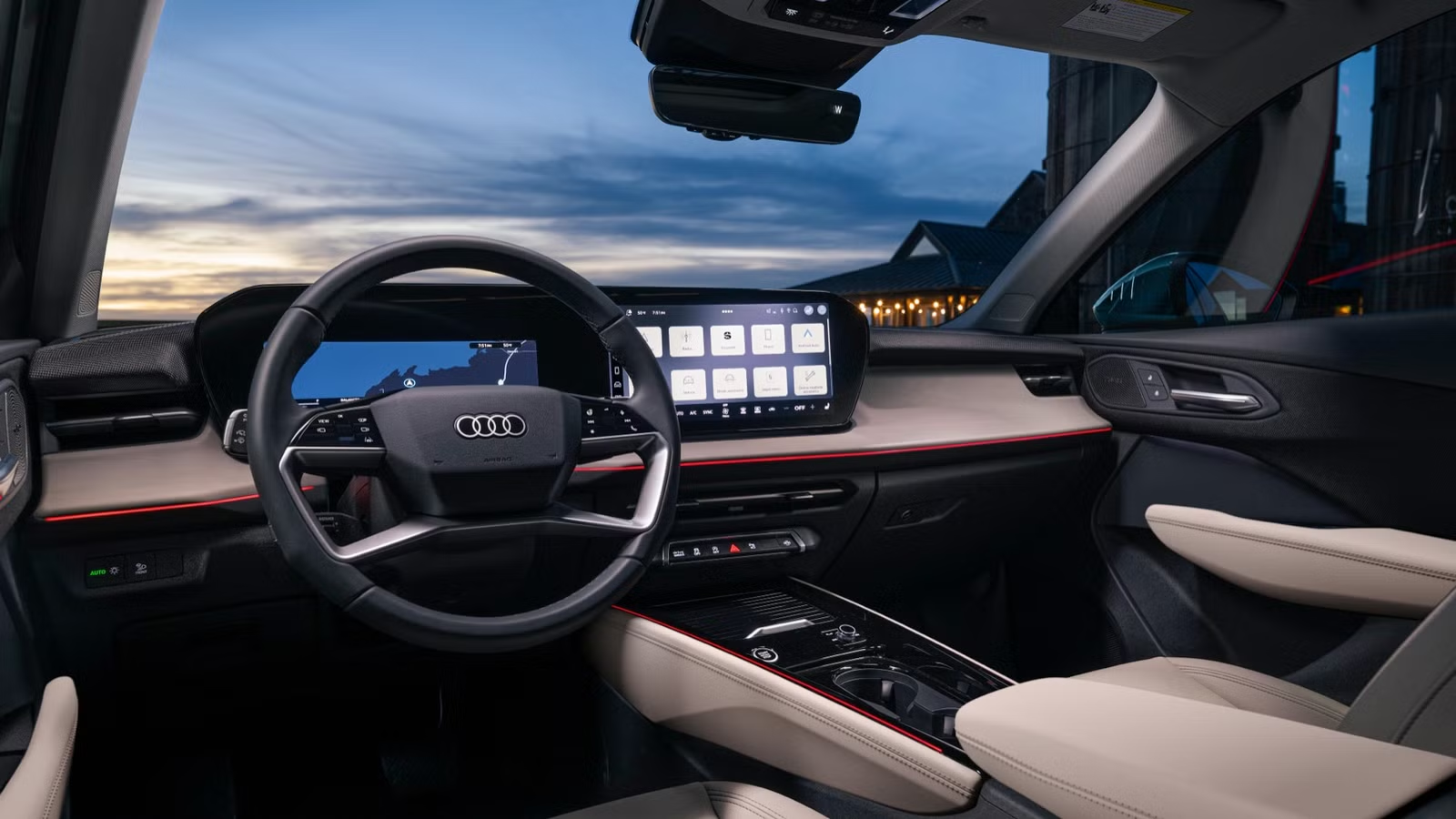
Audi has quietly been making some smart, forward-looking decisions. The latest, according to GoAuto in Australia, relates to the interior. In a world where digital screens dominate – and arguably make all car interiors look the same – Audi might do something a bit more original. And by that, we mean incorporate some more character into the greenhouse with less screen and more style.
The report claims Audi is abandoning the screen-heavy, wrap-around ‘Digital Stage’ design direction that was introduced in 2023. The new direction will be tactile controls, more subtle screens, and “higher perceived quality.” That last one has an interesting modifier in the middle, but speaking with GoAuto, chief technical officer Rouven Mohr said the brand is now working to restore qualities historically associated with Audi interiors. But what exactly does that mean?
Enter ‘Radical Next’ Design
Audi Nuvolari driver’s seat viewAudi
“In the future, [Audi will] integrate the Radical Next interior design…we want to be very subtle on the display size and haptic elements,” Mohr went on to say. Indeed, Audi’s haptic response on its screens can feel clunky in a world of touchscreens that require only a light touch to make something happen immediately.
Mohr also talks about putting attention to detail into real materials. For example, if something looks like it’s metal, it should be metal. “Buttons and wheels,” he says, should have “the classical Audi click and touch and feel.” And all this is a massive admission from Audi about what the majority of the industry has been doing – moving as many of the physical controls onto screens as possible while cheapening out on materials to increase margins.
Related
The Distracted Driving Epidemic Is Getting Worse. Here’s Proof Touchscreens Are To Blame
Driver studies from Sweden, spanning four years, find drivers spend too much time looking at screens rather than the road ahead.
Lessons Learned From Touch-Weary Customers
2025 Audi A6 Allroad main touchscreen with the lower console screenAudi
In a recent press release, Audi says its 2027 lineup has advancements in digital ecosystems to deliver more intuitive interfaces and enhanced connectivity. The promise is a more cohesive user experience, expanded driver assistance functionality, and simplified packaging. However, a new Vorsprung package available “at the top of the lineup” adds a 10.9-inch front passenger screen to the interior, so there may be a delay before Audi becomes “very subtle on the display size.”
Audi’s Digital Stage design language has only been around for four years, which means Audi is cutting its lifespan short. It’s a big admission for a major brand that it got things wrong by embracing screens so overtly over tactile controls. However, it is worth remembering the context of the big shift – the tech industry had shifted its hype-trained gaze to the automotive industry and convinced the mainstream that its computer-controlled, all-electric cars would be driving us everywhere by now.
Related
Hyundai Is Fixing Everyone’s Biggest Problem With Car Interiors
Other automakers see screens as a way to streamline the interior, making it look sleeker while offering more amenities. Hyundai thinks otherwise.
CarBuzz Insight – Why This Matters:
2026 Mercedes-Benz CLA-Class fully-funtional dashboard with all three display screensMercedes-Benz
As GoAuto points out, the cost-cutting across the industry has largely come from massive investments in electrified powertrains and vehicle autonomy over the past decade or so. Those investments aren’t necessarily paying off yet, and some will likely never truly pay off. In truth, a lot of manufacturers know that funneling as many physical controls into as big touchscreens as it can sell and cutting back on interior material quality isn’t going down well.
However, with long lead times on vehicles, automakers can’t switch interior designs quickly, so we’re going to continue to see brands try and spin big screens and a lack of physical controls as convenient, luxurious, or futuristic for a while now.
Source: GoAuto
