

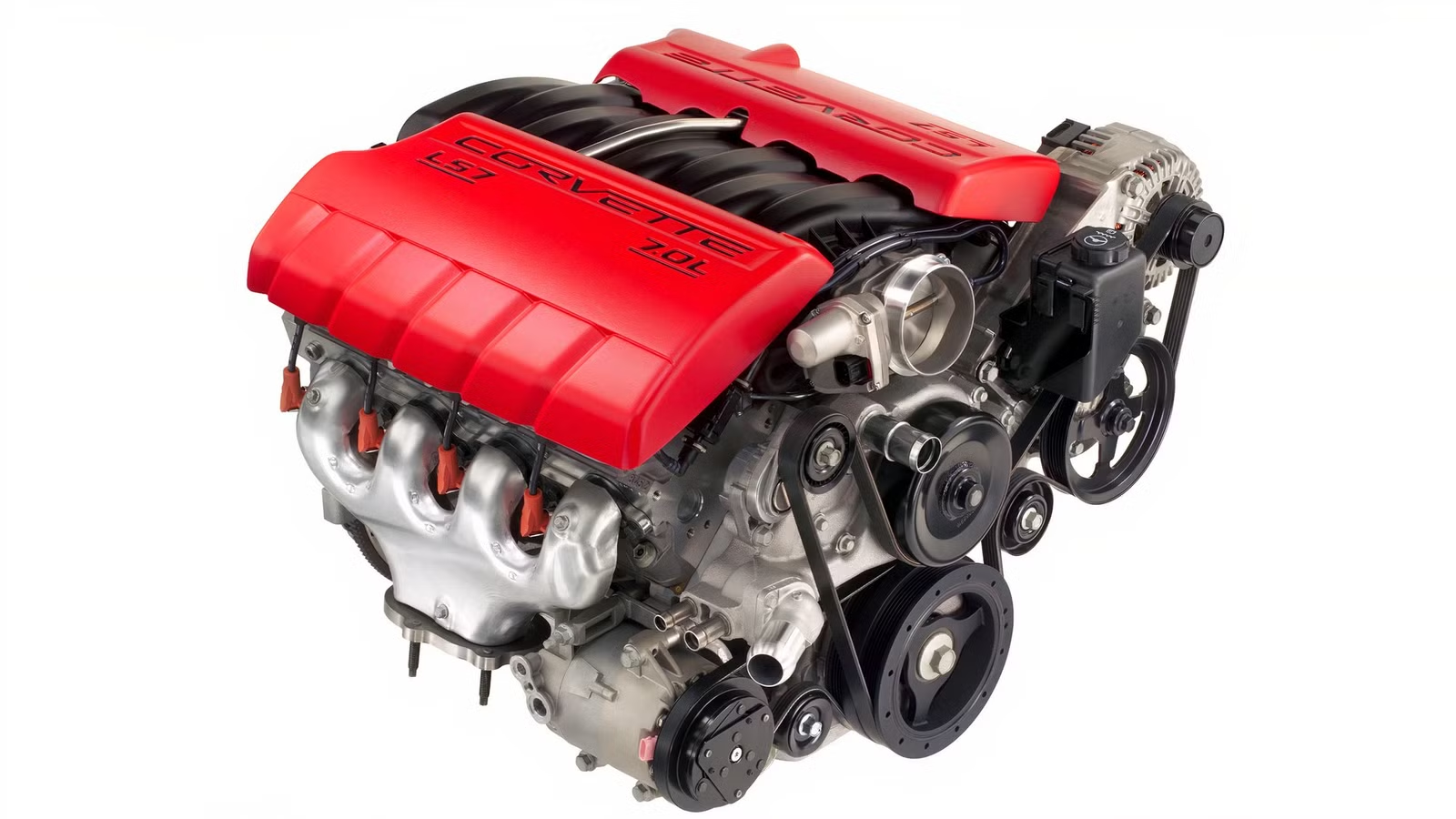
The LS7 isn’t just a great engine — it’s a race-derived record-breaker that’s meant to be driven and can achieve 100,000 miles or more if properly cared for. Below, we’re digging into the engineering, processes, hardware, and literal race-derived parts that set the first 500-horsepower Corvette Z06 apart from its competitors of the day, as well as a major concern with valve guide wear that diminished the confidence of some in the owner’s community along the way.
This Engine Shouldn’t Have Been Possible, And That’s Why They Built It
The 2007 Chevrolet Corvette C6 Z06 has a naturally-aspirated, seven-liter V8 that revs to 7,000 rpm. Perfect for track days.Chevrolet
The C6 Corvette was launched into an era of 500-horsepower supercars and super sedans that were mostly powered by fairly exotic engines. Many of the glamorous new powerplants entering the Corvette’s competitive ballpark and pricing universe were also capable of very high RPMs. Making an engine spin faster was a trendy way to turn the dial up on horsepower in this era, but achieving high RPMs was also a previously inherent weakness of the 2-valve design used by the small-block V8 engine.
With other competitors in the 500-horsepower range hitting that output with bespoke 10-cylinder engine designs or complex, weight-adding forced induction, GM engineers looked to once again evolve the small block V8 to achieve 500 horsepower for the first time. The resulting engine punched the small block V8 out to its biggest displacement yet, 7 liters or 427 cubic inches.
What Makes a C6 Z06 a C6 Z06?
- LS7 7.0-liter/427-cubic-inch Gen IV V8 with lightweight reciprocating components
- 7000 rpm redline
- Titanium connecting rods and intake valves
- Dry-sump engine lubrication system
- Engine hand-built at GM’s Performance Build Center
- Aluminum body structure with one-piece hydroformed perimeter rails frame and magnesium front cradle
- Fixed roof design optimizes body rigidity and aerodynamics
- Carbon-fiber composite front fenders and front wheelhouses
- Unique front fascia incorporating a larger grille, cold-air scoop and lower air splitter
- Wide-body rear fenders and a unique rear spoiler incorporated with the CHMSL
- 14-inch cross-drilled front disc brakes with six-piston calipers and 13.4-inch rear rotors with four-piston calipers
- 18 x 9.5-inch front wheels with 275/35ZR18 tires and 19 x 12-inch rear wheels with 325/30ZR19 tires
- 3-inch-diameter exhaust with bi-mode mufflers and larger polished stainless steel tips
- Engine, transmission and differential oil coolers; and steering cooler
- Rear-mounted battery to improve weight distribution
- Unique interior features including revised gauge cluster and lightweight two-tone seats with more aggressive bolsters
- Curb weight of 3130 pounds / 1419.7 kg (estimated)
- 3 inches wider than other Corvette models
This was a big, two-valve V8 engine: a powerplant that convention would hold to be a perfect recipe for a lot of torque, but not much appetite for RPMs. Flipping that idea on its head, the engineers upgraded key reciprocating components to titanium, reducing the weight of each connecting rod by nearly one-third in the process.
2006 Chevrolet Corvette Z06 painted in yelllow with black interiorChevrolet
Every part of the LS7’s rotating mass was scrutinized for weight, and race-derived breathing modifications were applied almost directly from the Corvette C6 race car, including CNC-machined, Le Mans-derived cylinder heads. The result was a compact and lightweight 7-liter, 7,000-RPM engine that belted out 500 naturally aspirated ponies. The Corvette was now powered by the fastest-revving 2-valve V8 engine a production car had ever seen.
The Intention Was Race Ready Durability, But That Didn’t Always Pan Out
If you’re getting the idea that the LS7 engine was designed for racing, then you’re correct. This engine would also power the track-focused Camaro Z/28 and collectible Corvette C6 427 Convertible, a rare run of LS7-powered drop tops and the only convertibles to ever see this engine. It’s an engine that was meant to be driven. The LS7 features a slew of engineering transfer from the world of racing, a good thing for owners after maximum durability. This engine was meticulously hand assembled by a single builder at GM’s Wixom Performance Build Center. In the assembly process, it’s subjected to levels of unit-by-unit validation and quality control not necessary on other small blocks.
2006 Chevrolet Corvette Z06 painted in yelllow with black interiorChevrolet
Let’s talk about that pushrod valvetrain. It’s very rare in an engine this powerful, though its use makes for an engine that’s relatively easy to service. The same style of pushrod valvetrain is still popular today in many commercial-grade V8 engines because of its inherent simplicity, durability, and serviceability. By the way, these same attributes are of high importance whether you’re running a racing team or daily-driving the fastest Corvette of the era, two decades on.
2006 Chevrolet Corvette Z06 painted in yelllow with black interiorChevrolet
The C6 Z06 also gives its engine oil a spa treatment with every lap through the powerplant, thanks to a race-bred dry-sump system that actively forces oil out of the engine where it would otherwise pool up and collect, instead transferring it to an external conditioning system that actively removes air from the oil, cools it, and pumps the cooled, air-free oil back in. Especially if you’ll regularly visit a racetrack with your Corvette Z06, this high-performance oiling system is easy to appreciate on an engine built for extended periods of full-throttle driving. Just note as an owner that the dry-sump oiling system has special procedures for checking oil levels and performing oil changes, with full details available in the owner’s manual.
2006 Chevrolet Corvette Z06 painted in yelllow with black interiorChevrolet
Though race-bred hardware helps the LS7 V8 achieve excellent durability, there’s another aspect helpful to hitting 100,000 miles with yours: the knowledge and support of a passionate owner’s community that seems keen to help each other keep these machines in tip-top shape. With a wealth of well-established knowledge at your fingertips, the C6 Z06 makes a particularly compelling first performance car for many.
Engineering Details: 2006 Chevrolet Corvette Z06
Engine:
7.0-liter (427.7 cu.-in.) OHV V8 LS7
Horsepower:
505 @ 6200 rpm (SAE certified)
Torque:
475 lb.-ft @ 4800 rpm (SAE certified)
Bore x stroke:
4.125 in. x 4.00 in. (104.8 mm x 101.6 mm)
Compression ratio:
11.0 :1
Fuel shutoff:
7100 rpm
Piston Type:
Flat top, short skirt, valve reliefs, lightening pockets, anodized top land, second land with pressure balance groove
Piston Material:
High-strength aluminum alloy, T-7 heat treat, polymer coated skirts
Piston Weight:
482 grams
Piston-to-valve clearance:
Intake: 8 mm Exhaust: 7 mm
Piston Pin Type:
Full floating, taper wall
Piston Pin Material:
High strength steel alloy, nitrided
Piston Pin Weight:
132 grams
Connecting Rod Type:
Forged I beam, stepped down pin end, blind cap hole, alignment sleeve
Connecting Rod Material:
Titanium aerospace alloy
Connecting Rod Weight:
464 grams
Related
The Most Affordable And Reliable Used Chevrolet Corvette You Can Buy In 2024
On top of its legendary reputation, the Corvette is also a relatively cheap and simple piece of equipment.
We found a 2006 model year unit with 125,000 miles on the odometer in Arizona, another with 121,000 miles in Florida, and a few more hovering around the 100,000 mile mark. With around 80,000 miles on the odometer, second-hand Z06 shoppers can expect to drop about $40,000. On CorvetteForum.com, numerous owners have checked into a ‘highest-mileage Z06’ thread with anything from 75,000 to 220,000 miles on the odometer.
The 2007 Chevrolet Corvette C6 Z06 has a naturally-aspirated, seven-liter V8 that revs to 7,000 rpm. Perfect for track days.Chevrolet
“132K miles on my 2010 Z06. All stock, and nothing’s ever been done to the engine except replacing the plugs around 120K. Runs like new,” said one owner. “My recently purchased Z06 is at 127k. The previous owners I spoke with claim it to be all stock and I don’t see any evidence otherwise,” said another. This same discussion thread references a potentially serious issue that may have made the LS7 a few modifications shy of the bulletproof performer it was meant to be.
How Dangerous Is The Valve Guide Issue As A Used Z06 Shopper?
If you’re a completely normal person considering this car, you’ll be plugging “C6 Z06 Engine Problems” in your favorite search engine as part of the process. When you do, you’ll see a lot of information about a particularly scary issue called valve guide wear, and a lot of noise around the topic.
Here’s the sticky: some LS7 owners experienced premature valve guide wear. Others did not. If the engine’s valve guides wear out, the engine can lose compression, leak oil, smoke like a jalopy, or drop a valve into the combustion chamber below, spelling instant death for the LS7 and many of the expensive titanium components inside.
2006 Chevrolet Corvette Z06 painted in yelllow with black interiorChevrolet
News of valve guide problems was widely publicized in owner forums about fifteen years ago, where it caused a frenzy. Whether this was a widespread defect that GM tried to brush under the rug or a small but seriously overblown problem that affected a small portion of owners is tricky to nail down. Many Z06s don’t have enough mileage for the symptoms to present themselves. The key takeaway is this: among the owner’s community, there was a significant sentiment that the LS7 was the potential carrier of a dangerous problem that could be lying in wait.
In the nearly two decades since the LS7 arrived, much has been done within the owner’s community to help pinpoint concerns and solutions for those shoppers after maximum mechanical confidence.
Some owners call the LS7’s cylinder head design flawed, and numerous aftermarket cylinder head options have hit the market as a fix or upgrade for the LS7’s valve-guide dilemma. Other owners, as mentioned above, have checked into forums with high-mileage cars that have had no issues. Some owners of twenty-year-old Z06s have reported engines blowing up in recent years, but most haven’t.
2006 Chevrolet Corvette Z06 painted in silver with black interiorChevrolet
Specialty engine shop Katech had been fixing and documenting the issue on a small but growing number of valve guide wear issues on LS7 engines for years. Their take? All copies of the engine in all applications are potentially affected, contrary to GM’s position at the time that the problem was limited to certain model years.
Since replacing damaged valve guides is expensive, and not replacing damaged valve guides is even pricier, you’ll want to exercise some caution before you buy. If you’re not willing to roll the dice, you’ll need to expand your budget a little, or perhaps considerably, depending on your risk tolerance.
“Some have reported symptoms of excessive valvetrain noise or high oil consumption, but we have seen some engines that have had extreme valve guide wear and exhibited no symptoms. Katech’s recommendation is that all engines should be inspected to prevent a much more expensive failure in the future.
-Katech Engines, 2016”
As a bare minimum, you’ll want to have the model you’re considering seen by a Corvette technician in a dealer setting, or a reputable expert shop in your area. A compression and leakdown test as well as oil analysis may be useful to assessing the health of a second-hand LS7, but the only widely accepted test for valve guide problems requires opening up the cylinder heads themselves and physically wiggle-testing the valves.
Another option is to look for a model that’s already had valve guides replaced under warranty. Some owners automatically swap out the factory heads for an aftermarket upgrade with associated valvetrain component upgrades to eliminate the risk of valve guide failure right from the get-go. Others roll the dice, drive their cars, and go 100,000 miles or more without much fuss at all.
2006 Chevrolet Corvette Z06 painted in yellow with black interiorChevrolet
Whether owning this legendary Corvette is worth the contingency costs required for maximum confidence is up to your own preferences and tolerances — but now, you’re armed to make a better decision.
Sources: CorvetteActionCenter, Katech, GM, CorvetteForum.com, BrintaTrailer.com
