

Hybrid demand has remained pretty consistent over the last few years, even as interest in fully electric cars seems to change with the weather. Toyota has not only been a pioneer in this space since the launch of the Toyota Prius (and even before that, if you want to count early concept cars like the G21), the brand has been the segment’s undisputed champion, selling 4.4 million of these vehicles in 2025 alone.
With gas prices climbing as high as seven bucks a gallon in some areas, we wouldn’t be surprised to see that number snowballing through 2026, with hybrids like the Toyota Rav4 and the Toyota Camry leading the way. Here’s why Toyota is not only surviving, but thriving in the hybrid segment.
Americans Bought 1.2 Million Toyota Hybrids In 2025
2025 Toyota Camry XSE Gray Rear Angled ViewToyota
There is no major automaker on the planet that can match Toyota’s commitment to hybrids. The brand announced an extra $912 million into new jobs and manufacturing plants to ramp up hybrid production last year, with nearly half a billion dollars going into Toyota West Virginia alone.
That commitment has clearly been paying off. Going over some key numbers for Toyota’s sales figures in 2025.
- Toyota reports 11.3 million sales globally for 2025, a 4.6% growth over the previous year.
- Toyota Motor North America reports 2,518,071 sales in the US in total for 2025.
- Toyota Motor North America Reports 1,183,248 hybrid sales in 2025 in the US, a 17.6% bump over 2024.
- Electrified vehicles (meaning anything that draws automotive power from a battery, be it EV, plug-in, or mild-hybrid) made up 47% of Toyota’s US sales for 2025.
- Toyota’s luxury sub-brand, Lexus, reported an all-time best-ever sales year for 2025, with 131,851 units sold, with many hybrids like the Lexus RX reporting a best-ever sales year.
Americans bought somewhere around 16.3 million new cars last year, so around one new vehicle, for every seven sold, was a Toyota, and one in 15 was a Toyota hybrid.
GM scratches out a modest lead on Toyota for overall US sales, with 2.8 million sold in 2025, but Toyota is the big winner in the hybrid segment.
We Saw This Coming A Mile Away
2025 Toyota Camry XSE Silver Front City DrivingToyota
Not to brag (because it’s not that hard to look at sales figures and see who’s winning), but we already called this more than once in 2025, noting that, even as EV dealers were struggling to meet sales goals, leading hybrids were flying off the lots, so to speak.
The Toyota Camry claimed an early lead last year and kept it, with hybrids selling around twice as fast as EVs, and staying strong in the fourth quarter, even after we lost those EV tax credits.
Related
The Real Reason Behind The Toyota RAV4’s Plummeting Sales Figures
Consider this the calm before the storm, as 2026 could be a big year for the SUV.
No matter how you look at it, we’re currently in the golden age of the hybrid. There is an argument to be made that hybrids are merely a transitional solution as the industry shifts toward all-electric power in the future. But, for the time being, it’s the hybrid, not the EV, that’s leading the industry into the future.
The Hybrid Camry Was A Big Risk (Or So Everyone Thought)
2025 Toyota Camry Silver/Black High Rear AngleToyota
When news first hit that the Toyota Camry was going hybrid-only, there were certainly some naysayers who expected the plan to backfire, with longtime Camry buyers jumping ship for a competing Honda or Hyundai. As it turned out, the hybrid-only Camry was one of the bestselling versions of the car in the nameplate’s history.
Going hybrid-only would see the Camry having its best sales year since 2019. At the end of 2024, Toyota tallied up 309,876 Camry sales. At the end of 2025, that number was up to 316,185.
Of course, it doesn’t hurt that the new hybridized Camry is simply a better car, spec-for-spec, than an entry-level 2024 Camry.
2024 Toyota Camry LE
2025 Toyota Camry SE
Engine
2.5-Liter NA 4-Cylinder
2.5-Liter Hybrid 4-Cylinder
Power
203 hp
225 hp
Fuel Economy (Combined)
32 MPG
47 MPG
0-60 mph
7.6 Seconds
6.8 Seconds
These numbers illustrate one of the potential strengths of a hybrid car. Back when mainstream, mass-production hybrids were a relatively new concept, the joke was that these cars sacrificed horsepower for efficiency. The truth has turned out to be quite the opposite, with the addition of electric motors slashing refueling expenses, and bumping horsepower.
Where the Tesla Model Y proves that EVs can lead the industry, the Camry does the same for hybrid sedans, placing in the top-10 sellers list for 2025.
Toyota Is Taking The Same “Risk” With The Rav4
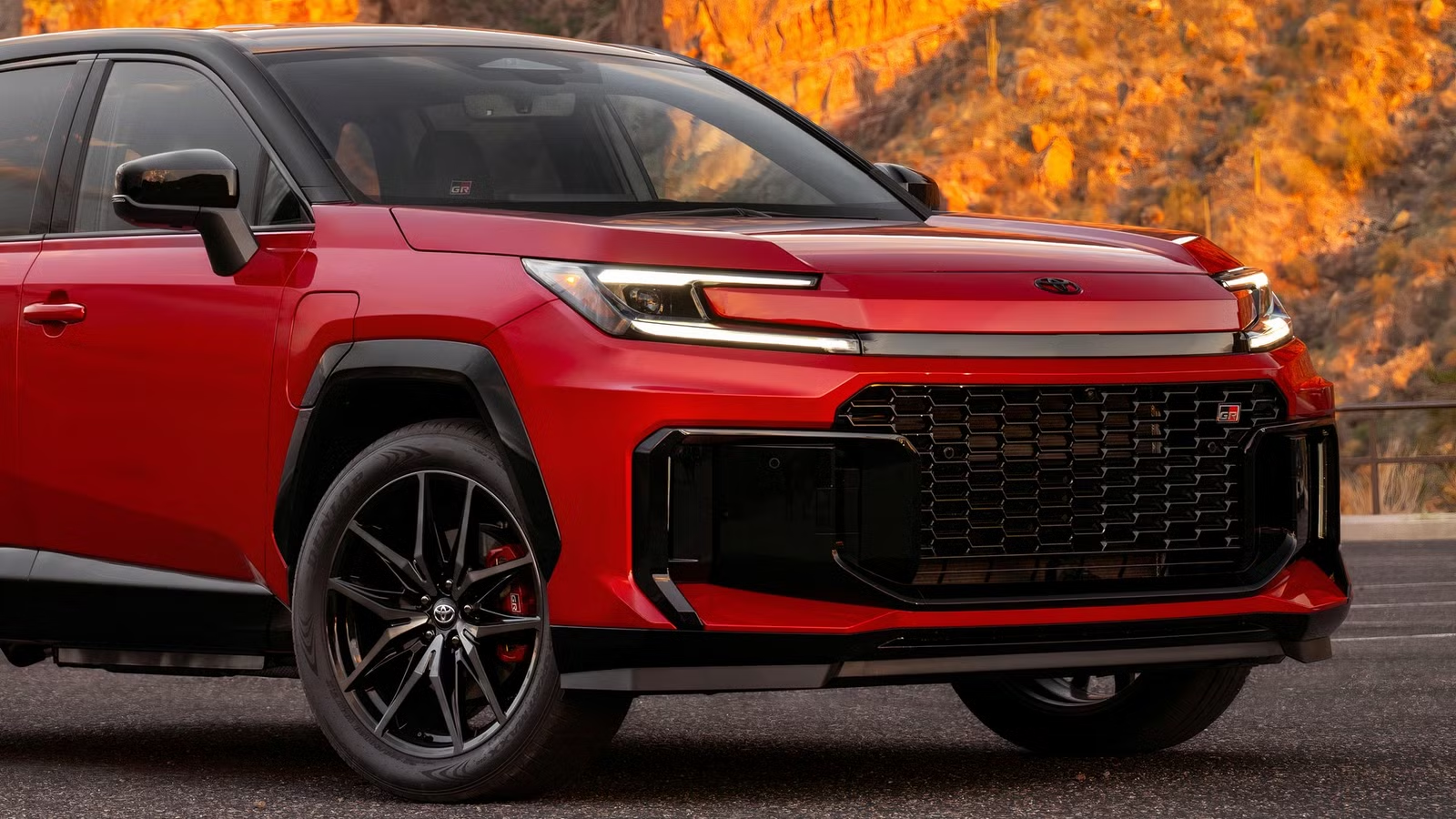
2026 Toyota RAV4 PHEV GR Sport front 3/4 angle in redJared Rosenholtz/CarBuzz/Valnet
At this point, we’re not sure if you can even call it a “risk,” but Toyota announced last year that the 2025 Toyota Rav4 would be going hybrid-only, just like the Camry before it. Now that the dust has settled, and the electrified Camry has proven to be a hit, this is less a bold marketing strategy than it is the most obvious next step for the nameplate.
Just like the Camry, the new hybridized Rav4 is a major step up over the outgoing ICE model in more ways than not.
2025 Toyota Rav4
2026 Toyota Rav4
Engine
2.5-Liter 4-Cylinder
2.5-Liter Hybrid 4-Cylinder
Power
203 hp
226 hp
Fuel Economy (Combined)
30 MPG
41 MPG
The Rav4 was Toyota’s bestseller for 2025, but it saw a dramatic sales dip in the beginning of 2026. Believe it or not, this has nothing to do with dwindling demand. Rather, the issue is on the supply end. While Toyota is busy ramping up production of the electrified SUV, new models have essentially been sitting out the first quarter of the year.
In other words, Toyota is selling so many hybrids, even its sales slumps are a positive sign, with the Rav4’s current absence from the market signaling the confidence Toyota clearly has in the upcoming 2026 relaunch.
Hybrids Are Paying Off For Everyone Who Cares To Invest In Them
2026 Toyota RAV4 PHEV badgeJared Rosenholtz/CarBuzz/Valnet
Toyota holds a pretty substantial lead over everyone else selling hybrids in the US at the moment, but the segment is paying big dividends to any leading automaker that is seriously investing in these vehicles. Honda sold more than 400,000 units last year, and Ford sold just under a quarter of a million hybrids.
Related
Subaru Vs. Toyota Vs. Honda Vs. Mazda: Which Japanese Hybrids Are The Most Efficient?
Dissecting The Data On 2026’s Japanese Hyrbids
The segment seems to reward automakers based on their respective level of commitment. GM had no real mainstream hybrids up for grabs last year, so Chevy, Cadillac, GMC, and Buick aren’t really in the conversation.
Stellantis’ hybrid offerings included compliance models, like the Dodge Hornet, which was built just to keep the EPA happy, and was discontinued with little fanfare. The hybrid versions of the Jeep Compass and Grand Cherokee were well-received but they made up a minority of their respective nameplates’ total sales.
Toyota Believes In The Product
2026 Toyota RAV4 lineup group shot of three vehiclesToyota
For Toyota, it’s the long game that’s really paying off. According to Toyota chairman, Akio Toyoda, the brand has sold around 27 million hybrids in total since it first started investing in the segment. This would seem to illustrate the tendency for the segment to reward the brands that really believe in the product.
Related
Here’s What Toyota’s Best-Selling Hybrid Will Cost You In 2025
For those who like to just buy a car that works, there are few better options than a Camry. This is how much the hybrid version will cost you in 2025.
That is, if you build a compliance car and give it zero marketing, it’s not going to become the sleeper hit of the year. On the other hand, taking long-running ICE nameplates and converting them to hybrid only, well, that only seems to boost sales.
Moving forward, we may see more brands following Toyota’s lead and jumping into the hybrid segment with both feet, rather than with a wishy-washy approach of adding a hybridized trim here and a plug-in performance model there. But, the window of opportunity to take the crown as the industry leader in the hybrid segment has clearly been closed ever since Toyota first jumped through it.
Sources: Toyota, Ford, Honda, GM, Stellantis.
