

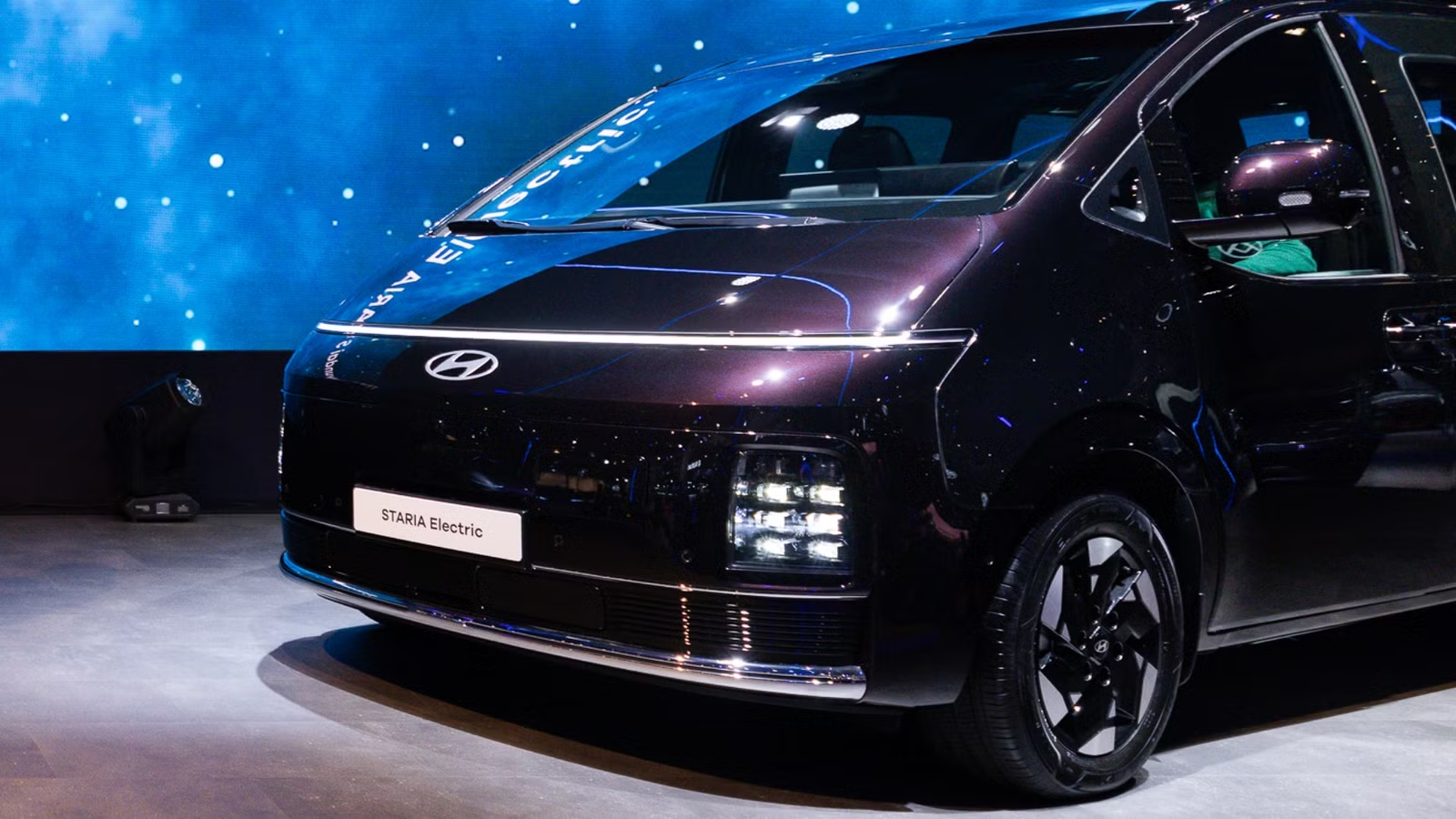
Hyundai’s space-age minivan, which so far has been limited to South Korea, Australia, South Africa, and several Eurasian markets, is going global at the same time that it goes combustion-free. The 2027 Staria Electric, which debuted at the Brussels Motor Show after a short teaser campaign, has been confirmed for Europe and other markets, which might even include the United States. The rumor mill began spinning when Hyundai Motor America posted the Staria Electric on its own media site, meaning the slow-selling, retro-look Volkswagen ID. Buzz might get an ultra-modern South Korean counterpart.
Hyundai
Founded
29 December 1967
Founder
Chung Ju-yung
Headquarters
Seoul, South Korea
Owned By
Hyundai Motor Group
Current CEO
Jose Munoz
Nearly 250 Miles For The Electric Staria
Unlike the Ioniq 9 crossover, which rides on an EV-specific platform, the Staria Electric shares its architecture with a combustion-engine variant. However, it doesn’t seem to hold the minivan back much: Hyundai claims the EV will travel more than 249 miles (400 kilometers) on a single charge of its 85-kilowatt-hour battery on the WLTP scale. Translated to the more realistic EPA scale, the Staria should still travel 220 miles or so per charge – not terrible given its form factor and relatively modest battery size.
The front-drive Staria Electric has a single electric motor putting out 215 horsepower, which would make it the least powerful minivan on the market if it indeed comes to the US. The single-motor Volkswagen ID. Buzz has 282 hp, for example. But despite the meager power output, Hyundai’s European arm is targeting a 4,000-pound towing rating for the Staria EV, allowing it to stand in as a camper tow vehicle on short weekend jaunts.
Related
Hyundai’s Answer To The ID. Buzz Gets A Familiar Face That GM Could Change For America
This oddball van could become part of GM-Hyundai commercial vehicle partnership.
Much more impressive is the charging system, which is part of an 800-volt electrical architecture. Hyundai is targeting a 10-to-80-percent charge time of around 20 minutes, meaning adding at least 160 miles of range in a quick charging stop. The charging speed is the Staria’s most promising spec compared to the more powerful ID. Buzz, which travels a comparable 231 miles per charge but takes around 10 minutes longer on a fast charger to add similar range.
2027 Hyundai Staria ElectricHyundai
Lots Of Space For The Big EV
The 2027 Hyundai Staria Electric will be the largest, most spacious EV the automaker produces, slotting in above the Ioniq 9 in terms of passenger and cargo capacity. Like the internal-combustion Staria, it will offer a seven-seat “Luxury” and a nine-seat “Wagon” interior configuration, with the former getting two adjustable, comfy-looking captain’s chairs in the second row, positioned in front of a three-passenger rear bench. The Wagon, meanwhile, will get three rows of two bucket seats in front of a fourth-row bench. Cargo space with three rows of seats in place ranges from a minimum of 15.4 cubic feet in the Luxury to 46 cubes in the Wagon.
There should be lots of comfort and convenience on offer as well. For example, the flagship model will have heated, ventilated, and power-reclining seats in the first two rows, with the lounge seats in back getting leg extensions as well. Hyundai Digital Key and a column-mounted gear selector free up clutter and space in the front row, while an integrated cabin microphone allows the driver to converse with passengers, even those in the way-back, with ease. And Hyundai’s comprehensive lineup of driver-assist and active safety features, are standard.
The company says the Staria Electric will arrive in Korea and certain European markets in the first half of 2026. Arrival timing for other regions will be confirmed later, as will pricing and official range ratings. We’ve asked Hyundai’s North American arm for confirmation that the electric minivan will be offered here and will update this article once we get an answer.
Related
Why The Volkswagen ID.Buzz Is Taking A One-Year Break
The VW ID.Buzz Minivan is one of the most striking EVs on the market, but no 2026 versions will be made.
Source: Hyundai
