

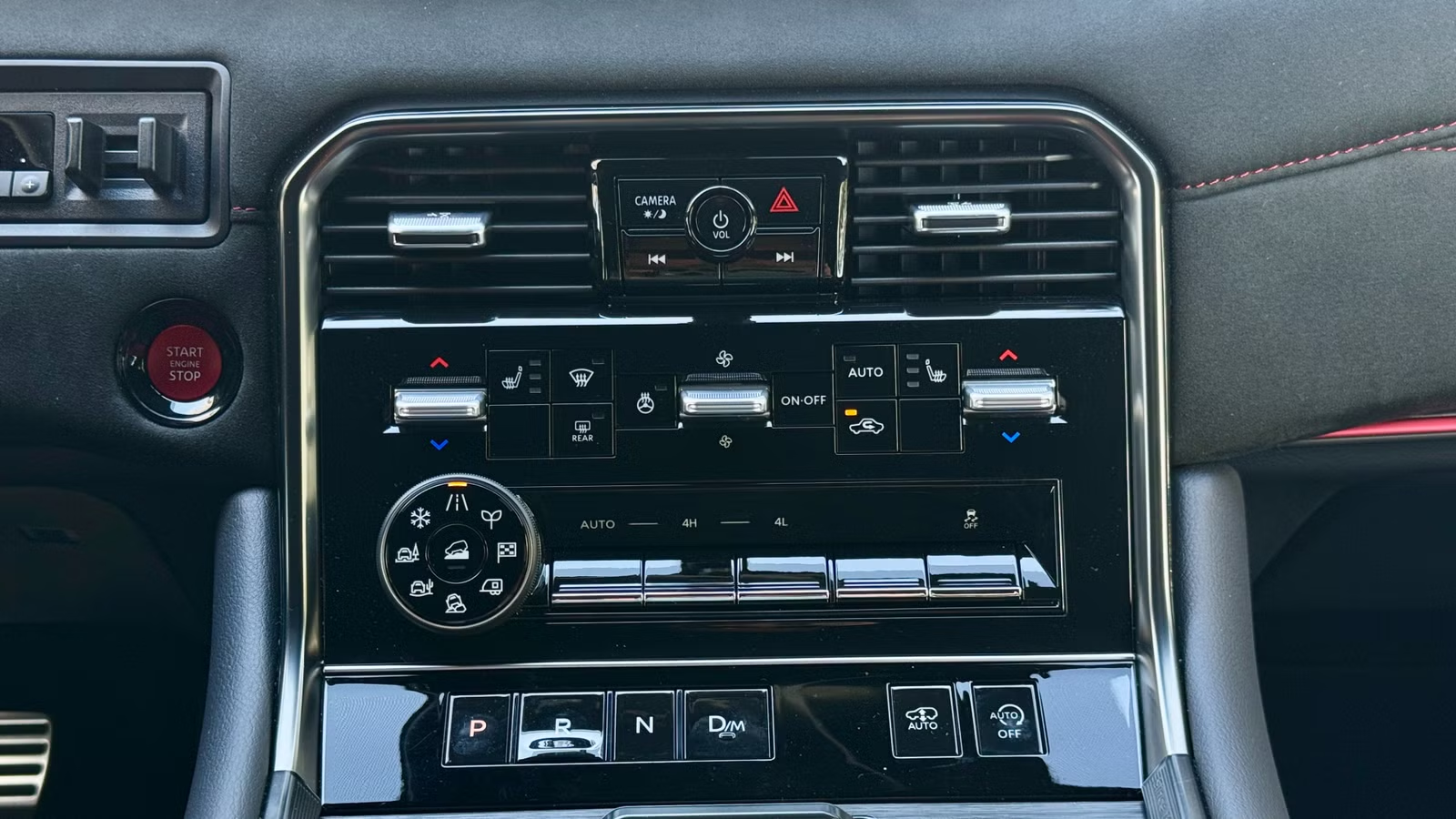
While car designers and companies do their best to create original, distinct vehicle designs, they all are working with similar buyers and technology. As such, every era of car design has some commonality across brands. The 1950s had fins and chrome. The 1980s had sharp edges and digital gauges. In the last decade, we’ve seen the mass adoption of piano black interior trim and big, bold flashy grilles, often with chrome.
Nissan is apparently done with that, and it’s starting to drop those trimmings on its latest vehicles.
Customers Said That It’s Time For A Change, And Nissan Agreed
Automotive news outlet The Drive, spoke with Ponz Pandikuthira, the Chief Product Planning Officer for Nissan North America, and he revealed that the brand is phasing out piano black plastic from interiors. As for why, he said the decision was, “Definitely consumer-driven.” He talked about the common complaints about the finish, which attracts fingerprints, shows dust, and has a tendency to scratch over time. Those aren’t characteristics you typically want in a material that needs to last many years of abuse, and frequently, those finishes would be placed around buttons, knobs, and screens that would be touched all the time.
Nissan isn’t just ditching piano black plastics, though. Pandikuthira also told The Drive that it’s phasing out chrome trim. Based on his response, this change seemed less for addressing complaints, and more for changing tastes. He said that the company is aiming to be more subtle and have some “sophistication” with its designs.
2025 Jeep Wagoneer SJared Rosenholtz/CarBuzz/Valnet
Nissan isn’t the only company moving away from chrome, though. Those companies have other reasons for losing the shiny stuff, too. When Jeep revealed the Wagoneer S, the brand noted that it wouldn’t use any chrome for environmental reasons. Chrome plating involves some pretty nasty chemicals, and that wouldn’t exactly be in keeping with an electric vehicle that’s ostensibly more environmentally friendly.
2027 BMW i3 ExteriorBMW
BMW is also moving away from chrome, but it’s not to be less flashy. If anything, it’s to be more flashy, more of the time. It’s trading the metal for illuminated badges, grilles, and trim that stand out not just during the day, but also at night.
How Soon Will We See The Changes?
The Rogue Hybrid is an early example of Nissan’s changing design philosophy. The exterior has no chrome, and the interior has matte, textured plastic in areas with buttons that would likely have featured piano black plastic in the past. It’s certainly not the first, though. The Nissan Leaf eschews the glossy plastic inside, and the only metallic trim on the outside is more of a dark satin finish, rather than bright chrome.
2026 Nissan Leaf interior view of the front cabinJared Rosenholtz/CarBuzz/Valnet
However, there are still plenty of Nissan models that were redesigned a couple of years ago or more that retain some of these features. The Pathfinder and Armada, for instance, still have plenty of shiny black plastic inside. The latter also has plenty of chrome. We also wouldn’t be surprised if select vehicles still end up featuring some chrome on the outside, like with the high trims of the Armada. Those are typically flashy vehicles, so buyers will still likely want a bit of glittery exterior trim.
2026 Nissan PathfinderIan Wright/CarBuzz/Valnet
CarBuzz Insight – Why This Matters:
In regard to abolishing piano black plastic, we’re totally on-board. We’ve been annoyed by all the reasons we’ve already discussed with the material, and will be happy to see it go away. As for chrome, we don’t think it’s quite a black-and-white subject. To us, it seems highly dependent on the type of car and how it’s used. A little bit can go a long way to adding some detail and flair. Too much can be gaudy. At the same time, dark trim can be subtle and menacing, but too much of it can end up obscuring a car’s design.
On the whole, though, we think Nissan has the potential to create some superb exterior and interior designs visually and functionally with these decisions.
Source: The Drive
