

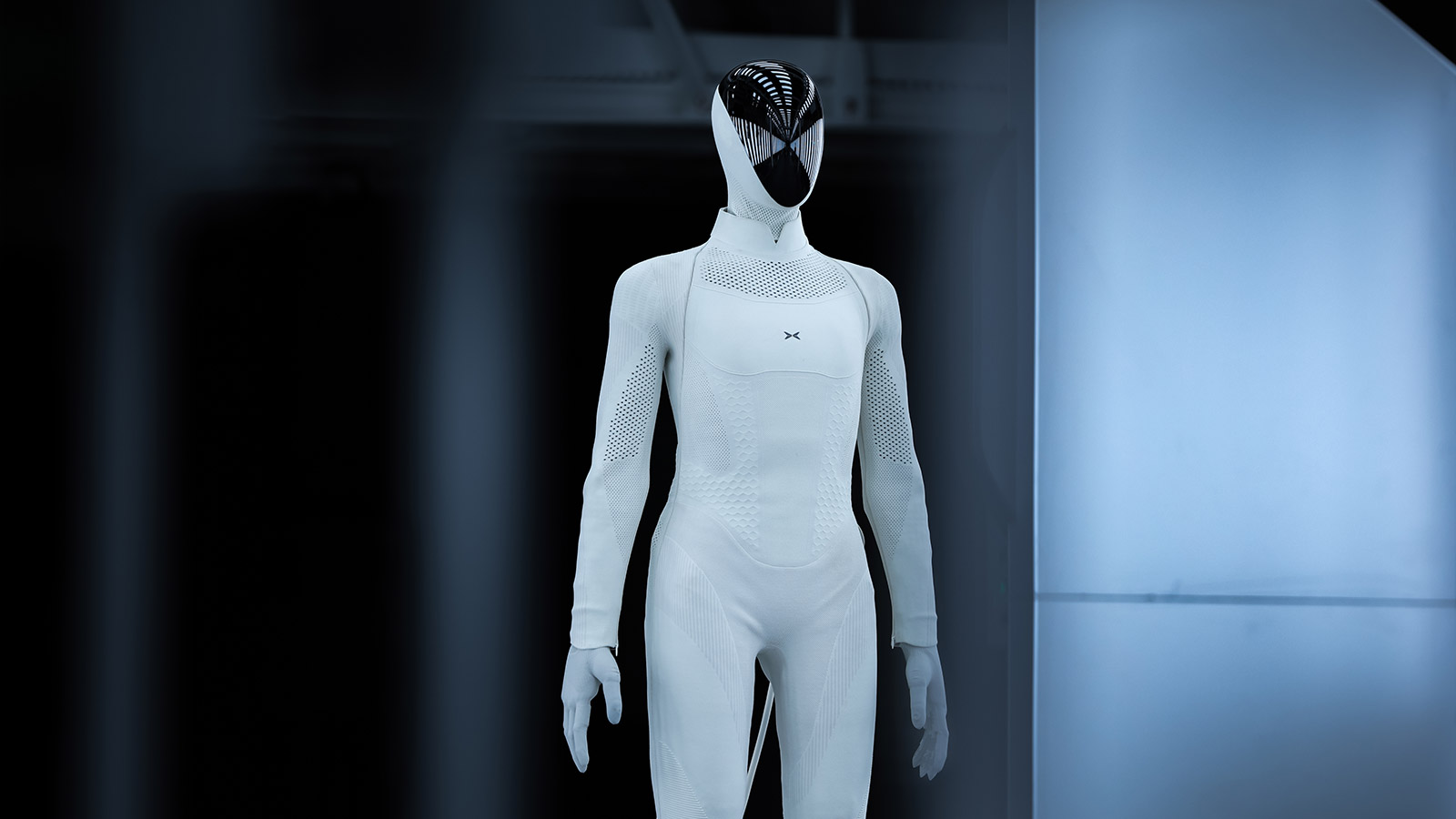
- Xpeng’s humanoid robot production line has begun operating, with Iron walking off the line autonomously after assembly.
- Xpeng reaffirmed plans to begin mass production by year-end, followed by an official launch and deliveries in China and overseas in 2027.
Xpeng (NYSE: XPEV) has commissioned its humanoid robot production line, with more than 80% of core processes automated, laying the manufacturing groundwork for mass production by the end of this year.
The company announced on Tuesday that its Iron humanoid robot had completed assembly and autonomously walked off the line, marking the project’s transition from research and development prototypes to production-line manufacturing.
Xpeng described the line as the world’s first automated production line for advanced humanoid robots, combining automotive-grade quality systems from the smart electric vehicle industry with precision robot manufacturing.
The line was designed for scale from the outset. Automation of core processes helps ensure consistent manufacturing quality and supports rapid capacity expansion, the company said.
The commissioning does not mean Iron has entered mass production. Xpeng reiterated that mass production will begin by year-end, with initial deployments at its own stores and campuses.
Xpeng plans to officially launch Iron and begin deliveries in China and overseas markets in 2027. The company did not disclose the line’s specific capacity or the robot’s price.
“The robot production lines were created from scratch with no precedent to follow,” said He Xiaopeng, Xpeng’s chairman and CEO. He said the company would continue to pursue faster production cycles and greater manufacturing scale.
The new line provides manufacturing support for Xpeng’s expansion into physical AI (Physical AI). The company is applying quality management, supply chain expertise and AI technologies developed in its automotive business to robotics.
Unveiled in November 2025, the next-generation Iron has 76 degrees of freedom (DOF) across its body and 21 in each hand.
It uses a fully enclosed flexible lattice structure developed by Xpeng to balance a human-like appearance with safety.
The robot is powered by 3 in-house Turing AI chips, delivering up to 2,250 TOPS of effective computing power and enabling Xpeng’s physical AI foundation model to run directly on the robot.
Xpeng said this configuration allows Iron to perform complex tasks autonomously without remote operation, while reducing inference latency and enhancing data security.
The company aims to develop Iron into a general-purpose humanoid robot platform that supports a wide range of applications and continuously improves through real-world operation.
Commercialization remains central to the next phase. Xpeng expects high technical barriers and limited high-quality supply in advanced humanoid robotics to support higher gross profit per unit than new energy vehicles (NEVs), though it provided no specific forecast.
The robotics business recently secured an independent funding channel. Xpeng announced on August 24 that its Dogotix unit had signed share purchase agreements with investors for about $900 million in financing commitments.
The round was led by IDG Capital, with participation from Gaorong Ventures. Alibaba and Tencent joined as strategic investors.
According to the earlier announcement, Dogotix’s implied post-money valuation would be about $6.3 billion if the equity incentive pool is fully used. Xpeng will retain control and continue to consolidate the business’s financial results after the transaction closes.
Xpeng Iron will use high-energy solid-liquid hybrid batteries, reflecting delays in the commercialization of all-solid-state technology.
