

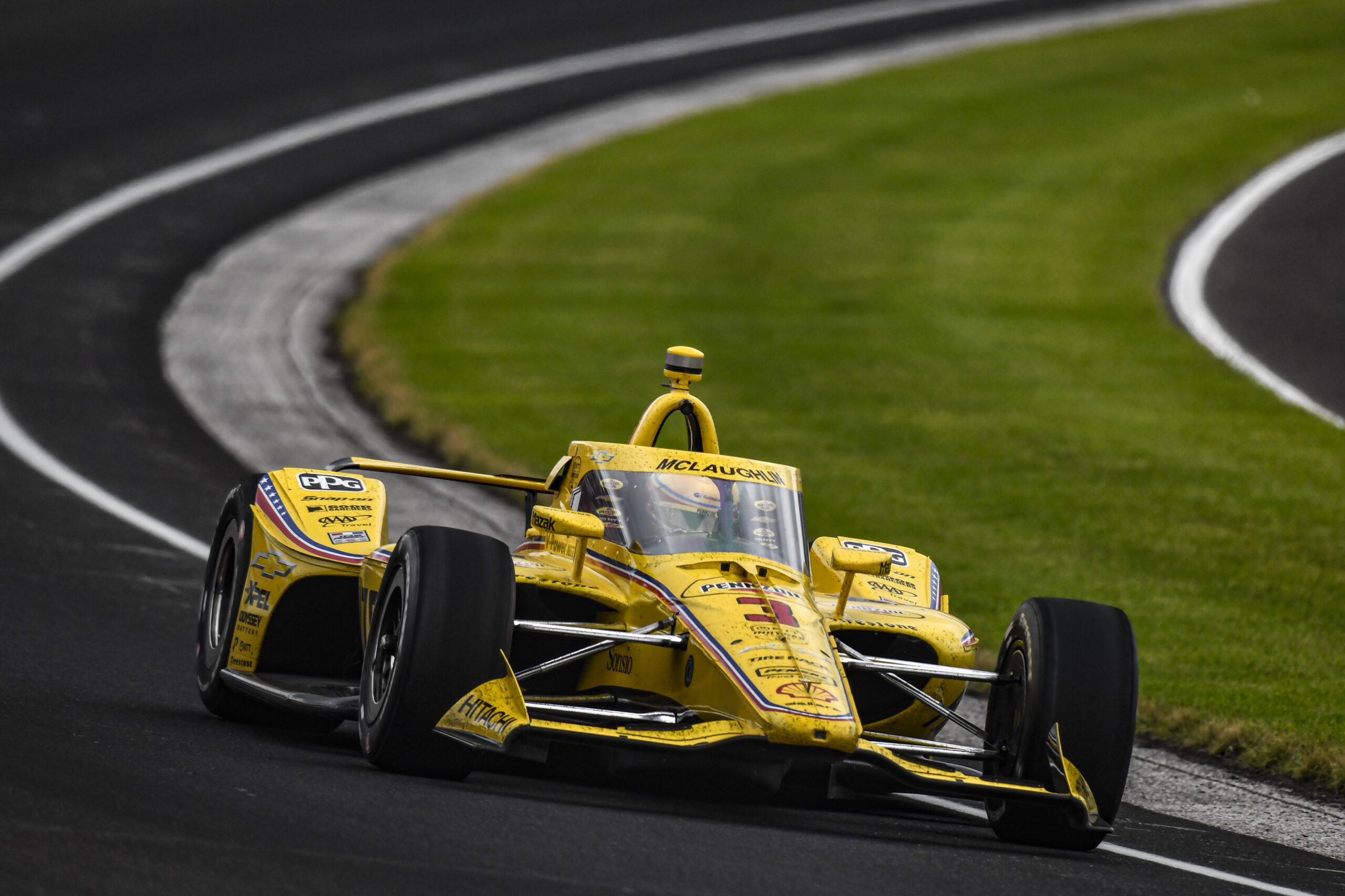
IndyCar racing gives engineers access to extremely strenuous operating conditions that far exceed what is seen in conventional automotive use. During a race weekend, lubricants experience sustained high temperatures, elevated engine speeds and constant friction between moving parts. Those stresses allow engineers to observe how an oil behaves when pushed to its limits.
Pennzoil is the official supplier of lubricants for the team, supporting its IndyCar program and working alongside race engineers to study how the oil responds to heat, load and wear. The company is also a primary sponsor of Scott McLaughlin’s No. 3 Chevrolet and acts as the official motor‑oil and lubricant partner of IndyCar and the NTT IndyCar Series, a role that allows its scientists to apply what they learn on the track to broader product development.
For Dr. Jung Fang, associate technology manager for North American motorsports at Shell‑Pennzoil, Canada has long been part of that learning environment.
“I remember my very first IndyCar race was in the exhibition place in Canada. So I know it’s no longer there. We moved to Markham, but you know, Canada and the IndyCar race have always had a special place in my heart,” he said.
IndyCar’s recent stop in Markham gave Pennzoil engineers another chance to study lubricants under the extreme heat, speed and friction.
Oil performance under extreme conditions
IndyCar engines are small and operate in intense conditions. Each car uses a 2.2‑litre twin‑turbo V6 from Honda or Chevrolet that makes more than 700 horsepower, revs past 12,000 rpm and spends long periods of time at full throttle. Each of these factors creates significant heat, pressure and friction inside the engine.
The oil has to stay stable at high temperatures and hold its viscosity at high speeds. The engine has to endure sudden load spikes and hold up during long periods of heavy use. For the engine to operate at its full capacity the lubricant needs to maintain certain conditions.
Andrew Miller, INDYCAR development engineer at Team Penske, said the behaviour of the oil depends on the application and how temperature affects viscosity. He said viscosity generally drops as temperature increases, which can improve efficiency in many cases. However, both Miller and Fang said it remains a balancing act.
“You can’t get too low viscosity that you start producing your oil film between those metallic components, because that’s when you’ll start to have a lot more metallic wear into the oil. But yeah, that’s generally how, you know, with the increase in temperature, the oil is going to behave,” he said.
Engineers watch oil temperature as it shows whether the lubricant can remain stable under extreme heat. Fang said the oil has to handle heat without breaking down or reacting with oxygen, also known as its oxidative stability. When temperatures climb too high, the oil can thin out and start behaving unpredictably, which could result in minimal protection.
#3: Scott McLaughlin, Team Penske Chevrolet
“Oil temperature is a really important indicator for the thermal stability, oxidative stability as well as the heat transfer of the oil, whether for the gearbox or for the engine. And in rare cases, if the oil temperature becomes too high, that probably means it will reduce the density of the oil and can create undesirable foam,” Fang said.
Foam is an issue as it introduces air into the oil. Fang said that when oil starts to foam, it can’t form a steady film between metal parts, and that film is what prevents wear. Air pockets also make it harder for the oil to carry heat away from the engine.Miller said that when air replaces the oil film between metal parts wear increases.
“You can’t get too low viscosity that you start producing your oil film between those metallic components, because that’s when you’ll start to have a lot more metallic wear into the oil. But yeah, that’s generally how, you know, with the increase in temperature, the oil is going to behave,” Miller said.
Miller said Team Penske designs its systems so the oil can keep performing even when temperatures rise, but there is a limit to how much they can predict once the car is running at full throttle. He said the team watches oil temperature closely during a run and adjusts the car’s cooling options to keep it in the right operating range.
How engineers detect problems in IndyCar lubricants
Teams depend on sensor data, temperature readings and engine‑protection checks to understand how an IndyCar lubricant is performing during a run and detect issues.
Sensors track how the oil behaves inside the engine and gearbox, and engineers watch those numbers for early signs that the lubricant is starting to break down or drift outside its safe operating range.
Wear‑metal analysis examines the tiny metallic particles suspended in the oil after a run to show how much contact occurred between internal engine parts. Engineers take samples after each session and run them through laboratory instruments that measure the concentration of metals such as iron, aluminum and copper.
Higher‑than‑expected levels can indicate that the oil film thinned out, causing components to rub against each other, while stable readings suggest the lubricant maintained proper protection. The results help teams understand how the oil behaved under race conditions and whether any changes are needed to prevent future wear.
“If we see you know elevated wear metal, that probably means maybe the oil need to be reviewed for the volume and if a different base oil technology or additive that need to be updated to further improve. [This] test data really tests the extreme of our lubricant technology, which ultimately, you know, benefits the product development for our everyday consumers, like you and me.”
Miller said the team monitors the sensor readings closely during a run because temperature changes can alter viscosity and weaken the oil film, increasing the risk of metal‑to‑metal wear inside the engine.
“So we have a lot of sensors on the car. In terms of lubricants, you know, it’s looking at primarily pressures and temperatures throughout the event. Sometimes we’ll also monitor fluid levels, both for the engine and, you know, our gearbox is another area where we use a lot of the pennzoil lubricants. So those are the primary metrics that we’re using, as well as just looking at overall powertrain performance. You know, you’re looking at the engine performance as well, just power. So those are the primary metrics that we’re using,” MIller said.
Engineers rely on live data to understand how the lubricant is holding up inside the engine and gearbox. Fang said teams collect large amounts of information, including oil temperature, pressure and engine speed, because those readings help them judge the health of both the lubricant and engine.
“Oil temperature that Andrew mentioned is a really important indicator for the thermal stability, oxidative stability as well as the heat transfer of the oil, whether for the gearbox or for the engine. And in rare, rare cases, if the oil temperature becomes too high, that probably means it will reduce the density of the oil and can create undesirable foam,” Fang said.
“From those telemetry data and also post‑oil race analysis, we conduct the metal as well as oxidation analysis. Those data can help us understand and evaluate the oil, and if the temperature becomes too high, it might prompt a review of if there’s sufficient oil volume or if we need a different oil technology to increase the protection,” he said.
Fang said the samples taken after the race usually provide the most insights.
“Typically, it’s post-race oil analysis that gives us the best data to understand if there’s insufficient production or something went wrong from the wear metal analysis, the oxidation level of the lubricants, even sometimes the somehow significant change in the viscosity. Those are some some of the same key parameters that we will be looking at,” he said
From the track to the city streets
#3: Scott McLaughlin, Team Penske Chevrolet
Although racing oils differ from consumer oils, the lessons learned in IndyCar often shape future passenger‑car formulations. Extreme racing conditions expose weaknesses quickly, allowing engineers to refine chemistry and protection strategies before applying them to everyday products.
Both Miller and Fang said when lubrication is put under extreme circumstances the lessons are applicable to everyday drivers as well.
“Those extreme testing conditions help us gain insights that ultimately benefit everyday consumers,” Fang said.
“The lessons you learn in the racing environment can be very applicable to the lubricants used by everyday drivers,” Miller said.
Tips for daily driver cars
- Stable viscosity: Viscosity drops as temperature rises, improving efficiency but risking protection if it goes too low. For daily drivers, choosing the correct viscosity grade and avoiding prolonged high‑heat operation helps maintain a stable oil film.
- Wear protection: Wear‑metal analysis shows whether the oil film stayed strong enough to prevent metal‑to‑metal contact. Conducting used‑oil analysis on everyday cars can help spot bearing wear, piston scuffing or contamination before a failure becomes obvious.
- Temperature control: Teams monitor oil temperature closely because heat affects viscosity and durability. In daily driving, overheating can thin the oil, reduce protection and accelerate wear, so proper cooling is essential.
- Efficiency vs protection: Fang said the industry is moving toward lower‑viscosity oils to help fuel economy, but any change has to be balanced with enough engine protection. He recommends mechanics stick to OEM viscosity specs instead of assuming thinner oil is always better.
