

If you’ve been looking for a clue as to what the next tech-hype bubble might be following driverless cars and AI, Florida is betting on battery-powered flying taxis. Some might call these vehicles airplanes or helicopters, but whatever the case, they take to the skies carrying a small number of people.
According to the Miami Herald, Florida is keen to put more flying taxis into the air. In fact, the state has been holding back its share of federal EV charging funds for more charging points because the private market has already done enough to serve “everyday vehicles.” So now, that money will be spent on infrastructure for technology and vehicles that doesn’t yet exist, and may never come to fruition.
Florida Is Investing In A Flying Taxi Network
Archer eVTOL air taxi.Archer
The Florida Department of Transportation (FDOT) is planning to build what it calls an “Aerial Highway Network.” The network being planned includes places where electric aircraft can take off, land, and, of course, charge. This will come about by using the federally supplied cash for an electric car charging network, which amounts to $197 million.
“The Florida Department of Transportation will not waste taxpayer dollars and spend it on everyday passenger vehicles,” an FDOT document reads. “Instead, FDOT’s proposal…takes an innovative and strategic approach to offer the greatest benefits to Floridians by supporting a new emerging mode of transportation.”
According to data from the Southern Alliance for Clean Energy group, Florida has the second-highest number of electric vehicles in the country, but lags behind the national average for chargers per vehicle. The reason is the number of people living in apartments and condominiums without access to chargers, which the Federal National Electric Vehicle Infrastructure (NEVI) money could address once an interstate charging network is sufficiently built out.
Air Taxis For The Rich, Or Public EV Charging For The Masses?
Archer eVTOL flying electric taxiArcher
Whether you want to call them flying taxis or eVTOL (electric Vertical Take-off and Landing) vehicles, they are, effectively, electric helicopters. And since they are flying machines, they are subject to FAA rules and regulations same as other flying machines – rules that are far more stringent compared to vehicles that stay on the ground. Meeting those regulations, both for physical vehicles and how they’re operated, doesn’t come cheap.
“Money is being hijacked from what would have benefited a large population to go to the oligarch, ultra-wealthy for these emergent technologies,” said Stephen Smith, executive director at the Southern Alliance for Clean Energy.
Florida Was Keeping This Quiet
FDOT SunTrax testing facility.SunTrax
All of this has come to light because the Florida administration went quiet and stopped publicly posting its EV charger deployment plans. The Miami Herald filed a records request in January, which was ignored until the newspaper applied legal pressure. Documents show that the plan is for 32 flying taxi pads, costing $5.6 million each. That’s $179 million, and FDOT says it wants them to be built at airports, luxury apartment buildings, golf courses, and military bases.
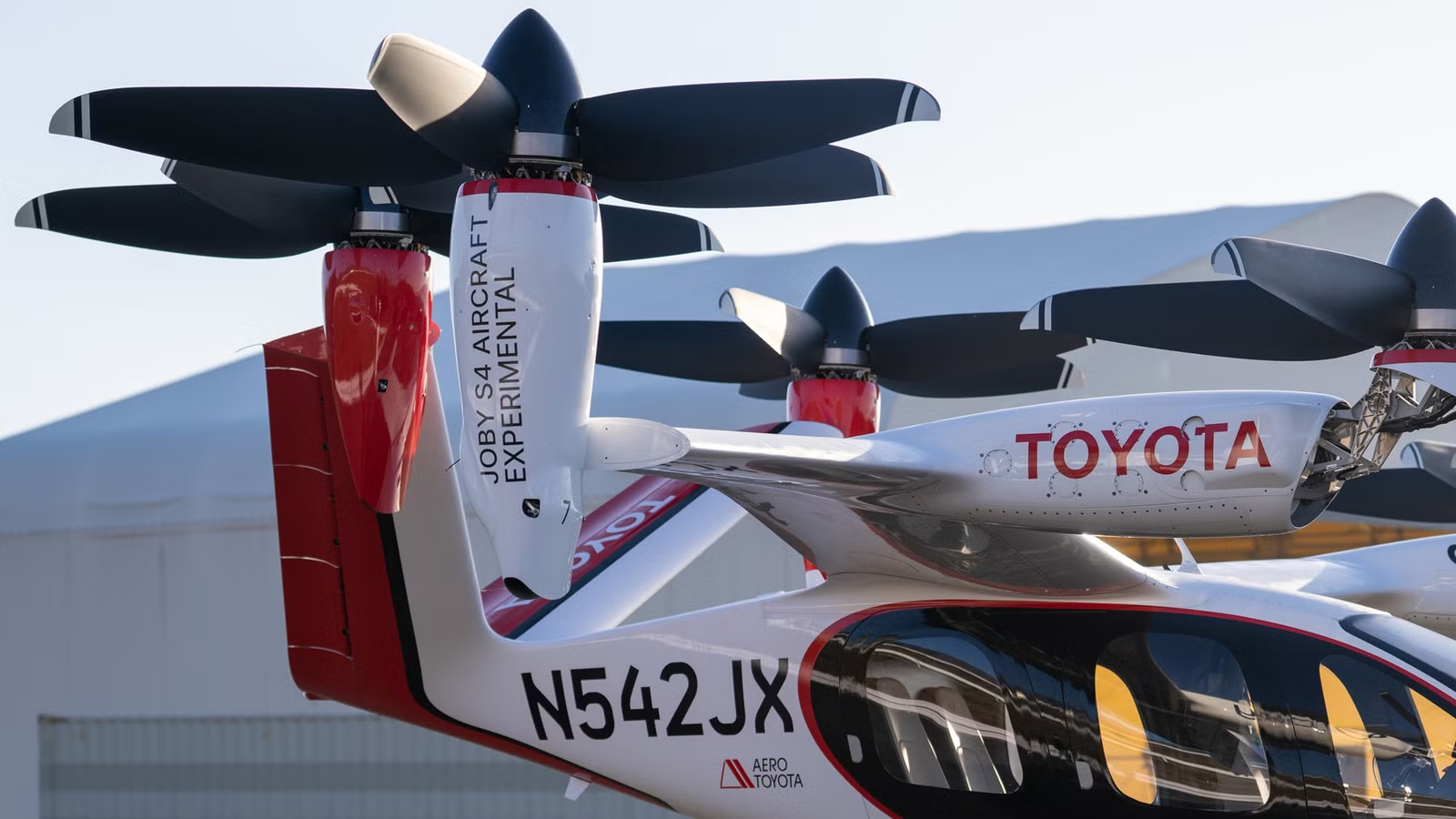
Florida has already built the nation’s first aerial testing site at the 475-acre FDOT SunTrax facility, which also works as a testing ground for self-driving cars. Companies working with FDOT on the program include United Airlines, Miami billionaire Stephan Ross-backed Archer, Amazon-backed BETA, Toyota, Joby Aviation, and Honeywell-backed Electra.
It’s worth noting that Archer Aviation claimed in 2021 that it planned to have its taxi vehicles flying across Miami skies by the end of 2024. According to Beta Technologies, its aircraft can travel more than 300 miles on a single charge. The ultimate goal is autonomous air taxis.
CarBuzz Insight – Why This Matters
Toyota Joby Air Taxi Experimental Full ViewToyota
Beyond the obvious chicanery of using federal money to build an electric air taxi service for the rich rather than its intended use of building out a public charging network, there are other considerations. If driverless cars still have a long way to go both technologically and legislatively, a driverless flying electric taxi network faces even greater hurdles, given that aircraft failures carry far more catastrophic consequences than ground-level mishaps.
Florida’s government is pouring both national and state taxpayer money into the air taxi network, effectively subsidizing speculative startup companies like Archer, BETA, Joby, and Electra. Instead, it could have helped Floridian drivers as well as small businesses like gas stations, restaurants, and grocery stores by using the money for car chargers as intended.
Source: Miami Herald
