

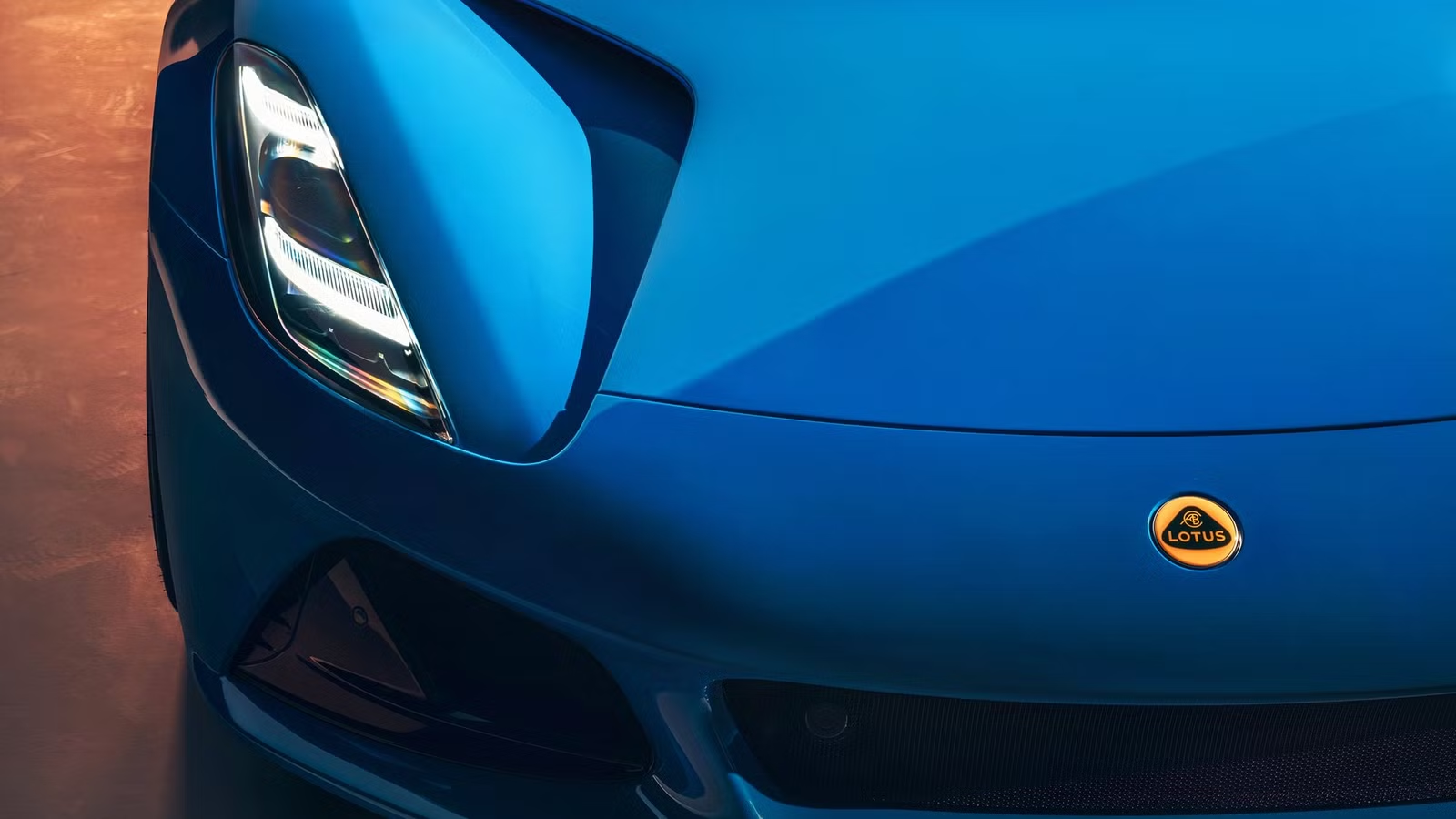
Lotus in recent years has pursued Porsche’s formula, selling SUVs and sedans alongside its sports cars in a bid to attract more mainstream buyers and drive growth. But in the US, that strategy has run into a wall.
A mix of challenges over the past few years, mainly due to its links to Chinese auto giant Geely, has forced Lotus to rethink its ambitions, leading to a series of U-turns that has led to the brand selling only one model here, a sports car. That’s a niche business, for what is already a niche brand, but the good news is that Lotus has no plans on exiting the market.
Risky EV Plan Clashes With Reality
Lotus Emeya And EletreLotus
For decades, Lotus operated on a shoestring budget and often seemed just one misstep away from bankruptcy. That changed in 2017 when Geely acquired the historic British sports car marque. Fresh from helping revive Volvo with its technology and deep pockets, the Chinese automaker hoped to work similar magic at Lotus. The plan was ambitious: transform a brand known for lightweight, gas-powered sports cars into an EV player with the Eletre SUV, Emeya sedan, and Evija hypercar. Unlike traditional Lotuses, the new family-friendly models would also be built in China rather than at the company’s historic home in Hethel, England.
The strategy was bold, but a series of developments quickly derailed it. Demand for EVs cooled just as Lotus prepared to launch the Eletre in the US, while Washington imposed steep tariffs on Chinese-built electric vehicles. Just this year, the US Department of Commerce’s Connected Vehicle Rule added another hurdle. The regulation, which takes effect from the 2027 model year, bans certain Chinese and Russian vehicle technology on national security grounds. The rule has already forced fellow Geely brand Polestar to exit the US, and Lotus faces similar challenges due to its heavy reliance on Chinese technology. Volvo has largely avoided disruption so far thanks to an exemption.
Lotus Doubles Down On Sports Cars
Lotus Emira 420 SportLotus
Despite the headwinds, Lotus isn’t giving up on the US market. In a recent interview with MotorTrend, Lotus Americas President and CEO Massimiliano Trantini said the brand is here to stay, even if that currently means relying on a single model: the British-built Emira gas-powered sports car. As for its EVs, the Evija hypercar was never homologated for the US market, and the Emeya never made it over.
Lotus did launch the Eletre here for the 2025 model year, initially absorbing a 100 percent tariff by offering only the Eletre Carbon special edition, which carried a hefty $232,900 sticker price. According to Trantini, that strategy became unworkable once tariffs climbed to 150 percent, prompting Lotus to pull the Eletre after selling a limited number of vehicles. Trantini confirmed that the Eletre was not sold as a MY26 vehicle. Whether the Eletre, and potentially the Emeya, goes on sale in the US in the future will depend on how the trade landscape and connected-vehicle regulations evolve, Trantini said.
What’s Next For Lotus?
Horse Powertrain W30 V6Horse Powertrain
The slowdown in EV demand has already pushed Lotus to rethink its product strategy. The company recently introduced internal-combustion power to the Eletre via a new plug-in hybrid powertrain, marking a sharp departure from the SUV’s original EV-only mission. Lotus has also committed to keeping the Emira alive longer than planned. The sports car was originally destined to give way to a now-canceled electric successor, but changing market conditions have prompted the automaker to invest in fresh powertrains instead.
Leading the charge is a new 536-horsepower hybrid setup built around a turbocharged 3.0-liter V6 from Horse Powertrain, the Geely- and Renault-backed engine supplier. The powertrain, due in 2027, is set to replace both the Mercedes-AMG-sourced turbo-four and Toyota-derived supercharged V6 currently offered in the Emira. Lotus has also previously confirmed a plug-in hybrid version of the Emira, further signaling that electrification and combustion will coexist in its future lineup.
Lotus Type 135 V8 Supercar TeaserLotus
Looking further ahead, Lotus plans to launch a hybrid V8 supercar in 2028. Widely tipped to revive the legendary Esprit nameplate, the model could represent the brand’s best chance of expanding beyond the Emira in the US. If Lotus keeps production in Hethel and avoids excessive reliance on Chinese connected-vehicle technology, the long-awaited return of the Esprit may yet give American enthusiasts something new to look forward to.
CarBuzz Insight – Why This Matters:
Lotus has survived more crises than most automakers, and the industry would be poorer without it. Few brands can match its engineering pedigree or knack for building genuinely rewarding driver’s cars. The road ahead remains challenging, but by adapting to changing market realities instead of stubbornly sticking to a failing plan, Lotus is giving itself its best chance to thrive in the years ahead – including hopefully on these shores.
Sources: MotorTrend
