

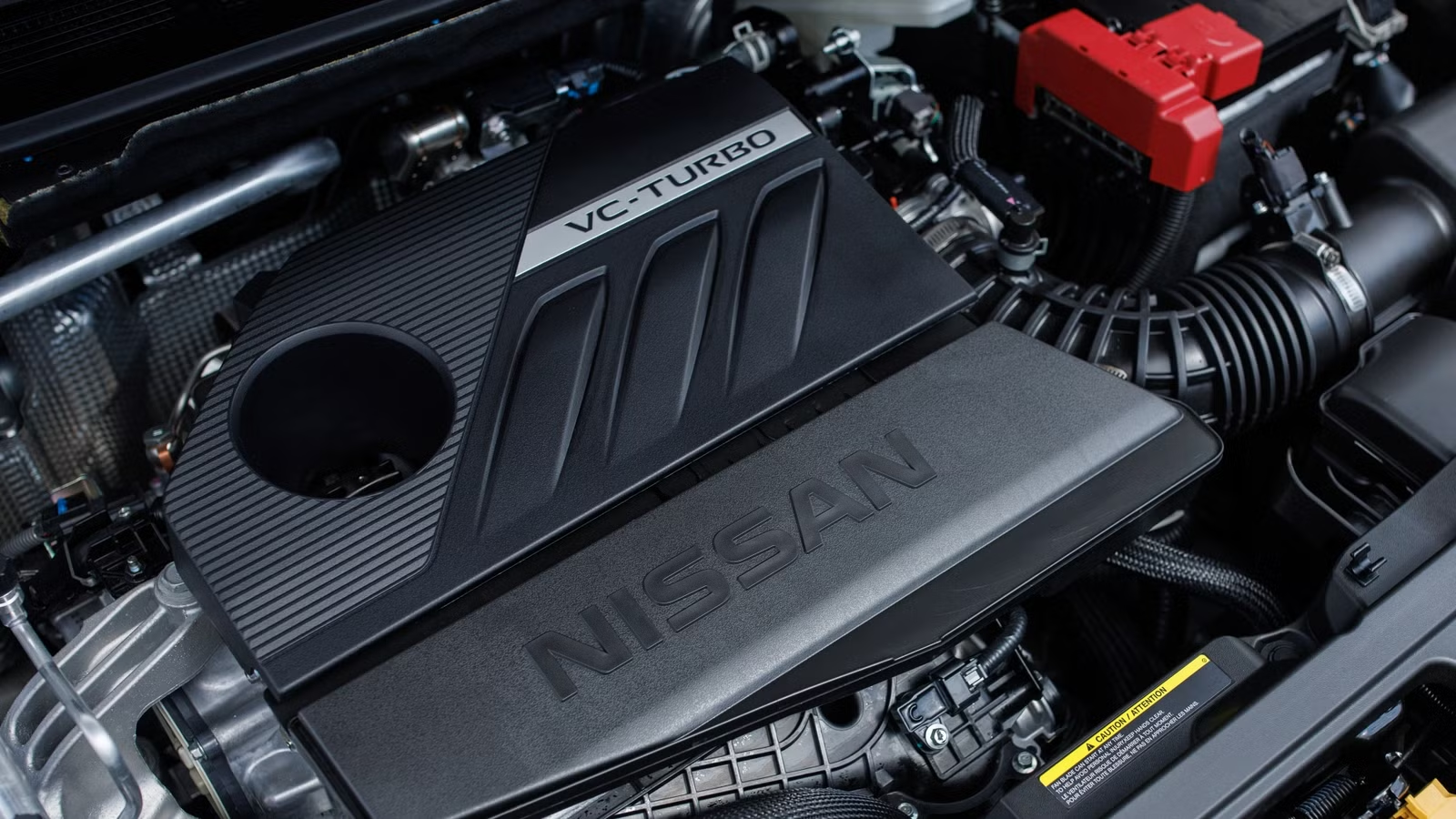
Nissan’s 1.5-liter variable compression engines are an amazing feat of engineering. But, as engineers and mechanics are well aware, a feat of engineering doesn’t always translate to a feat of customer satisfaction or reliability. A new engine teardown video shows how Nissan’s neat variable engine works, and why this particular one failed at just 43,000 miles.
While Nissan does have a recall on the engines for bearing problems, this teardown suggests there are other fatal flaws affecting the VC’s lifespan.
This Nissan VC Turbo Engine Has Gone Rogue
Nissan VC Turbo teardownIDoCars/Youtube
The three-cylinder engine came out of a 2023 Nissan Rogue with just 43,000 miles. Eric from I Do Cars is an expert at tearing engines down as part of running an auto recycling business, and so this KR15 VC Turbo engine takes no time at all to get down to its basics.
Eric pulls off the cam covers to reveal the hilariously small camshafts of this 1.5. As much as these sub-sized camshafts give us the giggles, they don’t reveal any signs of why this engine failed so early.
Removing the EGR valve and cooler and the electronically adjustable thermostat don’t show any problems either. Eric keeps tearing down parts you’d never believe a car needed – like fuel line noise dampers – and the high pressure fuel pump mounted to the top of the engine.
After about 50 fasteners, Eric finally removed the timing cover. The timing chain guides and the chain itself appear to be in good shape, but we can also see the first obvious signs of failure. Yes, the engine has been left outside with no turbo and no spark plugs, but the oil still shouldn’t look like a chocolate milkshake. That’s a clear sign of engine coolant getting into the oil.
When the shoebox-sized cylinder head came off, we were expecting to see head gasket damage. That’s the usual cause of coolant in the oil and that milkshake effect, but again, there’s no visible problems with the gasket, though. At least not anywhere that can let coolant get into the oil system. There is a shocking amount of wear in the oil pump, but that could be the result of coolant in the oil, and isn’t the cause.
Nissan VC Turbo teardownIDoCars/Youtube
The most interesting part of the video is where Eric shows the system that lets the variable compression engine actually vary its compression. An A-shaped link is controlled by an actuator, changing the effective length of the connecting rod, thus raising and lowering compression. And it can vary by a surprising amount, but alas, that’s not why this engine is being torn down.
What Actually Killed This VC Turbo?
A look at the connecting rod bearings, or the equivalent of them on this engine, shows more significant wear. It’s still not engine-killing wear, even if it’s not good for the age of the engine. The crankshaft looks ready to go into another engine, along with the compression adjusting shaft.
Despite taking the engine down to its basic components, there are no obvious signs of how the coolant got into the oil. So Eric digs even deeper. He actually dismantled the head gasket to check for small problems, and there is some evidence that coolant may have leaked through in a few areas with strange wear.
He also notes the finish of the cylinder head around the combustion chambers is rough, though there aren’t any cracks. Interestingly, the head bolts didn’t have the same tightness either. It all points to a possible issue with the head, but nothing was conclusive.
However, some of the comments on the video might have the real answer. They suggest that they’ve seen problems with porous castings. A porous casting has voids. When the engine is hot, those voids can expand and let coolant flow through, possibly reaching the oiling system. It’s not an unheard of problem, though it is rare.
On this engine, though, we might never know for sure. But it’s clear something major happened, and it wasn’t related to the already widespread bearing issue. At this rate, Nissan might have a very rough future dealing with VC Turbo failures.
Source: I Do Cars / YouTube
