

In theory, plug-in hybrids (PHEVs) should be the best-selling vehicles on the market. The idea is that you plug in to charge overnight, then drive it on electric power until the battery is done, at which point the engine fires up and you have a regular hybrid. In theory, the PHEV is the perfect bridge to an all-electric car future, giving drivers a break from regular gas stops while negating EV range anxiety that maybe people still feel.
Unfortunately, the reality is that plug-in hybrids don’t go far on electric power alone, and because of that, people aren’t that interested in plugging in. But Volvo is about to change that with its game-changing PHEVs coming for 2028.
PHEV Is Finally Become A Practical Reality
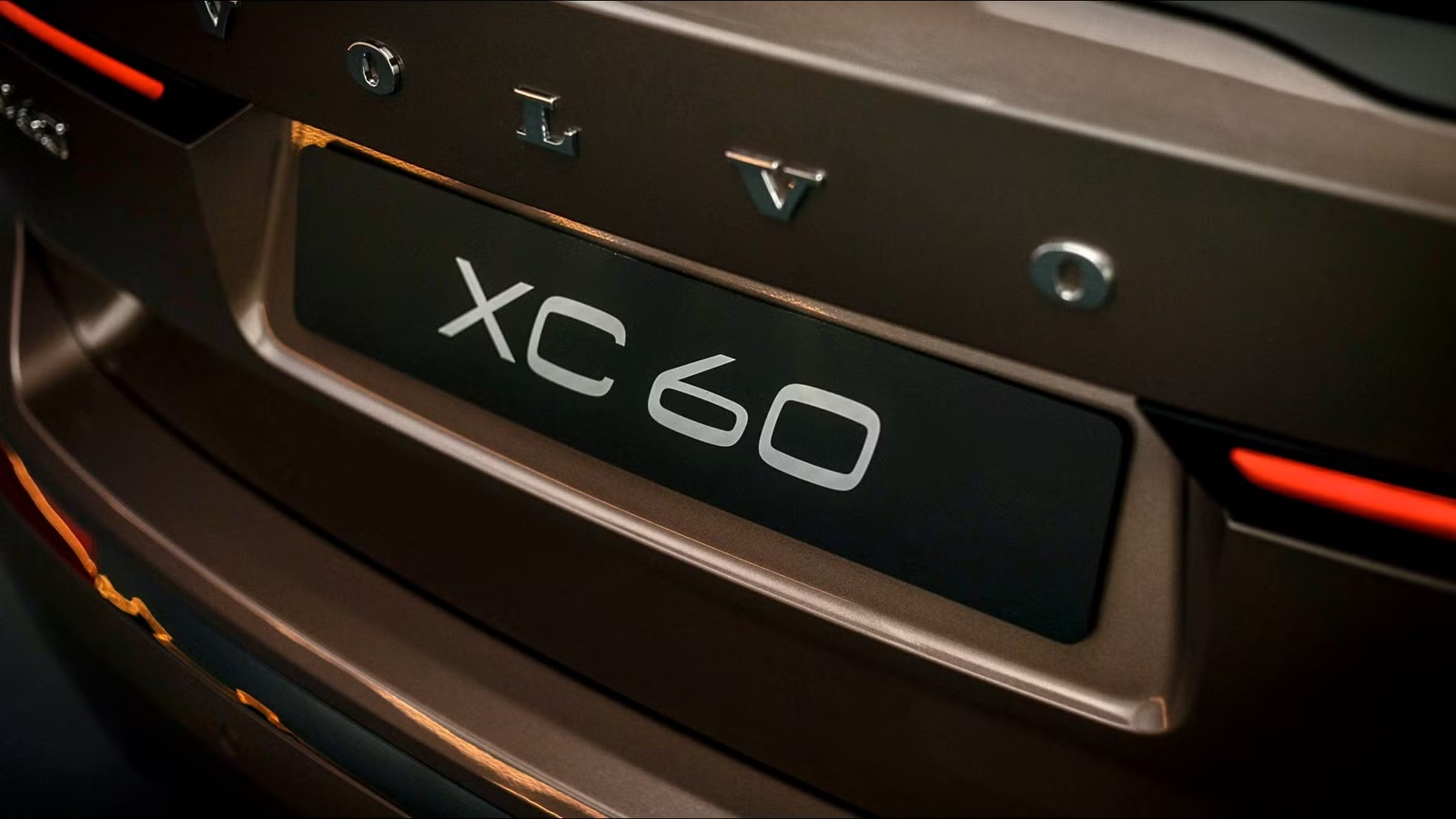
2028 Volvo XC60Ian Wright/CarBuzz/Valnet
The problem with PHEVs that only manage about 30 to 40 miles on electric alone is that it seems like a lot of work to keep charging a car for minimal electric mileage. When we consider that a 41-mile round trip is the average daily commute in the US, plus the added cost of a PHEV, and having to manage charging to get the most out of it – that’s just more friction than many want to deal with. It’s no surprise PHEVs aren’t selling as well as expected.
However, the upcoming Volvo XC60 PHEV comes with a 41.2-kWh battery that Volvo is confident will give the midsize SUV an all-electric range of 78 miles. That’s a sizable pack that, not long ago, was nearly a standard size pack for a fully electric vehicle. With this pack, the XC60 PHEV will have the longest all-electric range in the US market, and that’s not all. The Volvo XC90 will have 73 miles of all-electric range before the 2.0-liter gas engine kicks in.
These are ranges that should accommodate all but the longest commutes, and even a few errands for good measure. It’s a good incentive to keep the car charged up at home, but there’s another hybrid powertrain that could steal Volvo’s thunder once it arrives.
Why Not Just Get An Extended-Range EV?
2026 Ram 1500 REV schematicStellantis
Of course, that other hybrid powertrain is the wave of extended-range electric vehicles (EREV) that should start dropping soon. These vehicles also use a combustion engine, but it’s only designed to power electric motors and charge the on-board battery, not drive the wheels. These vehicles will also have a hefty electric-only range that should easily exceed Volvo’s new wave of PHEVs, but it remains to be seen just how practical or affordable they will be.
Companies like Ford and Stellantis have been touting EREVs for full-size trucks and SUVs, promising the instant torque and power of an EV with the convenience of stopping at gas stations to fill up with gas if you can’t fill up with electricity. But, we’ve yet to see these vehicles reach the market yet; Stellantis has delayed its plans, and Ford’s next-generation F-150 Lightning is still nowhere in sight.
The Stepping Stone To All Electric Vehicles
2028 Volvo XC90Volvo
Quite a few automakers got overexcited about all-electric vehicles being the future, forgetting that, for a multitude of reasons, there was going to be a stepping stone. As a result, automakers are now rushing regular hybrids and PHEVs to market.
Akhil Krishnan, Global Head of Program Management at Volvo Cars, told CarBuzz that the automaker specifically started with the XC60 because it would take three years to develop a new vehicle to target an 80-mile PHEV range. In the end, it took just under two years, and Volvo sees the long-range PHEVs as the bridge to all-electric for its customers.
“We think that the plug-in hybrid propulsion is the perfect stepping to electrification, so that we give the customers the electrified benefits without having any, any concerns about range. So we believe that customers that do move into these long-range plug-in hybrids, they will enjoy the full electric experience, and they will adapt towards getting an all-electric car next.”
– Olof Landin, Commercial Product Lead, Volvo Cars.
CarBuzz Insight – Why This Matters
2028 Volvo XC60Ian Wright/CarBuzz/Valnet
When we say quite a few automakers got overexcited about all-electric vehicles being the future, that’s not an overstatement. Volvo, much to its credit, holds its hands up as being one of them. But government policy and legislation were also to blame, as well as the tech-cycle hype.
For those buying into the all-electric vehicle future, hybrid powertrains were always going to be the bridge as an electric charging infrastructure that allows people the same freedom as a gas station and convenient charging times is a long way off. The average commute might be minimal but, particularly here in the US, people still cover real miles outside of commutes.
It’s understandable that people have been hesitant about PHEVs, with even Toyota’s RAV4 PHEV only hitting 54 miles on electric power (less if you want a higher trim than the base SE model). Delivering 78 or 73 miles of all-electric range makes most commutes comfortable on electric power, and a lot of people will only have to charge twice during the week. And it makes PHEVs convenient, especially as gas prices continue to rise.
Even if Volvo doesn’t have a runaway success with the XC60 and XC90 PHEVs, it will push other automakers to drastically improve their PHEV offerings to be practical for the average driver.
