

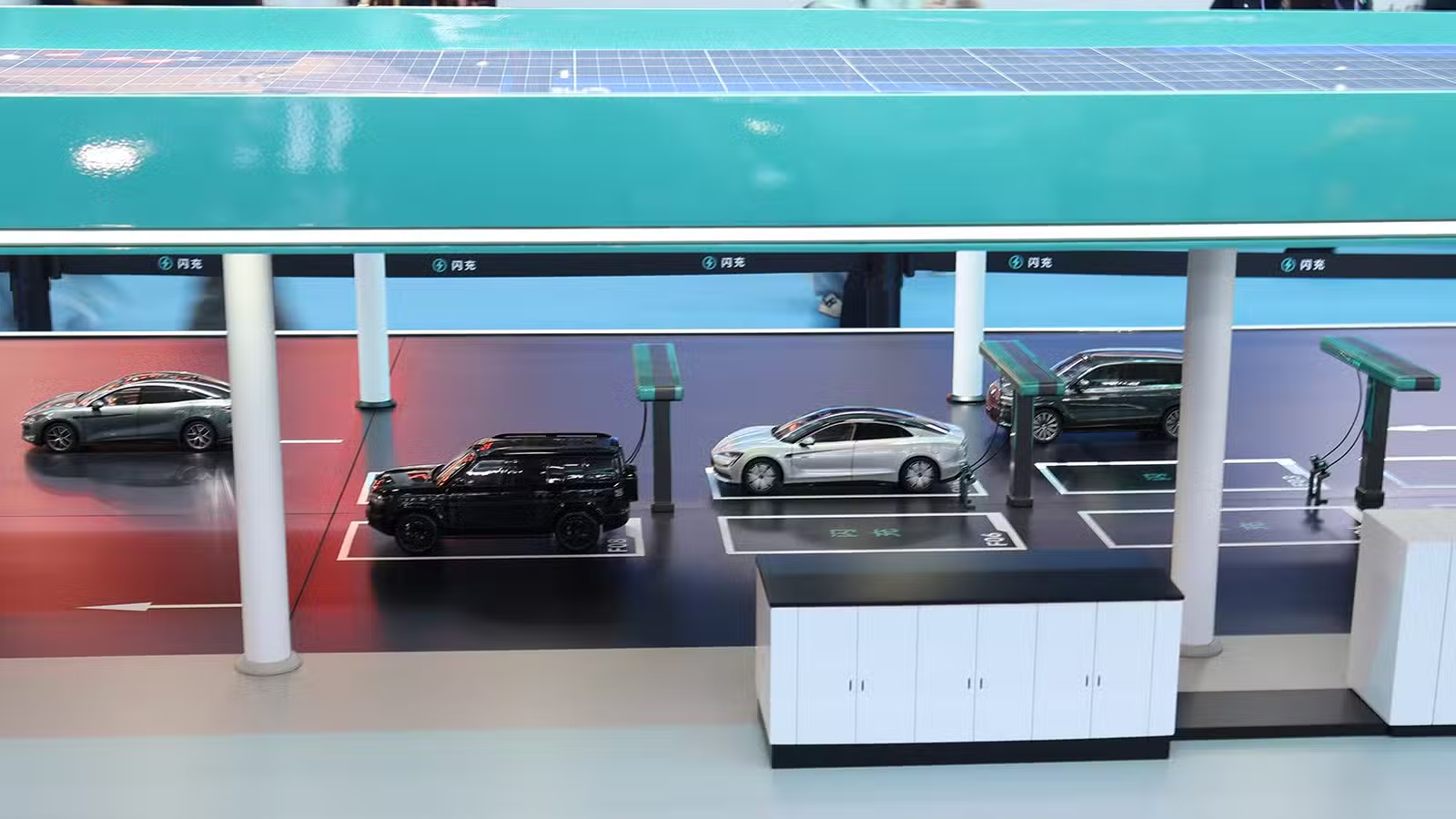
A mock-up of BYD’s fast-charging facility, displayed at the Beijing Auto Show in April 2026. Credit: CnEVPost
- The goal means China’s NEV fleet needs to more than double within five years.
- The plan calls for new-energy operational transport vehicles to make up 25% of the fleet by 2030.
China has released a carbon-peaking action plan targeting a fleet share of 30% for new energy vehicles (NEVs) by 2030, setting a new milestone for the electrification of the world’s largest auto market.
China’s State Council on Thursday released the “15th Five-Year Plan” Carbon Peaking Action Plan, laying out a road map for the country’s goal of peaking carbon emissions before 2030.
The latest target set by the plan means China’s NEV fleet needs to more than double within five years.
China’s NEV fleet reached 43.97 million units by the end of 2025, accounting for 12.01% of the total vehicle stock, according to data from the Ministry of Public Security.
Of those, battery electric vehicles (BEVs) numbered 30.22 million, or 68.74% of the NEV fleet.
The plan also calls for new energy commercial transport vehicles to also account for 25% of the fleet by 2030.
It further requires accelerating the electrification of vehicles in the public sector, promoting the shift to new energy for vehicles operating at construction sites, mines, ports and airports, and supporting the large-scale adoption of new energy heavy trucks.
To underpin NEV promotion, the latest plan proposes improving refueling and recharging infrastructure, including charging and battery swap facilities and green hydrogen, ammonia and methanol refueling, while focusing on national expressways and ordinary national highways with heavy freight volumes to build zero-carbon road transport corridors.
The plan also proposes building zero-carbon waterway corridors and developing vessels powered by electricity, liquefied natural gas, biodiesel and green methanol.
Beyond the transport sector, the plan sets out a series of targets for China’s energy transition.
By 2030, China’s carbon dioxide emissions per unit of gross domestic product are to fall by 17% from 2025 levels, with non-fossil energy accounting for 25% of consumption.
In 2025, non-fossil energy sources including wind, solar, hydro and nuclear made up 21.7% of China’s consumption.
The plan proposes that by 2030, total installed capacity of wind and solar power reach more than 2.8 billion kilowatts, with operating nuclear power capacity reaching about 110 million kilowatts.
By then, installed capacity of new energy storage is to strive to reach 300 million kilowatts, while pumped-storage hydropower capacity reaches about 160 million kilowatts.
During the “15th Five-Year Plan” period, China will accelerate efforts to have incremental electricity demand covered by incremental clean energy generation.
Tian Zhiyu, director of the Sustainable Development Center at the Energy Research Institute of the National Development and Reform Commission, said this carries significant weight for shoring up the security foundation of high-quality development against the backdrop of current turbulence in international energy markets and transport corridors.
He said it means China will move from a development stage dominated by coal, leap over a stage dominated by oil and gas, and gradually advance toward a stage dominated by non-fossil energy, according to a CCTV report.
The plan proposes building around 100 national-level zero-carbon parks and about 500 zero-carbon factories during the “15th Five-Year Plan” period, and calls for strengthening the competitive advantages of industries such as new energy, NEVs and power batteries, while cultivating industries including hydrogen energy and green fuels.
The plan also proposes setting up a national low-carbon transition fund to guide private capital toward projects related to carbon peaking and carbon neutrality.
At the same time, it requires key industries including steel, electrolytic aluminum, cement, flat glass and petrochemicals to advance energy-conservation and carbon-reduction projects.
During the “15th Five-Year Plan” period, carbon dioxide emissions per unit of value added for industrial firms above a designated size are to fall by more than 17%, while energy consumption per unit of GDP declines by about 10%.
China has mapped out a plan to promote new-energy heavy-duty trucks, aiming for a fleet exceeding 1.6 million vehicles by 2030.
