

Just about any version of the Toyota JZ engine is worthwhile if you want good performance and terrific longevity. From the original 1JZ that powered the Toyota Crown in the 1990s to the 2JZ-FSE found in the early-2000s models. The twin-turbo 2JZ-GTE is particularly popular among tuners and gearheads for its 320-horsepower output in cars like the Toyota Supra, but the standard, non-turbocharged 2JZ-GE may have the whole engine family beat when it comes to dependability.
Toyota developed the 2JZ-GE and the 2JZ-GTE in tandem, showing that the intention from the start was to turbocharge this engine. As a result, you have a naturally-aspirated engine built to withstand far more power than it’s actually producing, making for an engine block that can just about last forever.
The 2JZ-GE Is Strong Enough For Twin Turbos
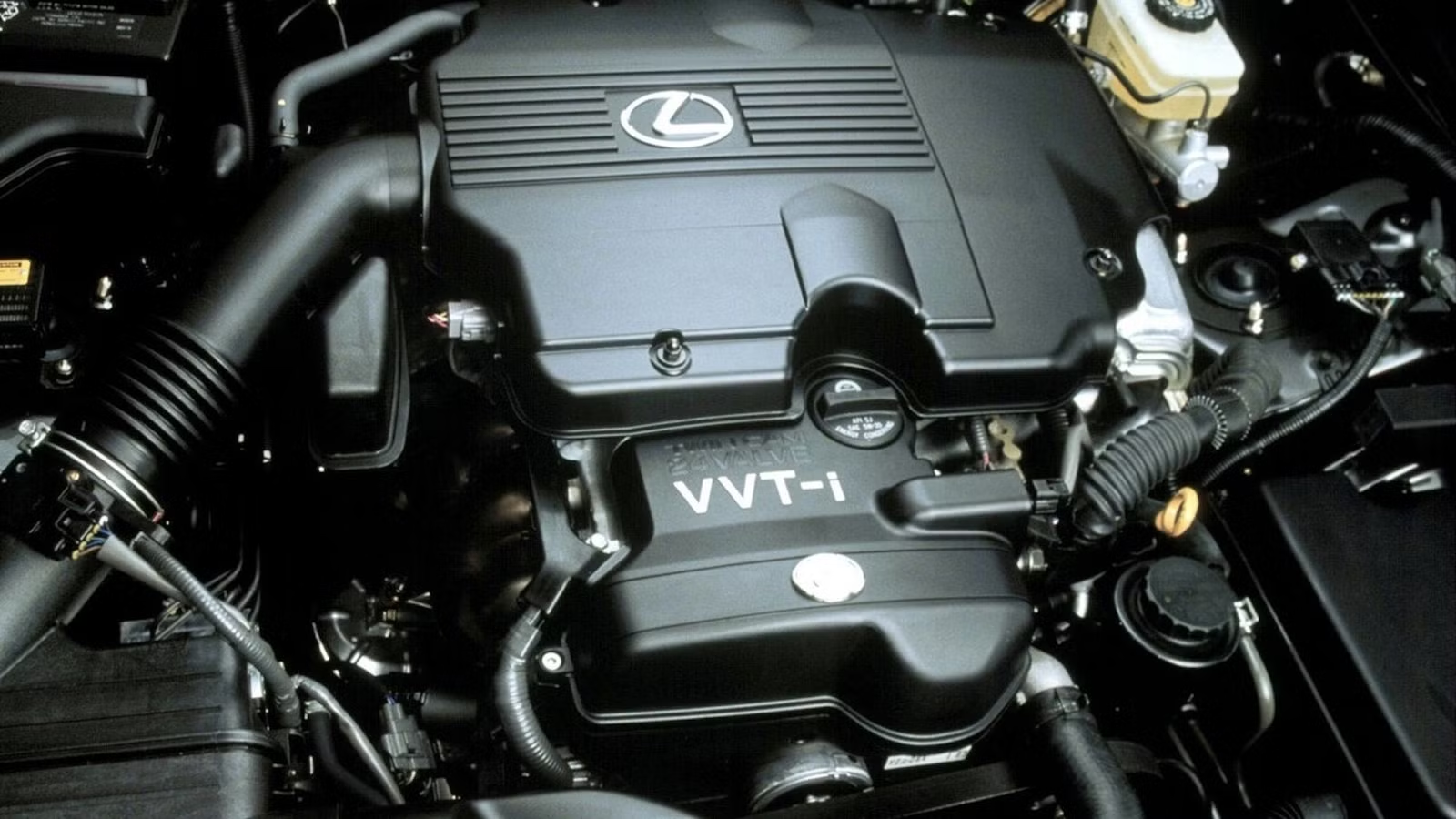
Lexus IS300 3.0L NA 2JZ-GE I6 EngineLexus
To get an idea of what makes the 2JZ-GE so reliable, we can simply compare specs between the GE and its turbocharged twin.
2JZ-GE
2JZ-GTE
Displacement
2,997 NA inline-six
2,997 Twin-Turbo inline-six
Power
212-227 hp
320 hp (US application)
Torque
209-220 lb-ft
333 lb-ft
Bore x Stroke
3.386 x 3.386 Inches
Compression Ratio
10.5:1 (1998+)
8.5:1
All JZ engines are straight-sixes built from cast iron blocks with an aluminum cylinder head. They’re water-cooled, 24-valve with dual overhead camshafts, and the 2JZs were built from 1991 to 2007.
Something you notice at a glance is that the 2JZ-GTE actually has a much lower compression ratio than the naturally-aspirated version of the engine. This allows the 2JZ-GE to stay competitive, with stock horsepower ratings in the 220-hp range and no need for turbos.
It’s possible to push the 2JZ to its limit, but it’s not easy. Look around, and you’ll find tuners building Supras out to 600 horsepower and then some. Internal components will definitely need to be upgraded to get there, but with the right parts, this is a potential supercar engine.
So the 2JZ-GE’s dependability formula is simple: take something built for high-stress driving and set a more modest goal.
400,000 Miles Is Light Work For The 2JZ
YouTube @ I Do Cars
We’ve yet to see a 2JZ hit a million miles, but I Do Cars did a teardown video on a 415,000-mile 2JZ-GE taken from a 1999 Lexus SC300 a few years back.
The thing was, it was still running just fine when the video pulled the unit apart, and proved to be in better shape than some engines at half that mileage. The engine’s forged-steel crankshaft and overbuilt internals, intended for high-horsepower, twin-turbo performance, go a long way toward keeping it looking shiny and new at almost half a million miles.
Related
The Comfortable Luxury Barge That Can Be Tuned To Produce 1,000 HP
Want early 2000s luxury and the ability to build a 1000-hp car? Well, the Lexus GS300 might be the perfect car for you.
The teardown turned up some sludge in the oil pan and some minor wear here and there, but it looked nothing like a 415,000-mile engine. Even the pistons and rings were fully functional.
If any stock engine qualifies as “unkillable,” the 2JZ-GE does. When you hear of one of these powerplants giving out, it’s usually because someone tuned it beyond the point of advisability, or because they were skipping routine maintenance for years on end.
The Tuner Engine’s Boring Brother
1998-2005 Lexus GS Front Angle ViewLexus
Ultimately, the Toyota 2JZ-GE engine benefits from simply being the “taxi-cab” version of the engine. You work out at the gym all month, so day-to-day tasks like moving boxes around in the garage or taking the trash out feel that much easier. That’s the same principle at work in the 2JZ-GE. It’s built for powerlifting, but it’s only tasked with carrying the groceries into the house.
The 2JZ-GTE gets the glory of being a tuner classic, while the 2JZ-GE quietly enjoys a long life of morning commutes and weekend road trips.
If It Ain’t Broke, It’s Probably A 2JZ-GE
1998-2005 Lexus GS Front ViewLexus
No engine is perfect. After 10, 20, 30 years on the road, you’re eventually going to need to make some repairs. Still, it’s hard to find “common problems” when we’re talking about the 2JZ-GE. To find anyone complaining about this engine, you’re probably looking at project car forums, where someone is running into hurdles in a custom build, or someone is cranking a Supra that’s been sitting in storage for years.
Related
The First Car With A Toyota 2JZ Engine Wasn’t Even Vaguely Sporty
The 2JZ engine is one of the most legendary performance units ever made, but its debut came in a car built to be a lover and not a fighter.
Browsing user forums and subreddits, as well as some of our own maintenance articles on the engine, we were able to turn up the following comments from 2JZ-GE owners.
- A user in the r/projectcar subreddit states that “the most neglected part in a stock JZ is usually the timing belt.”
- Another user in the r/projectcar subreddit adds, “Start with the basics. Just doing spark plugs, air filter, and an oil change will give you stuff to look at to determine if you need to do more work, or if someone took the time to maintain it.”
- A user in the Lexus IS Forum reports leaking valve cover gaskets. Most of the wear-and-tear problems you’d likely run into with an old 2JZ stem from these rubber components, which become brittle and crack over time. These are usually worth a preemptive replacement before they become an emergency fix.
- Valve stem seals are another rubber part that can become brittle with age.
- We’ve reported on issues with harmonic balancer degradation. That is, the component that dampens crankshaft vibration. This part can wear down over time and, if left unchecked, can lead to a domino effect of further damage through the engine.
The thing about a 2JZ-GE is that, if you leave it stock, you might wind up with something to pass on to your great-grandchildren. If there aren’t a whole lot of million-mile instances out there, it’s only because it’s such a popular tuning engine. Cranking any engine up to two or three times the stock power output is going to take some years off its life expectancy.
Almost Any 2JZ-GE-Powered Car Is Easy To Recommend
2001-2005 Lexus IS DashboardLexus
Here in the US, we tend to associate the 2JZ-GE primarily with Lexus, though the base Toyota Supra and the SE model also packed a naturally-aspirated 2JZ through the mid-1990s.
Digging around the CarBuzz Marketplace, we were able to turn up the following listings.
- A 150,191-mile 1999 Lexus GS300 is selling for $7,995 in Massachusetts.
- A 145,507-mile 2005 Lexus IS300 is selling for $7,999 in Florida.
- A 221,522-mile 2005 Lexus IS300 is selling for $7,995 in Texas.
- A 145,564-mile 2004 Lexus IS300 is selling for $7,888 in Texas
- A 152,162-mile 2005 Lexus IS300 is selling for $6,995 in California.
- A 65,354-mile 1995 Toyota Supra is selling for $76,990 in Florida.
It’s not hard to find a high-mileage 2JZ-GE-powered car at a nice low price. A Toyota Supra with fewer than 100,000 miles on the odometer, on the other hand, may go for more than you’d spend on a brand-new Porsche.
It’s A Seller’s Market Out There
2001-2005 Lexus IS Rear Angle ViewLexus
The problem with shopping for a used 2JZ-GE isn’t that they’re not out there; it’s that few people want to sell. If you’ve got a naturally-aspirated Toyota engine in good shape at 100,000 miles, you’re probably going to hold onto it for another 100,000 or 200,000 miles.
We wouldn’t say this about most engines, but when it comes to a 2JZ-GE, $8,000 is a fair price for something with around 150,000 miles on the odometer. If it’s been well maintained, and if you continue to maintain it, you can easily double that mileage.
Going over RepairPal maintenance estimates for these cars, here’s what we’d be spending on maintenance, year after year.
Model
Annual Maintenance Estimate
Lexus SC300
$425
Lexus GS300
$434
Lexus IS300
$428
Toyota Supra
$561
If you can find a 2JZ-GE in good condition, at a fair price, don’t let six-figure mileage scare you away. As long as the seller can provide service records and it passes the test-drive and pre-purchase inspection, 150,000 miles is just getting started for this powerplant.
Sources: Toyota, RepairPal, r/Projectcar, Lexus IS Forum.
