

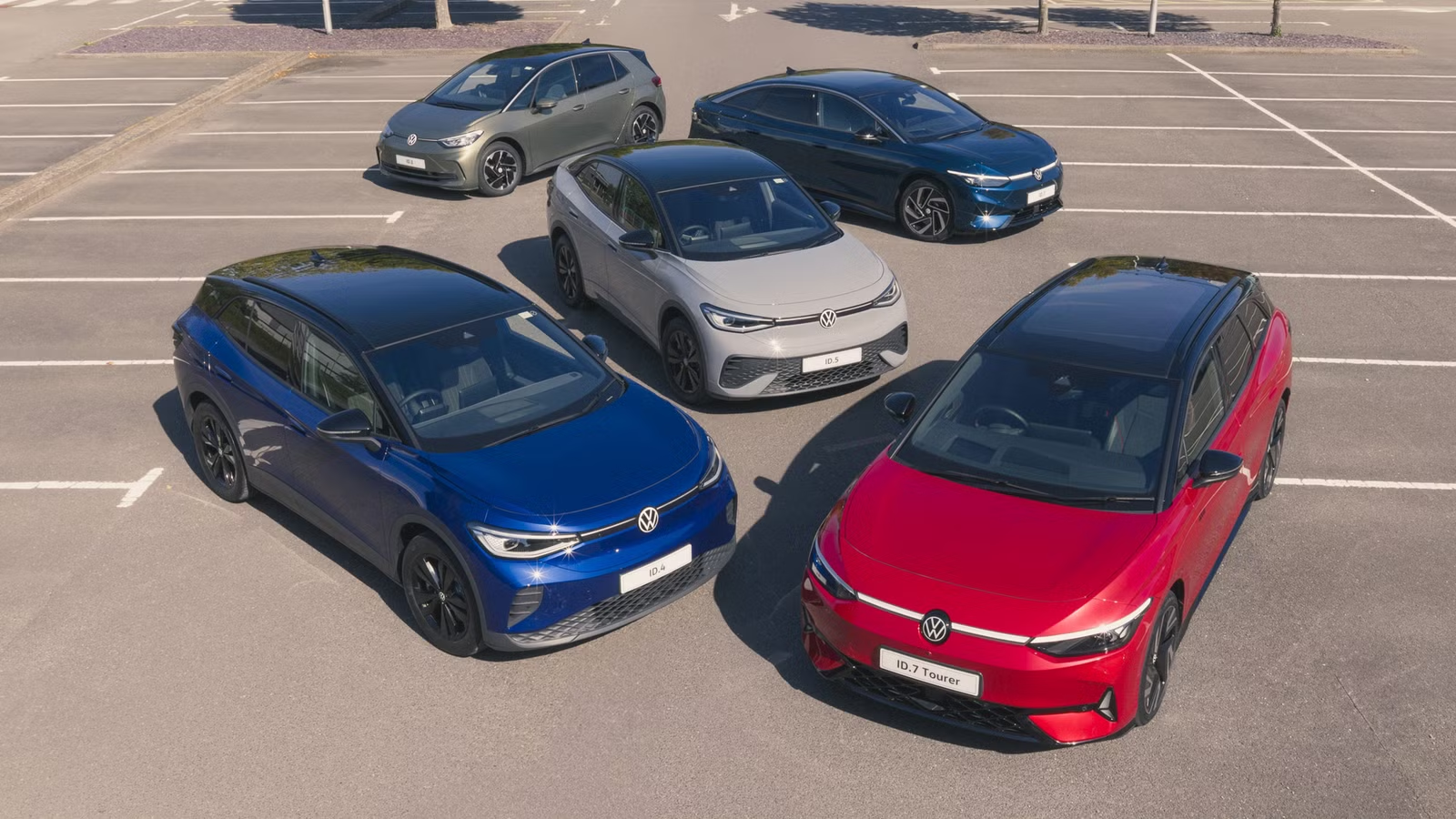
The Volkswagen Group, like most established automakers, is under pressure from all sides. Fierce competition from China, US tariffs, and slower-than-expected take-up of its expanding EV lineup have forced the automaker to consider drastic measures, including as many as 100,000 job cuts and multiple plant closures by 2030.
In July, the group also outlined plans to reduce the number of models and variants across its eight car brands by as much as 50%. Thomas Schäfer, head of the Volkswagen brand, has now revealed more details on the plans, namely that the cuts will be a gradual and logical process.
VW Has Been Planning To Cut Its Lineup For Some Time
VW Group’s plan to cut models is designed to curb costs while focusing on the most profitable segments, and speaking with Autocar at this week’s Paris Motor Show, Schäfer acknowledged that Volkswagen, the group’s biggest brand by volume and the one with the most diverse lineup, certainly isn’t immune.
However, he said that the cuts will come through a “natural transition” rather than simply taking the axe to models that aren’t selling brilliantly. He said preparations for the reduction have been underway for some time, as the automaker was already looking to shrink its lineup in response to Europe’s planned 2035 restrictions on the sale of new gas- and diesel-powered cars.
“We started this debate mainly because of the 2035 end of combustion engines in Europe.”
– Thomas Schäfer, Volkswagen Brand CEO
How Will The Cuts Take Shape?
volkswagen id polo gtiVolkswagen
Schäfer didn’t detail which models would face the axe in his interview with Autocar, but he offered some clues. He said Volkswagen currently sells separate gas and electric models in the same segments, but in the future, the two could be merged, or the gas-powered model phased out, leaving only the EV.
He cited the Polo and ID. Polo subcompact hatchbacks, as well as the T-Cross and ID. Cross subcompact SUVs, as examples. Based on this approach, it’s possible VW’s US-bound ID. Tiguan could eventually merge with the gas-powered Tiguan or replace it.
The shake-up will also see some brands abandon certain segments while others retain them. Schäfer pointed to the planned production version of the ID. Every1 minicar concept as an example. While VW Group has previously offered electric minicars under multiple brands, only Volkswagen will offer one in the future, reflecting the segment’s limited demand.
Development will also become more streamlined. Multiple VW Group brands will continue to compete in the same segments with distinct vehicles, but they will collaborate more closely from the outset. Rather than each brand developing its own vehicle around shared mechanicals, one brand will take the lead and handle most of the development work, helping the group cut costs and eliminate duplication.
Thomas Schäfer With The Volkswagen ID. Cross ConceptVolkswagen
CarBuzz Insight – Why This Matters
VW Group’s dire financial situation, with profit margins barely above zero in parts of its business, means drastic cuts are unavoidable. But enthusiasts shouldn’t assume their favorite hot hatches, sporty wagons, or performance SUVs are about to disappear overnight. The goal is to eliminate duplication and development costs, not necessarily the cars that give each brand its character.
If VW Group gets the balance right, it can build fewer models without making its lineup any less interesting to drive.
Sources: Autocar
