

Rising gas prices and changing federal incentives are reshaping the American car market, prompting more buyers to reconsider how they balance fuel economy, affordability, and convenience. Hybrids have become an increasingly attractive option for drivers seeking to reduce fuel costs without switching entirely to fully electric vehicles.
However, strong demand and limited availability can create some unexpected pricing trends. In some cases, lightly used vehicles are commanding higher prices than comparable brand-new models, challenging the traditional assumption that buying used automatically saves money. For shoppers, comparing actual transaction prices has become more important than ever.
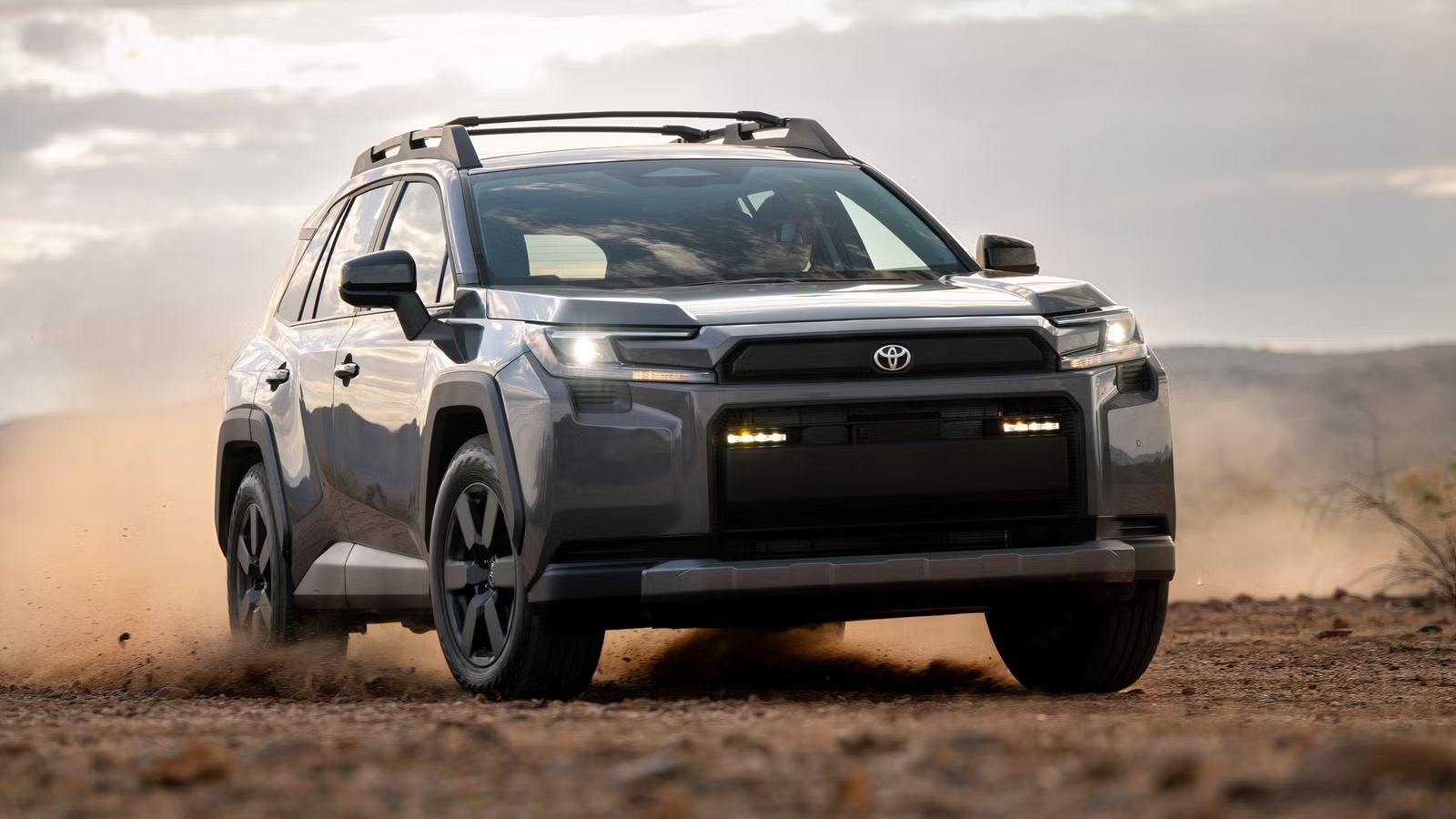
Used 2026 Toyota RAV4 Hybrids Are Selling Above Its Original Price
The used-car market is producing some surprising numbers for buyers interested in popular hybrids. According to CarGurus‘ third-quarter 2026 intelligence report, used 2026 Toyota RAV4 listings average 116% of their original manufacturer’s suggested retail price (MSRP). In other words, shoppers are paying about 16% above the vehicles’ original sticker prices, an unusual premium for vehicles that are already on the used market.
One example illustrates just how substantial the difference can be. Carvana listed a 2025 Toyota RAV4 Hybrid Limited with just 5,606 miles on the odometer for $48,590. According to reporting by the Los Angeles Times, that asking price was $6,040 above the vehicle’s original MSRP and nearly $5,300 more than a new 2026 model. The figures highlight the scale of the pricing anomaly, particularly when a vehicle with some mileage and depreciation behind it carries a higher price than its newer counterpart.
High Gas Prices Are Driving Buyers Towards Hybrids
Gasoline prices have become a significant factor in vehicle purchasing decisions across the United States. In late September 2026, the national average reached approximately $4.40 to $4.48 per gallon, while California drivers faced averages as high as $6.36 per gallon. These costs make fuel efficiency an increasingly important consideration, particularly for commuters and households that rely on their vehicles for daily transportation.
Geopolitical tensions have added further uncertainty to the energy market. The conflict involving Iran and instability around the Strait of Hormuz, a critical shipping route for global oil supplies, have contributed to concerns about fuel availability and prices. Disruptions or threats to shipments through the strait can push oil prices higher because markets must account for the possibility of reduced supply.
For buyers who want to reduce their exposure to volatile gasoline costs, hybrids offer a practical alternative to conventional gasoline-powered vehicles. By combining an internal combustion engine with electric assistance, the powertrain can reduce fuel consumption, especially in stop-and-go driving. The financial benefit depends on the model, driving habits, and purchase price, but elevated fuel costs can make improved efficiency more appealing to buyers weighing their long-term running expenses.
EV Tax Credit Cuts Are Reshaping Vehicle Demand
Changes to federal electric vehicle incentives have introduced another variable into the American automotive market. New EV sales reportedly fell 48% year-to-date following the Trump administration’s decision to cut federal EV tax credits, reducing a financial advantage that had helped make battery electric vehicles more accessible to some buyers. While this decline cannot be attributed to a single factor without further sales data, the loss of incentives may be encouraging some shoppers to consider hybrids instead.
Toyota is particularly well positioned to benefit from this shift. According to CarGurus data, the automaker accounts for 47.2% of all new hybrid sales, reflecting its extensive range of established hybrid models. The technology also appeals to buyers who want improved efficiency without committing exclusively to battery-electric power.
Hybrid variants have become particularly popular in several vehicle segments. Reported figures indicate that hybrids account for 65.7% of Toyota Highlander sales and 61.5% of Grand Highlander sales. The Ford Maverick also records a substantial hybrid take rate of 59.9%. These figures suggest that hybrid powertrains are no longer a niche choice, but an increasingly mainstream preference across different vehicle categories.
Tight Hybrid Supply Is Keeping Used Prices High
Availability is an important part of the pricing equation, particularly for buyers who want a specific trim level, color, or combination of features. Cox Automotive identifies Toyota, Lexus, and Honda among the brands with the tightest new-vehicle inventories in the industry. When dealerships have fewer vehicles available, shoppers may struggle to find their preferred configuration locally, leaving them to wait for incoming stock or consider alternatives that do not fully meet their requirements.
This situation can make a nearly new vehicle on a used lot more appealing to buyers who prioritize immediate availability. Although it may carry a higher asking price, the vehicle is already on the ground and ready for delivery, avoiding uncertainty over when a particular new model might arrive.
CarGurus data adds context to the strength of demand, reporting that popular Toyota hybrids, including the RAV4 Hybrid, Sienna, and Grand Highlander, are spending only 15 to 17 days on dealer lots. Such short selling periods suggest that available vehicles are being absorbed quickly. However, days on lot alone do not establish why individual vehicles sell quickly or prove that every used example commands a premium. Inventory levels and local dealer availability remain important variables for shoppers comparing their options.
New Hybrid Incentives Can Reverse The Price Equation
The advertised price is only one part of what a buyer ultimately pays for a vehicle. Cox Automotive reported incentive spending equivalent to 7.8% of transaction prices for compact SUVs and 6.8% for midsize SUVs, indicating that discounts on new vehicles can make a meaningful difference to the final cost. Although these figures cover their respective SUV segments rather than hybrids specifically, they illustrate why buyers should investigate available offers before assuming a used vehicle represents better value.
A fair comparison starts with equivalent trims and equipment. Buyers should obtain written, out-the-door quotes for both the new and used vehicles, including destination charges, dealer documentation fees, taxes, and registration costs. They should then subtract any applicable manufacturer rebates or dealer incentives from the new vehicle’s price.
Financing also deserves attention. A promotional interest rate on a new vehicle could reduce the total cost of borrowing compared with financing a used car at a higher rate, though eligibility requirements vary. Buyers should compare the total amount payable over the same loan term, rather than focusing only on monthly payments. By calculating the actual cost of each option, shoppers can establish whether a used vehicle’s availability justifies its price or whether buying new makes better financial sense.
Warranty Coverage Can Make A New Hybrid The Better Buy
Warranty protection is another important consideration when comparing new and used hybrids. A new vehicle generally comes with its full factory warranty, giving the owner greater coverage from the outset. With a used vehicle, some of that protection may have already expired or been consumed by the previous owner’s mileage, depending on the manufacturer’s terms and the vehicle’s service date.
The Lexus NX Hybrid illustrates why buyers should examine warranty details carefully. Lexus provides a four-year/50,000-mile basic warranty and eight-year/80,000-mile coverage for specified hybrid components. However, buyers should confirm the applicable terms for the particular model year, including when coverage began, which components are included, and whether any transferable benefits or exclusions apply.
Before paying a premium for a used hybrid, shoppers should compare the final out-the-door prices, current mileage, remaining factory warranty, maintenance records, and vehicle history. They should also examine financing costs and whether a certified pre-owned vehicle includes additional warranty protection or roadside assistance. A used vehicle may still make sense if its condition and price justify the purchase, but immediate availability alone should not determine the decision. The best value comes from weighing the complete ownership package, not simply the asking price.
Base Trim Engine
2.5L Inline 4 Hybrid
Base Trim Transmission
CVT
Base Trim Drivetrain
Front-Wheel Drive
Base Trim Horsepower
183 HP @6000 RPM
Base Trim Torque
163 lb.-ft. @ 3600 RPM
Segment
Compact SUV
Sources: CarGurus, Los Angeles Times, Cox Automotive, Lexus
