

There’s a certain subset of auto enthusiasts who believe the Lotus Elise is the ne plus ultra of driving enjoyment and performance, and it’s not hard to see why. Despite producing just 118 horsepower, the Series 1 model was a snappy performer thanks to its bantamweight mass of around 1,600 pounds. But at least one Elise owner believes there’s room for improvement, and they turned to Singapore-based Crayon R&D to make a few changes. Lighter and more extreme than before, the Crayon S1 project also has one very surprising trick up its sleeve that should flatter Gordon Murray quite nicely.
The Extreme Elise Goes Even Harder
Crayon R&D Lotus Elise S1 ProjectCrayon R&D
One of the goals with the S1 project was to take the already teensy Lotus and make it even lighter. Crayon started with a complete body swap, replacing the original’s composite fiberglass bodywork with prepreg dry carbon fiber to make it lighter and a bit stiffer. Take note of the headlights as well, which share little with the Series 1 car and instead ape the Lotus Type 62 and its Radford-designed modern tribute.
Crayon R&D Lotus Elise S1 ProjectCrayon R&D
The robust aluminum chassis was widened slightly in the rear, making space for a 1.6-inch wider track and the associated thicker rubber. It’s not clear if Crayon made any changes to the powertrain, but the Series 1 did offer up to 192 horsepower in later models, so more grunt might have been extranneous, especially if the project achieves its targeted curb weight of less than 700 kilograms (1,543 pounds) by the time it’s ready for construction.
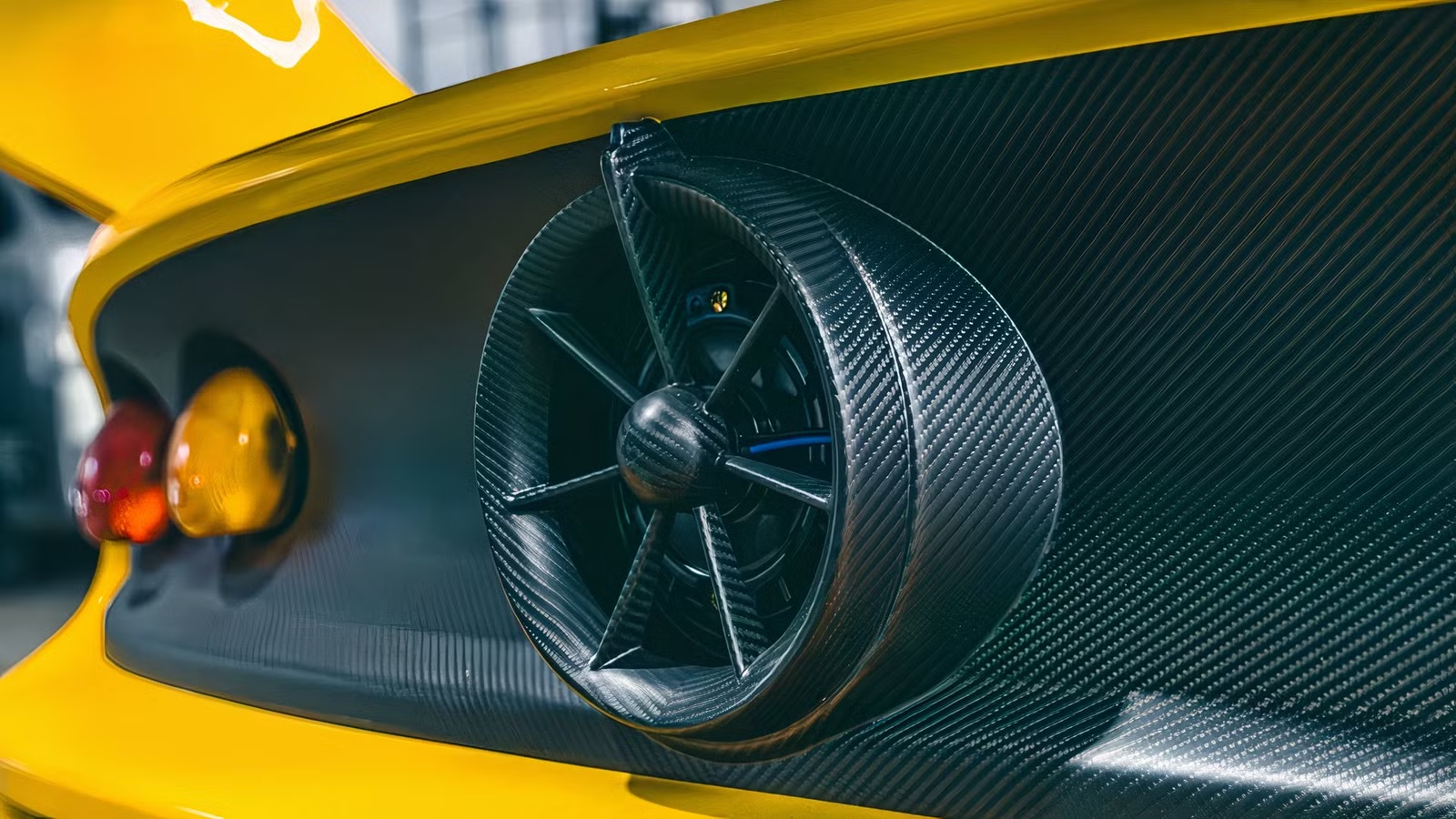
More to the point than straight-line speed is the aerodynamics package that Crayon applied to the Lotus. The front end receives gaping bonnet vents, while a front splitter and fender vent cutouts help route air around and under the car most effectively to reduce drag and improve downforce. At the back is a towering Group 5–inspired rear wing that sits above a high-velocity aero fan, à la the Gordon Murray Automotive T.50 supercar. In the S1 project, the fan helps separate the boundary layers around the exhaust and transaxle for improved downforce.
It Could Enter The Wider Market Someday
Crayon R&D Lotus Elise S1 ProjectCrayon R&D
Although the Crayon Series 1 project started life as a one-off consumer build, the auto builder acknowledged that it had received inquiries on the styling and handling package. As a result, the shop is evaluating if a limited production run of these high-performance sports cars would be in the company’s best interest. That said, in order to cut weight even further, the fan assembly might get removed, and Crayon says it has a number of different wing designs to match aesthetics and performance requirements of each prospective owner.
Related
Lotus Emira Becomes A Supercar Hunter With A Price Tag To Match
By uncorking a couple hundred extra horsepower, the JUBU Performance Lotus Emira is lean and mean, and requires a lot of green.
Pricing for either the prototype with the fan or the potential series cars without it has not been announced, but plan on the Lotus Elise S1 project to demand at least $100,000 – pre-preg carbon fiber isn’t cheap after all.
CarBuzz Take – Why This Matters
The Lotus Elise Series 1 is rapidy becoming a hotly contested new model, with Americans who grew up on Gran Turismo finally getting the sporty roadster we’ve wanted for decades thanks to the oldest examples now being eligible for importation under the 25-year exemption clause with the Department of Transportation. If the demand for imported vehicles continues, it’s possible that prices could rise, potentially leading buyers with higher net worths to seek out new ways to set their cars apart. The Crayon R&D Lotus, with its supercar-aping design, could be just what those folks are looking for.
Related
Lotus Emira Going Plug-In Hybrid In 2027
Lotus is not having a good time, but the brand’s lightweight sports car has been confirmed for a plug-in hybrid in 2027.
Source: Crayon R&D, via Facebook
