

The fourth-generation Lexus GS proves that great cabin design doesn’t expire with age. Marking the end of the GS nameplate, this surprisingly spirited midsize luxury sedan pairs impeccable build quality with timeless styling, premium materials, and ergonomics that still outshine many newer German competitors.
Buyers have noticed. The final GS has held its value remarkably well, so don’t expect bargain-bin pricing just because it’s a decade old. Its combination of reliability, refinement, and a genuinely upscale interior keeps demand high, and used prices reflect that.
Why The Fourth-Generation GS Is The One Worth Buying — And Why It Disappeared
2019 Lexus GS Front 3/4 ViewLexus
The Lexus GS always occupied a sweet spot in the fiercely contested midsize luxury sedan segment. It combines the balanced handling of a rear-wheel-drive sports sedan with the supple ride, refinement, and rock-solid reliability that have long defined the Lexus brand.
That formula earned it a loyal following, but it couldn’t escape the market’s relentless shift toward SUVs. Lexus finally pulled the plug on the GS after the 2020 model year, leaving the similarly sized but front-wheel-drive ES as its midsize luxury sedan. It’s an understandable decision, even if the ES lacks the GS’ driver-focused character. By 2019, the GS accounted for just four percent of Lexus’ US sales, with only 3,378 examples finding homes that year.
The fourth-generation version was introduced for the 2013 model year after making an unlikely debut during 2011 Monterey Car Week. It’s the version to buy today because it represents the peak evolution of the GS formula, blending handsome styling, sharp dynamics, and quality that still feels competitive nearly a decade later.
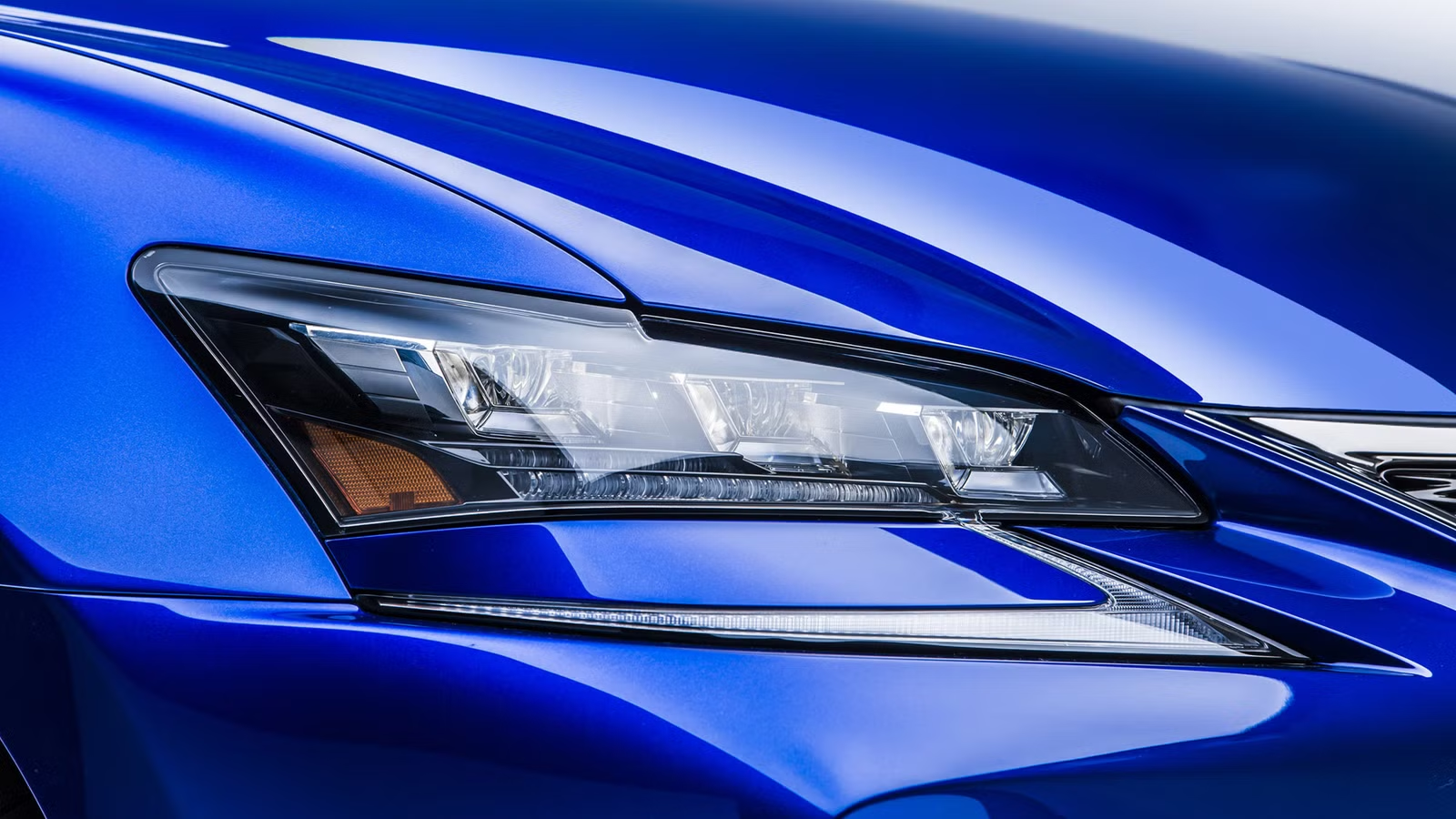
Lexus gave the car a mid-cycle refresh for 2016, sharpening the styling, updating the technology, and introducing the fire-breathing GS F V8 flagship. The cabin changed very little, though, so pre-facelift models shouldn’t be dismissed outright. Even so, if your budget allows, the refreshed car is the better pick thanks to its improved technology, particularly when it comes to safety, and broader range of powertrain options.
2019 Lexus GS Interior ViewLexus
Performance enthusiasts should head straight for the GS F. Its naturally aspirated 5.0-liter V8 produces 467 horsepower and 389 pound-feet of torque, and its legendary durability already makes it feel like a future classic. Buyers who don’t need that level of performance will still find plenty to like elsewhere in the lineup.
Following the 2016 refresh, the range opened with the GS 200t, which used a turbocharged 2.0-liter inline-four producing 241 hp and 258 lb-ft. Above it sat the GS 350 with a then-new 3.5-liter V6 delivering 311 hp and 280 lb-ft, while the GS 450h paired a 3.5-liter V6 with an electric motor for a combined 338 hp and 254 lb-ft of torque. But powertrains are easy to compare – what makes the GS genuinely hard to replace is what happens once you’re inside.
Lexus GS Interior: Refined Rather Than Radical
2019 Lexus GS Interior ViewLexus
The same philosophy that shaped the GS’s rear-wheel-drive chassis – prioritize what matters, ignore what doesn’t – defined its interior, too.
The GS doesn’t rely on flashy design tricks (ambient lighting, anyone?) or acres of digital screens to impress, and that’s exactly why it has aged so gracefully. Instead of chasing the latest trends, Lexus focused on the fundamentals. The dashboard is clean and uncluttered, with physical buttons and knobs for the functions you use most, along with analog gauges, premium leather, genuine wood or aluminum trim, and soft-touch materials on nearly every surface your hands naturally reach.
While there’s still a 12.3-inch infotainment screen, it doesn’t dominate the dash, and you won’t find glossy piano-black panels waiting to collect fingerprints.
One of the cabin’s biggest highlights, and today, a genuine flex, is the beautifully refined analog clock sitting proudly at the center of the dash. It evokes the classic luxury sedans of the past, yet it’s far more sophisticated than its traditional appearance suggests. Lexus machined the clock from a single ingot of aluminum, making it look like a high-end watch. Meanwhile, LED backlighting ensures it’s easy to read at night, while GPS synchronization automatically adjusts the time when traveling across time zones. It’s just the type of feature that reflects the GS’ attention to detail.
2019 Lexus GS Interior ViewLexus
The rest of the cabin follows the same approach, packing in luxury features without making them feel overwhelming. Even standard models came well-equipped with power-adjustable heated front seats, dual-zone climate control, and keyless entry and start, while higher trims added ventilated seats, heated rear seats, premium semi-aniline leather upholstery, a power rear sunshade, and higher-quality dash accents. Audiophiles should also seek out models equipped with the available 17-speaker Mark Levinson surround-sound system, which remains one of the best factory audio systems of its era.
The pre-facelifted GS shares the same basic cabin design, so buyers on a tighter budget won’t be missing out too much. However, it lacks a few of the later car’s finer touches, including the GPS-synchronized analog clock, the 4.2-inch multifunction display in the gauge cluster, and the updated steering wheel design. It also missed out on the Lexus Safety System+ suite of electronic driver-assist features that debuted with the 2016 update. The suite bundles Adaptive Cruise Control, Pre-Collision System with Pedestrian Detection, Lane Keep Assist, Automatic High Beams, Sway Warning, Traffic Sign Recognition, and more.
Lexus GS Reliability: Built To Last, With A Few Caveats
2019 Lexus GS Rear 3/4 ViewLexus
As with most Lexus vehicles, the fourth-generation GS delivers impressive reliability. RepairPal gives it an above-average four-out-of-five-star reliability rating, ranking it among the best cars in its class, while listing annual repair costs as well below the segment average. CarComplaints also records relatively few owner-reported issues, though the car’s initial 2013 model year seems to have significantly more reported issues than any other year, most of them electronic gremlins.
Despite its strong reliability ratings, not every GS will be trouble-free. Like any aging luxury car, maintenance history matters far more than the badge on the hood. Make sure routine servicing has been carried out, inspect the suspension for wear (especially on higher-mileage cars), and verify that all recalls have been completed, including those affecting earlier model years related to the Takata airbag scandal.
2019 Lexus GS Interior ViewLexus
Ironically, the interior is not without one key quality issue, at least on pre-facelift GS models. The dashboard material can be susceptible to heat and prolonged sun exposure, causing the upper dash to become sticky or even crack over time. It’s worth checking the dashboard and door panels for tackiness or discoloration before buying, although many affected cars have already been repaired. Lexus largely addressed the issue with the facelifted model.
How Much To Pay Today
2019 Lexus GS Side VIewLexus
A quick look through the CarBuzz Marketplace and other popular classifieds shows that fourth-generation GS prices start below $10,000, but those cars are typically pre-facelift models with close to 200,000 miles on the odometer. Set a more realistic mileage cap of around 70,000 miles, and you’ll find plenty of well-kept examples priced from roughly $20,000. If your sights are set on the updated 2016-2020 model, however, expect to spend at least $25,000 for a clean example with reasonable mileage.
Those asking prices highlight just how well the GS has held its value. The 2016 lineup started at $45,615 for the GS 200t, powered by the turbocharged 2.0-liter four-cylinder, while the much more common GS 350 carried a starting MSRP of $50,000. Considering that most low-mileage, facelifted GS 350s still command around half of their original sticker price nearly a decade later, depreciation has been surprisingly gentle. That’s an impressive showing in a segment where many luxury sedans lose value rapidly during their first few years.
2016 Lexus GS F front 3/4 angle in blueLexus
The GS F sits in an entirely different league. Thanks to its naturally aspirated 2UR-GSE 5.0-liter V8 and growing reputation as a future classic, prices remain remarkably strong. Expect to pay at least $50,000, with clean, well-maintained examples more commonly advertised around $60,000. That’s not far removed from the 2016 model’s $84,440 starting MSRP. Now compare that with similarly aged BMW M5 and Mercedes-AMG E63 models, both of which have depreciated far more heavily despite offering comparable performance.
Timeless Quality Comes At A Price
2016 Lexus GSLexus
The fourth-generation Lexus GS is proof that great luxury cars don’t have to chase trends to stay relevant. Its well-built, thoughtfully designed cabin still feels special nearly a decade later, while strong reliability, a sporty rear-wheel-drive chassis, and impressive value retention only strengthen its appeal. If you’re shopping for a used midsize luxury sedan and are the type who likes to hold on to a car, few alternatives blend craftsmanship, comfort, and driving enjoyment quite as convincingly. Just note that good examples are priced accordingly.
Sources: Lexus, CarComplaints, RepairPal
