

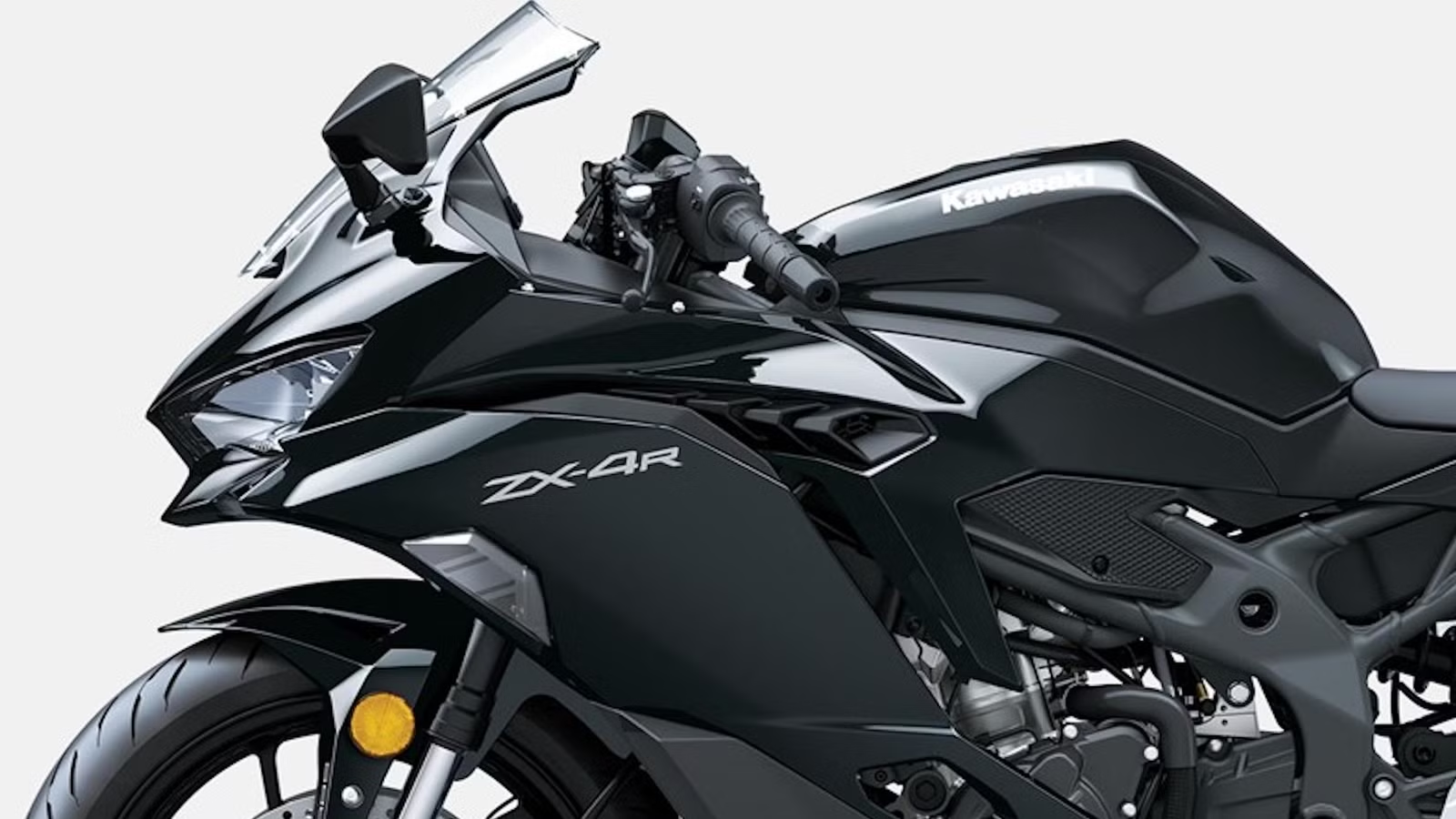
As time marches on, motorcycles seem to be getting bigger and bigger. Not only in terms of physical size, but also in terms of power and displacement. This trend seems particularly evident in the sport bike segment, as power figures reach heights previously not thought possible. In an effort to rein in all the power, manufacturers have also added a myriad of electronic safety nets, which also add weight and cost.
The Supersport Segment Is Flourishing With Options
Yamaha
For a time it looked as if the supersport class was dying a rather quiet death. The inline-four 600s that did stick around were starved of updates, and performance was curbed in an effort to meet global emissions standards. When Triumph and Yamaha discontinued their bikes, things were not looking good, but as quickly as those bikes went away, others were introduced.
2025 Ducati Panigale V2 Elbow Down RearDucati
Ducati, for one, had long since offered a V-twin supersport that didn’t fit into any particular racing class. Other manufacturers followed suit, offering modern supersports all based on existing platforms. All these bikes are more practical, efficient, and affordable, but lack that feeling you get with a high-performance motorcycle. The bike in question is not necessarily a “good old-fashioned” supersport, but rather something new and different that captures the essence of the old class.
The Kawasaki Ninja ZX-4R Is In A Class Of Its Own
MSRP: $9,299
Kawasaki
Few would have predicted that Kawasaki, a motorcycle manufacturer that is deeply invested in green tech, would develop a small displacement inline-four in this day and age. While the Ninja ZX-4R is a global release, it actually started with the ZX-25R, a 250cc screamer that really does hark back to a different time. That bike was mostly developed for racing purposes; the 400cc variant we have before us was developed in an effort to fill a small gap in the market. While the new supersport class has given us a wide selection of affordable twins and triples, none of those bikes offer the same visceral performance you get from a small screamer like this.
Powered By An Inline-Four Screamer Engine
Power: 56 Horsepower
If there was ever a motorcycle you would buy exclusively for its engine, this would be it. It is a niche offering, but for those looking for a scaled-down liter bike, this really is it. You get the full experience, without the fear of breaking the law every time you go out for a casual ride. The only downside is the fact that its torque also sits pretty high up in the rev range, and you will be forced to ride as if you stole the thing most of the time.
One Tune Away From Chaos
Kawasaki
On paper, the bike only seems to be as powerful as other 400cc bikes, but the US model is restricted, not by emissions, but rather by noise restrictions. A simple re-flash or fuel controller will unlock the bike’s full potential (closer to 80 horsepower), but it will cost you your warranty, and most likely your relationship with your neighbors. Depending on where you live, it could also get you in trouble with the law, which kind of defeats the whole purpose of owning a bike like this in the first place. So it is something we wouldn’t advocate, but it is worth considering if you want to convert it into a track toy.
The Ninja ZX-4R Is A Track Bike That Actually Works In The Real World
Kawasaki
*RR version shown
Make no mistake, this is not a particularly practical motorcycle. As previously mentioned, you need to wring its neck a bit to get up and running. But, when compared to your average superbike, it most certainly is. It delivers the same riding experience without the sacrifices usually associated with a bigger bike. Its ergos are racy, but not nearly as aggressive as the Ninja ZX-6R or the Ninja ZX-10R.
For those new to riding on track, this is also an ideal place to start, and will help you hone your skills. Its lightweight steel trellis chassis, sourced from the ZX-25R, offers an ideal balance between rigidity, flexibility in the right places, and affordability. Its chassis also more than makes up for what is a relatively basic Showa-supplied suspension. For anyone with track experience, or plans on using the bike for regular track days, it is well worth considering the RR model (pictured above), which offers an uprated suspension with more adjustability.
An Unexpected Gift Of A Motorcycle
Kawasaki
In terms of electronic features, you get ABS, traction control (which offers some level of adjustability), ride modes, and a modern TFT dash with smartphone connectivity. The quickshifter is reserved for the RR model, but on a bike like this, that requires you to be fully engaged, is not expressly necessary. This is a bike that needs your full attention, and not necessarily a bike you would consider if you were after a more sophisticated modern supersport that is easy to ride. To get the most out of a bike like this requires a certain level of commitment to the cause.
A combination of its high-revving small-displacement inline-four and a dynamic, razor-sharp chassis delivers a riding experience that can’t be replicated by any other sub-$10k motorcycle. It offers amazing value to the right buyer looking for a legitimate supersport which is equally at home on a canyon road, and out on track. While it may not be the best commuter bike in the world, with a wet weight of just 415 pounds, it is most certainly light enough to do the job if required.
Kawasaki
Just like any motorcycle, this won’t be for everyone. We didn’t actually think a bike like this would ever actually make it into full production again, and if it was not for Kawasaki, we doubt it would have. With such a rich sport bike history, it makes perfect sense that the Japanese giant would be willing to develop a motorcycle that other brands might have considered a massive gamble. Its success might actually pave the way for more bikes like this, and we welcome that.
Source: Kawasaki
