

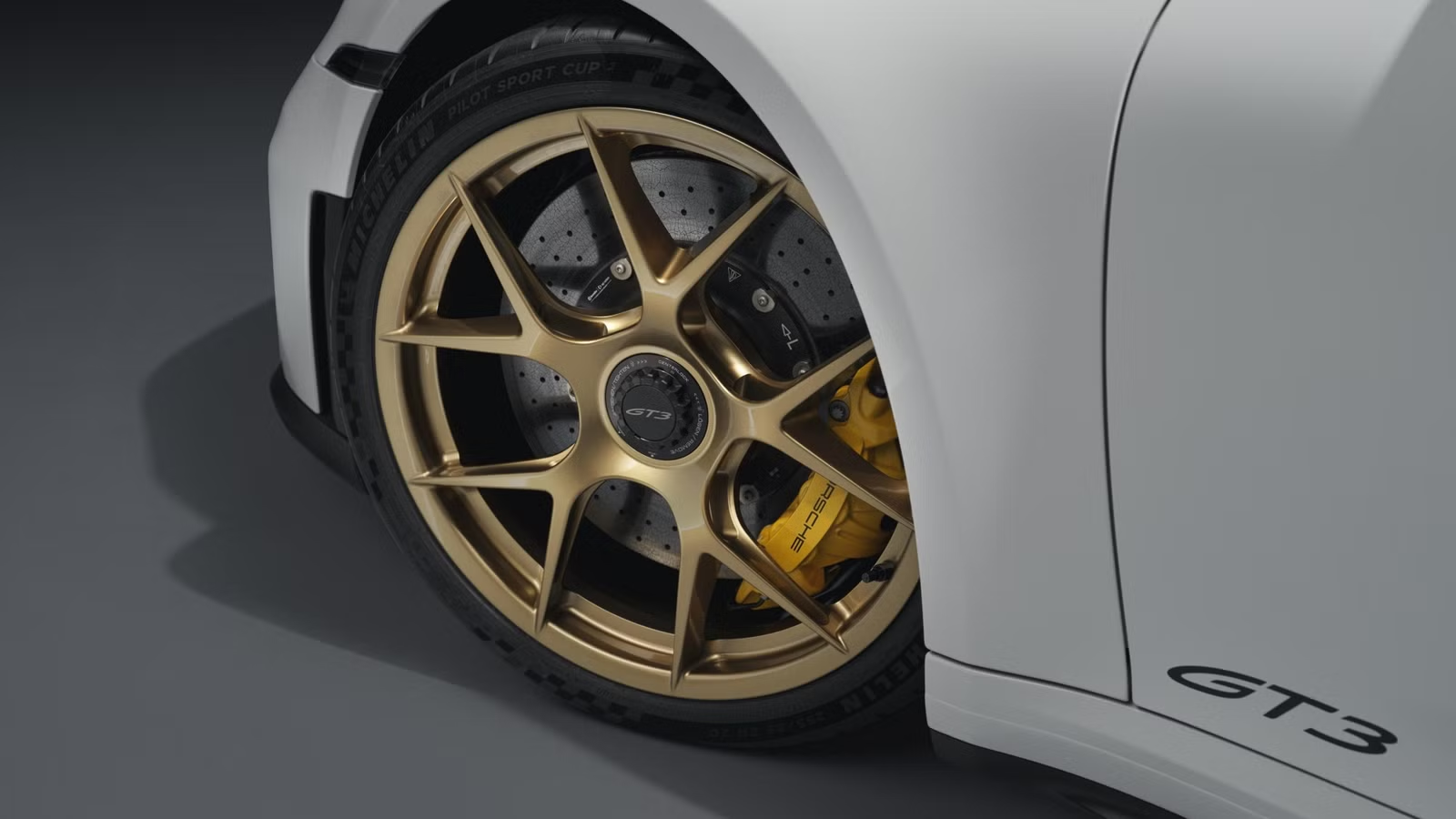
Most sports cars begin losing value the moment the dealer hands over the keys. This Porsche does the opposite. In a performance-car market that has grown increasingly crowded with turbocharged, tech-laden machines that age quickly and depreciate faster, it has carved out a singular reputation: a road car that routinely holds its value, and in several documented cases, has multiplied it. Whether you’re a driver chasing the ultimate analog experience or a collector looking for a tangible asset, this 911 variant keeps making the same compelling argument — and the market keeps agreeing.
That staying power isn’t built on marketing. It rests on a foundation of limited production, motorsport-derived engineering, naturally aspirated powertrains, and a fiercely loyal global enthusiast base. Unlike many modern performance cars that lean heavily on forced induction, electrification, or digital abstraction, this model has stayed true to an analog, driver-first philosophy that becomes more desirable with every passing year. For buyers lucky enough to secure one at MSRP, ownership can feel less like purchasing a depreciating liability and more like acquiring a rolling piece of automotive currency.
Why The 911 GT3 Defies Depreciation In A World Of Disposable Supercars
996 Porsche 911 GT3, front quarter viewPorsche
The strongest evidence supporting the GT3’s reputation as a value-retention champion lies in the numbers. While most high-performance cars lose 40 to 60 percent of their value within five years, multiple generations of the 911 GT3 have proven immune to that trajectory.
One of the most extreme examples is the 2011 Porsche 911 GT3 RS 4.0 (997.2). When new, it carried a U.S. MSRP of $180,000. Limited to just 600 units worldwide and powered by the final evolution of Porsche’s legendary Mezger engine, it has since become one of the most sought-after modern Porsches ever built. In recent years, low-mileage examples have sold at auction for between $1.1 million and $1.3 million, representing an appreciation of more than 600 percent over their original purchase price.
A front 3/4 driving shot of a red 2016 Porsche 911 GT3.Porsche
Even non-RS models show remarkable strength. A standard 2018 Porsche 911 GT3 (991.2) had a base MSRP of around $143,600 before options. Well-kept examples regularly list between $160,000 and $190,000 on enthusiast marketplaces and auction platforms like Bring a Trailer, depending on mileage, transmission choice, and specification — meaning many owners could sell their cars for more than they originally paid.
The trend continues with newer models. The 2023 Porsche 911 GT3 (992) started at $161,100, but real-world dealer pricing often pushed transaction figures closer to $190,000–$210,000. Used examples with modest mileage frequently trade in the $230,000–$270,000 range, according to recent listings — placing them firmly above original sticker pricing, an almost unheard-of outcome for a modern production car.
Naturally Aspirated Perfection: The Mechanical Formula Collectors Can’t Ignore
Front 3/4 view of 2003 white Porsche 911 GT3 RS.Porsche
At the heart of the GT3’s enduring value lies its naturally aspirated flat-six engine, a feature that has become increasingly rare in the modern performance landscape. While turbocharging has brought efficiency and headline power figures, it has also diluted the visceral connection many enthusiasts crave. The GT3 resists that trend entirely.
Consistently Prioritizing Raw Driver Feel Over Tech-Driven Flash
Low-angle front 3/4 shot of 2022 Porsche 911 GT3 in blue parked on trackPorsche
From the Mezger-derived engines of the 996 and 997 generations to the 4.0-liter units found in the 991.2 and 992 GT3, Porsche has maintained a high-revving, throttle-responsive powertrain that prioritizes feel over forced-induction theatrics. With redlines approaching or exceeding 9,000 rpm, these engines deliver an experience that is both mechanical and emotional — qualities that age exceptionally well in the eyes of collectors.
As emissions regulations tighten and electrification accelerates across the industry, naturally aspirated engines of this caliber are effectively extinct in new production. That scarcity makes every GT3 not just desirable today, but increasingly irreplaceable tomorrow. Collectors understand this, and markets consistently reward cars that represent the end of an era. The GT3 doesn’t merely benefit from nostalgia — it actively creates it in real time.
Why We Called The 911 GT3 One Of The Finest Sports Cars Ever Made After Test Driving It
Front three-quarter shot of a red, white, and black 2023 Porsche 911 GT3 RS stopped on a road next to grass.Porsche
Our team had the grand opportunity to test drive the 992.1 GT3, and were enthralled by the aura it gives off at first glance. The iconic lines, the model-specific additions, and the overall stance it possesses let you know that, even though 911s are recognized for their performance ability, this one has something that could easily lap one of the world’s most renowned sports cars. Inside, our team wasn’t met with practicality, but when you approach a GT3 on any given day, the only thought on your mind is speed, cornering precision, and more speed.
On the track, we noted the 911’s natural pendulum effect due to the powerful RWD layout and unique engine placement, which took a few test laps to gain confidence in stretching its legs without worry of putting the six-figure sports car into the wall. Once acclimated, there are few words to describe the visceral engagement, though we attempted to describe the experience with the following sentiment:
Words can’t accurately describe the feeling from behind the wheel. As you go around the track, you start looking for the limit of adhesion. You turn into the corner harder and press down on the throttle a bit more, waiting for that point where the front starts to understeer or the rear lets go. But it never comes. So you point the nose even further into the apex and stand on the throttle, but the revs keep piling on as the GT3 hurls itself through a corner. This car wants to be driven hard. It wants you to use all of the revolutions, all of the time.
Production Doesn’t Meet Demand
Porsche 911 GT3 on trackPorsche
Another key factor supporting the GT3’s exceptional value retention is Porsche’s disciplined production strategy. While the 911 range as a whole is relatively broad, GT3 variants are produced in limited numbers and distributed through tightly controlled dealer allocations. Demand almost always exceeds supply.
This Imbalance Creates A Self-Reinforcing Loop
Porsche 911 GT3 At NurburgringPorsche
Buyers unable to secure new allocations are forced into the used market, where competition keeps prices elevated. Even during broader market slowdowns, GT3 values tend to soften far less than other performance cars, largely because supply never floods the market. Special configurations further amplify this effect. Manual transmission cars, Touring Package variants, and low-mileage examples consistently command premiums. Depreciation curves flatten dramatically — or reverse altogether — once production ends. In financial terms, scarcity insulates the GT3 from the volatility that affects more widely produced rivals.
Motorsport DNA That Translates Directly Into Long-Term Value
Low-angle shot of 2022 Porsche 911 GT3 interior showing front cabinPorscheClose-up shot of 2022 Porsche 911 GT3 interior showing front seatsPorsche
The GT3 was never conceived as a lifestyle product. It exists because Porsche needed a homologation platform for GT racing, and that motorsport DNA permeates every generation. From suspension geometry to aerodynamic tuning and engine durability, the GT3 is fundamentally a race car adapted for the road.
Cars with genuine motorsport lineage tend to age exceptionally well. Enthusiasts value authenticity, and the GT3’s credibility is unquestioned. It doesn’t rely on artificial scarcity or cosmetic packages to justify its existence; its purpose is baked into its engineering. As motorsport regulations evolve and manufacturers increasingly separate race programs from road cars, vehicles like the GT3 become historical markers of a purer era. That narrative resonates strongly in collector circles and directly supports long-term value.
From Track Weapon To Blue-Chip Asset
A front 3/4 shot of a Blue 2018 Porsche 911 GT3.Porsche
Few cars manage to balance usability, performance, and financial resilience the way the Porsche 911 GT3 does. It can be daily driven, tracked hard, and still emerge as one of the safest places to park automotive money. That combination is extraordinarily rare.
While no car purchase should be treated as a guaranteed investment, the GT3’s track record speaks for itself. Certain generations have delivered returns that outperform inflation, equities, and even some real estate markets — all while providing owners with one of the most engaging driving experiences available at any price.
Shot of the Porsche 911 GT3 with its siblingPorsche
In a world increasingly filled with disposable performance machines and rapidly outdated technology, the GT3 stands as proof that engineering integrity, motorsport authenticity, and scarcity still matter. That is why the Porsche 911 GT3 isn’t just a great sports car; it’s one of the closest things the automotive world has to a blue-chip investment.
Base Trim Engine
4.0L Flat 6 Gas
Base Trim Transmission
7-Speed Automatic
Base Trim Drivetrain
Rear-Wheel Drive
Base Trim Horsepower
500 hp
Base Trim Torque
338 lb-ft @ 6250 rpm
Fuel Economy
14/20 MPG
Make
Porsche
Model
911 GT3 RS
Segment
Sports Car
Infotainment & Features
8 /10
Sources: Porsche, Bring a Trailer, Edmunds, Kelley Blue Book
