

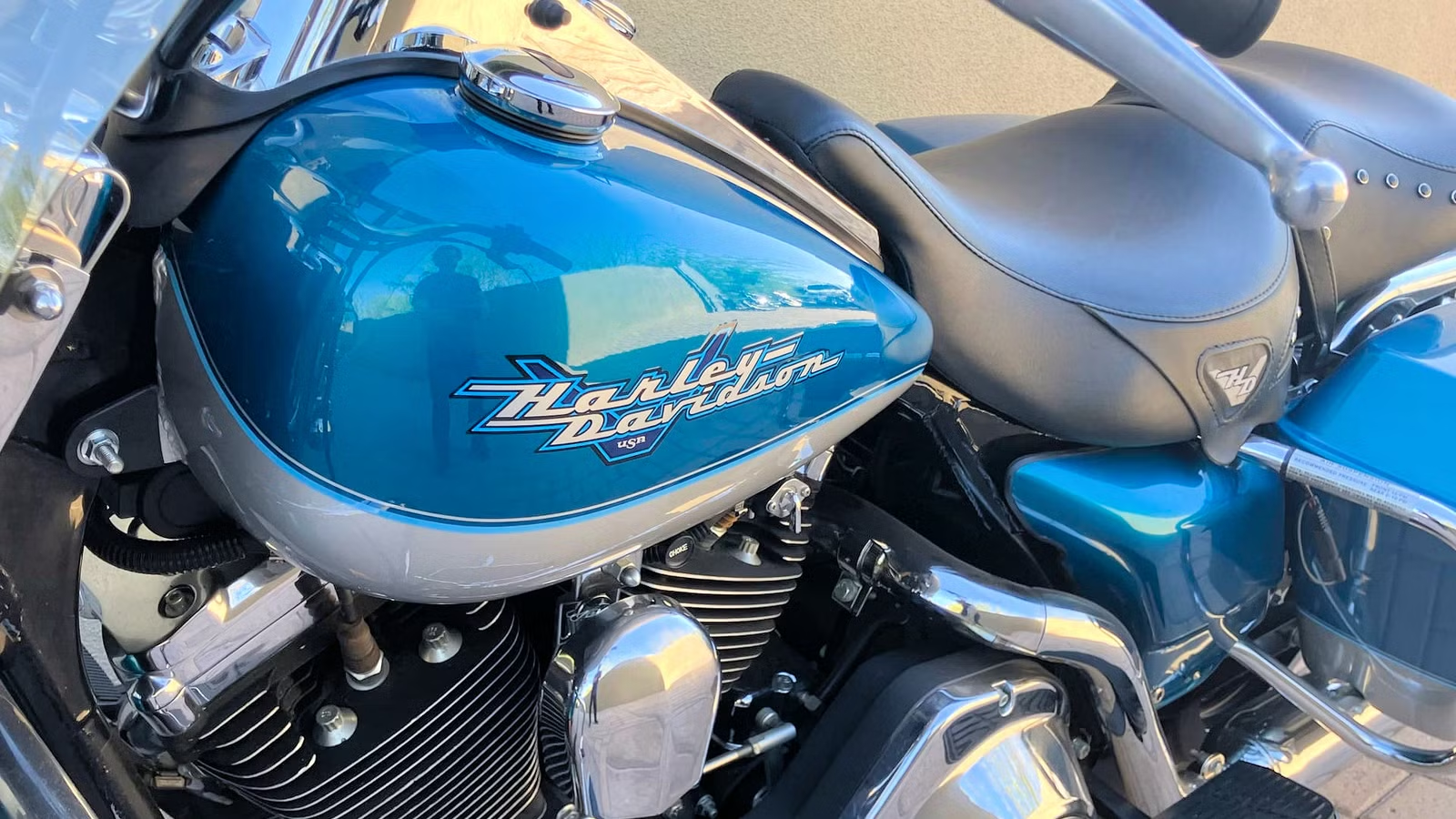
Harley-Davidson has produced some of the most recognizable motorcycle engines ever built. Some became famous for their sound, others for their performance, and a few for completely reshaping the company’s future. But when the discussion shifts to engines that can genuinely survive enormous mileage, the list becomes much shorter. Reaching 100,000 miles takes more than nostalgia or good luck. It requires strong engineering, manageable heat, dependable oil circulation, and an owner willing to maintain the motorcycle for decades instead of seasons.
Plenty of Harley engines can theoretically last that long, but only a handful have consistently proven themselves in real-world ownership. Modern Harley engines may eventually earn that reputation, too, but one powerplant has already established itself as the company’s defining high-mileage workhorse long before the current era of touring bikes and touchscreen dashboards.
What It Really Takes For A Harley-Davidson To Reach 100,000 Miles
Harley-Davidson
A Harley-Davidson engine does not survive six-digit mileage because it spent its life parked in a garage. The bikes that reach that point are usually ridden heavily. They accumulate highway miles, endure years of heat cycles, and survive decades of use without suffering catastrophic failures. More importantly, they belong to owners who treat maintenance as part of ownership rather than an afterthought.
Harley-Davidson
That matters because longevity is about far more than horsepower or displacement. A true high-mileage engine needs stable oil circulation, effective cooling, durable internal components, and enough parts support to remain repairable decades later. If an engine becomes fragile or financially unreasonable to maintain, most motorcycles end up abandoned long before 100,000 miles.
1972 Harley-Davidson FLH ShovelheadMecum Auctions
Older Harley engines often struggled with this balance. Shovelheads became legends because of their character and unmistakable sound, but they also earned reputations for leaks, heat, and constant wrenching. Riders accepted roadside repairs and regular mechanical work as part of the Harley experience. Six-digit mileage was possible, but it usually required an unusually patient owner.
The Milwaukee-Eight’s Case Is Still Being Written
Milwaukee-Eight 114 in a 2020 Harley-Davidson Fat BoyHarley-Davidson
Modern Harley engines are far more refined. The Milwaukee-Eight, introduced for the 2017 model year already appears smoother, runs cooler, and is more reliable than many earlier Harley engines. Plenty of owners have already piled on serious mileage. Still, the platform remains relatively new, so it’s too soon to confidently declare it Harley-Davidson’s definitive 100,000-mile engine. Most examples simply have not existed long enough to build that kind of long-term reputation across the broader riding community.
Rider cruising on the open road on a blue 2026 Harley-Davidson Heritage ClassicHarley-Davidson
That distinction matters because durability is not measured by engineering claims alone. It is measured by decades of riders repeatedly proving that an engine can survive enormous mileage without becoming financially unreasonable to keep alive. One Harley engine established that reputation better than any other.
Related
10 Harley Motorcycles That Last Practically Forever
From touring models to cruisers, all of these Harley-Davidson bikes are built to last.
The Evolution Engine Became Harley’s High-Mileage Legend
1994 Harley-Davidson Road KingMecum
When Harley-Davidson introduced the Evolution Big Twin in 1984, the company desperately needed a reset. The AMF years had damaged Harley’s reputation for quality, and many riders viewed Harley ownership as an ongoing mechanical project rather than dependable transportation. The Evolution engine changed that perception almost immediately.
1984 Harley-Davidson FXRS Super Glide Sport Low RiderMecum Auctions
Known simply as the “Evo,” the air-cooled 1340 cc V-twin replaced the aging Shovelhead and brought major improvements in reliability, cooling efficiency, oil sealing, and manufacturing precision. Aluminum cylinders and heads helped control heat more effectively, while tighter tolerances reduced many of the leaks and mechanical frustrations associated with earlier Harley engines. Just as importantly, the Evo proved durable in real-world use.
The Models That Built The Evo’s Reputation
Mecum
The engine powered much of Harley-Davidson’s lineup through the late 1980s and 1990s, including models like the Softail, Dyna, Electra Glide, Road King, Fat Boy, Heritage Softail Classic, and Road Glide. These were not niche motorcycles ridden occasionally on weekends. They were touring bikes and cruisers that owners used constantly, often piling on huge mileage over decades.
1998 Harley-Davidson Road King 95th AnniversaryMecum
That widespread use helped establish the Evo’s reputation naturally. Riders across the country discovered the same thing independently: if maintained properly, the engine simply kept running. The timing also mattered. The Evo arrived as Harley-Davidson was rebuilding itself and American touring culture was exploding in popularity. Riders were suddenly putting serious highway mileage on their bikes, and the Evolution became the engine that carried Harley into a more dependable modern era. Harley has built more powerful engines since then, but few have earned the Evo’s reputation for straightforward durability.
Related
The Most Reliable Used Harley-Davidson Cruiser That You Can Buy
With almost a 40-year run, the now-discontinued Evolution Sportster is the epitome of reliability
It Still Deserves The 100,000-Mile Reputation
1994 Harley-Davidson Fat BoyBring A Trailer
Some riders push back against the idea that Evo-powered Harleys are true 100,000-mile motorcycles. Much of that skepticism stems from seeing older Harleys that already feel worn out at around 50,000 to 70,000 miles. But there is a major difference between a motorcycle feeling tired and an engine actually being finished.
1991 Harley-Davidson Electra Glide ClassicMecum
By that mileage, many Evo Harleys need suspension work, charging-system repairs, carburetor rebuilds, or cosmetic restoration. Rubber mounts age, electrical systems need attention, and the bike itself can start showing decades of wear. Owners often look at the overall condition and assume the engine is nearing the end, too. Very often, it is not.
The Bottom End Is The Real Story
Mecum
One of the Evolution engine’s greatest strengths is its bottom-end durability. Many owners report Evo engines continuing to run strongly well past 80,000 or 90,000 miles with only routine maintenance and occasional top-end work. And needing top-end refreshes before 100,000 miles does not make an engine unreliable. Many durable motorcycle and automotive engines require valve work, seals, or piston rings over their long service lives. What matters is whether the core engine remains fundamentally solid and economically repairable. The Evo earned that reputation over decades.
Durable, Repairable, And Easy To Keep Alive
1998 Harley-Davidson Road GlideMecum Auctions
Unlike some later Harley engines that became associated with specific weak points, most Evolution issues were manageable and well understood. Owners learned how to keep them alive because the engines responded well with proper care. Regular oil changes, sensible tuning, and avoiding abusive modifications went a long way toward extending their lifespan.
1995 Harley-Davidson Road KingMecum Auctions
The Evo also benefited from simplicity. Compared to newer Harley engines, the Evolution remains relatively straightforward to repair and maintain. Parts availability is still excellent, and independent Harley mechanics know the platform intimately. That simplicity has helped keep countless Evo-powered bikes on the road long after other motorcycles would have been scrapped.
Maintenance Still Matters
Beautiful cherry red 1994 Harley-Davidson Heritage Softail parked on green grass.Via David_S. on Flickr.
None of this means every Evolution automatically reaches 100,000 miles. Neglect can destroy any engine. Poor tuning, overheating, skipped maintenance, and aggressive modifications can shorten the life of even the most durable Harley powerplant. But when riders discuss Harley engines that consistently survive enormous mileage in real-world ownership, the Evolution keeps returning to the center of the conversation.
Related
10 Forgotten Harley-Davidson Bikes That Still Hold Their Own Today
You might have forgotten these Harleys in 2025, but they can still make their case against modern-day alternatives
The Evo’s Legacy Is Bigger Than Mileage
1993 Harley-Davidson Wide Glide 90th AnniversaryBring A Trailer
The Evolution engine’s greatest achievement may not be that some examples crossed 100,000 miles. It is that Harley riders began expecting that kind of durability in the first place. Before the Evo, many riders accepted oil leaks, vibration, and constant repairs as part of owning a Harley. The Evolution helped move Harley-Davidson beyond that era. It proved a Harley Big Twin could still feel mechanical and charismatic while also becoming dependable enough for daily riding and cross-country touring. That changed Harley-Davidson permanently.
Harley’s Original High-Mileage Workhorse
1998 Harley-Davidson Road King 95th AnniversaryMecum
The Evo also became associated with motorcycles that owners kept for decades rather than trading away after a few seasons. Riders piled huge highway mileage onto Road Kings, Electra Glides, Dynas, and Softails powered by the Evolution engine, helping cement its reputation as Harley-Davidson’s true high-mileage workhorse.
1995 Harley-Davidson Fat BoyBring A Trailer
Harley has built smoother and more advanced engines since then, and the Milwaukee-Eight may eventually establish an even stronger durability record. But for now, the Evolution remains the Harley-Davidson engine most responsible for proving that a Big Twin could realistically become a six-digit motorcycle. That is why, decades later, the Evo still stands as Harley-Davidson’s definitive 100,000-mile engine.
Source: Harley-Davidson (Data is supported by experience as a certified Harley-Davidson mechanic, adding practical insight into reliability trends, service intervals, ownership patterns, and long-term durability.)
FAQ
Q: Which Is The Most Reliable Harley-Davidson Engine In Recent Years?
The Evolution engine has proven to be the most reliable powerhouse by Harley-Davidson in the past few decades.
Q: Can The Harley-Davidson Evolution Engine Keep Running For 100,000 Miles?
Yes, there are plenty of Harley-Davidson Evolution bikes that have breached the 100,000-mile mark.
