

Few motorcycle silhouettes carry as much instant recognition as the chopper. That long, low, stretched-out stance has been turning heads for decades — and it shows no sign of fading. The question has always been whether you can have that dramatic presence without sacrificing the reliability and everyday usability that keep a bike in regular rotation. One Japanese manufacturer has quietly been answering that question for years, building a chopper-style cruiser that delivers genuine style alongside genuine practicality.
Choppers Offer A Look That Never Goes Out Of Style
David Lundgren Unsplash
The whole idea behind a chopper is pushing proportions to the limit. Extended rake angles, long front forks, and stripped-down bodywork all work together to exaggerate the bike’s silhouette. Everything is stretched, lowered, and simplified to create maximum visual impact. Form comes first, and function usually takes a back seat. That approach naturally comes with trade-offs. Ergonomics tend to be more laid-back than practical, suspension travel is often limited, and steering can feel slow and deliberate rather than sharp. These bikes aren’t built for aggressive cornering or quick direction changes. They’re built to cruise in a straight line and look good doing it.
Trading Comfort For Aesthetics Is The Point
A front 3/4 studio shot of OCC Go Daddy custom chopper with white background.OCC Bikes
But that’s exactly the point. For a lot of riders, the compromises are part of the charm. A chopper isn’t about chasing performance numbers or lap times. It’s about presence, personality, and the experience of riding something that feels completely different from everything else on the road. That long, low silhouette has become one of the most recognizable shapes in motorcycling, signaling individuality and a rebellious spirit that few other bikes can match. Even as performance bikes and ADVs dominate headlines, the chopper remains a cultural icon.
The Honda Fury: A Chopper With Japanese Reliability And Harley Presence
Low angle shot of a purple 2010 Honda FuryHonda Powersports
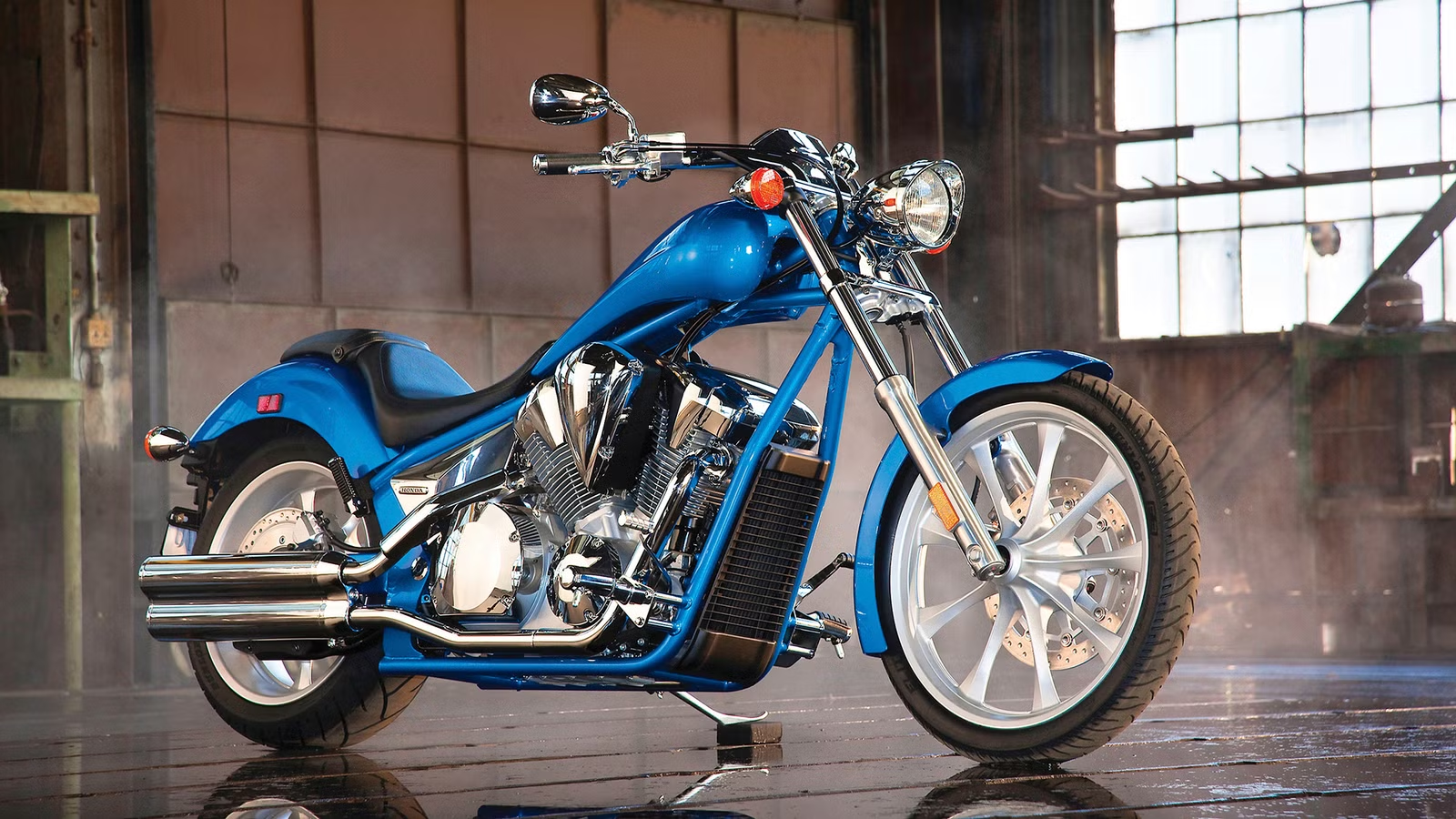
The Honda Fury takes that classic formula and flips one key detail. Instead of building a showpiece that’s hard to live with, Honda engineered a chopper that works like a normal motorcycle. It looks like something straight out of a custom shop, but underneath, it’s all precision, consistency, and the everyday usability you’d expect from a Honda.
Competitive MSRP In The Cruiser Segment
Closeup of the fuel tank and headlight of the 2010 Honda FuryHonda Powersports
The Fury sits in a sweet spot within the cruiser segment, undercutting many traditional American V-twins while offering a level of build quality and reliability that’s hard to ignore. You’re getting a bike that looks like a custom build, rides like a standard cruiser, and doesn’t come with the usual ownership concerns.
For riders who want the chopper experience without the compromises, the Fury makes a strong case. It delivers the style, the stance, and the presence people associate with big-name cruisers, but backs it up with engineering that just works. It’s not trying to reinvent the category — it’s simply making it easier to live with. In a segment where emotion often outweighs logic, the Fury manages to offer both. That balance is what makes it stand out, even years after its debut.
A parked Harley-Davidson Breakout with rider walking up to itHarley-Davidson
Your next best option, if you’re looking for a chopper-style cruiser, is the Harley-Davidson Breakout, which carries a significantly higher price tag. What you essentially get is a Softail cruiser wearing tall and thick wheels, a laid-back stance, and design touches that give it a chopper-style look. But put it next to the Fury, and you’ll see why the Honda cruiser looks like a chopper while the Breakout is merely trying to be one — and the Fury does it for considerably less money.
History Of The Honda Fury
The world’s only factory chopper in a bright purple shade, front third quarter zoomed-in shotHonda Powersports
The Honda Fury has been around since 2009, and it has a pretty interesting story behind it. For example, it’s actually a successor to the low-slung and stylish Honda VTX1300 cruiser, but with a chopper stance, making it the first-ever production chopper from a major manufacturer. For reference, the Harley-Davidson Breakout was launched back in 2012 as a 2013 model and was initially a limited-edition CVO model.
As far as design is concerned, the Fury is inspired by the custom choppers from Arlen Ness and Orange County Chopper’s Paul Teutul Sr. However, the original concept was conceived by Jesse James and the crew at West Coast Choppers, and then developed by Honda R&D Americas designers and engineers at Honda’s Akasa R&D Center in Japan. The goal was to essentially bring the once-limited and expensive chopper onto the mass market with high quality, reliability, and affordability.
A studio shot of the Honda FuryHonda Powersports
The Fury gets its chopper styling thanks largely to its long-wheelbase frame and faux hardtail rear end. The frame’s geometry also raises the steering head, stretching out the fork tubes and giving the bike a more raked-out appearance. It still retains the same 32-degree rake angle as its VTX predecessor, keeping it more manageable on the road. And it’s powered by an updated version of the VTX1300 engine with PFM-FI, modified internals, and an inconspicuous cooling system.
Fury was among the earliest bikes manufactured at Honda’s newly built motorcycle factory in Kumamoto, Japan, and was exported to America. And when it did make its way here, it was mostly well-received, even topping the charts when it came to stylish cruisers. Some critics did find that the bike prioritized form over function. None put it as well as Dexter Ford of The New York Times, though; the one “thing wrong with the Fury is the same thing that is so right about it: It’s a Honda.”
Powered By A Trusty V-Twin Engine
Rider accelerating on a Honda Fury along a city road, side profile viewHonda Powersports
At the heart of the Fury is a 1,312cc liquid-cooled V-twin engine tuned for strong, usable torque rather than peak numbers. It delivers that signature V-twin pulse, paired with fuel injection for smooth throttle response. Output sits at around 57 horsepower and 76 pound-feet of torque — right where you want it for relaxed cruising. Power is sent through a five-speed gearbox and a shaft drive, which means less maintenance compared to chain-driven setups. The overall package favors smoothness and durability over outright performance, making the Fury easy to manage in traffic and effortless on longer highway runs. It’s not about speed. It’s about feel, and the Fury gets that right.
Engine
1,312cc liquid-cooled, 52-degree V-twin, SOHC, 3 valves per cylinder
Output
57 hp @ 4,250rpm / 76 lb-ft @ 2,250rpm
Transmission
5-speed manual
Drive Layout
Shaft drive
Big V-Twin Feel, Without The Hassle
The Fury delivers the kind of relaxed, torque-heavy ride you expect from a big cruiser, but without the quirks that often come with traditional American V-twins. It pulls cleanly from low rpm, settles into a steady rhythm on the highway, and never feels like it’s working too hard. It’s a bike you can ride all day without thinking about it. There’s no excessive vibration, no unpredictable fueling, and no need to constantly manage the throttle. Honda’s engineering keeps everything smooth and consistent. Liquid cooling helps maintain stable temperatures in stop-and-go traffic, while the overall tuning favors real-world usability over drama.
A Striking Aesthetic With Simple Underpinnings
Static studio shot of a yellow 2022 Honda FuryHonda
Visually, the Fury nails the brief. The long, raked front end is paired with a slim 21-inch front wheel and a wide 200-section rear tire that emphasizes its stretched stance. The teardrop fuel tank flows cleanly into a low-slung seat, while the minimalist rear fender and exposed frame elements keep the look uncluttered. Beneath that styling is a steel frame engineered to support its aggressive geometry — including a 38-degree rake and a long wheelbase that defines the bike’s signature profile. Suspension comprises a 45mm front fork and a single rear shock with adjustable preload, tuned for cruising stability rather than sharp handling.
Frame
Steel frame
Suspension
Front: 45mm telescopic fork; 94mm travel / Rear: Single shock with adjustable preload; 94mm travel
Brakes
Front: Single disc, 2-piston caliper / Rear: Single disc, 1-piston caliper, ABS
Braking is handled by a single front disc with a two-piston caliper and a rear disc setup, supported by ABS for added confidence. The overall package isn’t about performance riding. It’s about delivering a composed, predictable experience that matches the bike’s laid-back character while still looking like a full custom build.
Don’t Listen To The Critics If You Love Choppers
2025 Honda Fury static side profile shotHonda Powersports
Being so faithful to the chopper philosophy inevitably costs the Fury some of the versatility you’d find in a standard cruiser. It’s why many critics argue the Fury is poorly designed, lacks storage, or offers woeful ergonomics. Choppers were never practical, and the Fury isn’t either. Still, Honda has done a commendable job making the Fury as livable as possible without compromising its purist chopper design.
It’s A Blank Canvas Of A Motorcycle
Another criticism of the Fury centers on its styling — specifically that the bike lacks modern color options. Honda sells the Fury only in Adventure Green, with no decals or badging to speak of. In our view, that’s actually a strength. The Fury is practically begging to be customized, just like the original choppers that inspired it. Rather than arriving from the factory with a pre-packaged personality, the Fury invites you to create your own.
Honda will help you along the way, too. The company offers a range of optional accessories, including a leather front pouch, sissy bar, passenger kit, custom grips, a boulevard screen, and more. The bike also enjoys solid aftermarket support, and its decal-free finish is perfectly suited to a bold custom paint job that reflects your personality, not Honda’s. The Fury is one of the best cruisers to consider if you want to go deep on customization without giving up reliability.
Proven Honda Reliability
Rider aboard a silver Honda FuryHonda Powersports
This is where the Fury separates itself from most bikes in its category. Underneath the styling, it’s still a Honda. That means tight build quality, durable components, and an ownership experience that’s largely hassle-free. The shaft drive reduces routine maintenance, while the engine itself is known for its longevity and consistency. You also get modern essentials like fuel injection, a compact digital instrument display, and reliable electrical systems that don’t demand constant attention. It’s the kind of bike you can leave in the garage for a week, start up, and ride without a second thought. That peace of mind is a big part of the appeal.
Source: Honda Powersports
