

It’s no secret that GM’sLS-based small-block V8engine family is one of the most celebrated of its kind in the modern era. It can directly trace its spiritual roots back to Chevy’s original small-block V8, which was in production for decades. LS-equipped performance models of all types manage to steadily hold onto their values through the years, and as the V8 begins to fade from the market as a whole, their values will likely continue to increase.
As prices go up, some folks may be out of luck when it comes to buying an LS-powered model. However, with the ninth-gen Chevrolet Impala SS, the price of entry is relatively low. It packs a transverse variant of the LS-based V8 under its hood, and it’s placed in a car that most people associated with rental car fleets when it was new, giving it a little sleeper appeal, too. It seems the front-drive Impala SS may have accidentally preserved one of the LS engine’s best-kept secrets, keeping prices low and public knowledge even lower.
Building The Ninth-Gen Impala SS Wasn’t Easy
Silver 2006 Chevrolet Impala SS nose viewChevrolet
In the early and mid-2000s, GM was looking for ways to spice up its model offerings, as things weren’t going so well regarding its financial standing. A plan was hatched to bring back a couple of classic names that sold well in the past, such as the Pontiac GTO and the Chevrolet Impala SS. The problem was, General Motors was broke, and engineering an all-new, rear-drive chassis for use on US roads would have been too expensive. So, the Impala SS would use the existing GM W-Body architecture, a front-wheel drive platform.
Chucking a V8 into a mid-size sedan isn’t all that difficult in and of itself, as it’s been done for decades. However, when you throw a front-wheel-drive drivetrain into the mix, things can get pretty complicated. When engineering an engine that large into a transaxle setup, packaging can get tricky. This was the case with the LS4 engine, so the engineers over at GM needed to get crafty in a couple of unique ways.
2006 Chevrolet Impala SS 5.3L NA LS4 V8 EngineSfoskett~commonswiki via Wikimedia
For starters, the LS4 needed to be shortened length-wise in order to be shoehorned into the Impala SS’ engine bay, which was originally designed to fit a 3.6-liter V6 at most. This required the LS4 to have a shorter-than-standard crankshaft, losing 13 millimeters of length right off the bat. It also needed to have its starter relocated to the transmission bell housing, on the passenger side of the car.
Its accessory drive – or what the engines’ serpentine belt spins – is unique, as well. Its alternator and AC compressor use special brackets, and the power steering pump is buried underneath the alternator, which itself is mounted at the rear passenger side of the engine. Backing up the mill is a 4T65-E HD four-speed automatic transmission.
That unusual engineering solution turned out to be a double-edged sword – and the reason the Impala SS is now one of the most undervalued performance cars on the used market.
Why the LS4’s Swap-Incompatibility Is Actually Keeping Prices Low
Many cars and trucks that were built with an LS-based engine installed — especially those getting on a bit in age — have succumbed to the LS swap. In other words, they’ve become donor vehicles. Many times, when someone wants to build a fast, V8-powered car, the LS-based small-block V8 is one of the most popular engine choices because it’s cheap, easy to fix, and parts are plentiful. That means, though, that these older LS-powered models are being taken off the road, driving up the price of ones that still have their engines.
However, the ninth-gen Impala SS’ LS4 engine is uniquely immune to being an LS-swap donor. Because of its unique, specific engineering, it’s really only able to be utilized by the Impala SS or its platform mates, such as theBuick LaCrosseand the Pontiac Grand Prix. So, more LS4 engines stay under hoods, meaning higher numbers of the ninth-gen Impala SS will remain on the roadways. This, then, keeps used prices lower than other LS-equipped performance models across the used car market.
2006 Chevrolet Impala SS Silver Front Angled ViewChevrolet
As for its current used pricing, the 2009 model-year Impala SS carries an average $13,786 price tag, albeit based on a single listing. However, if we ratchet back the model year to 2008, the average price falls to around $5,700 across two for-sale listings. This wide range of prices just goes to show that the market, while volatile, sticks to the lower side of the used, 2000s performance market. Condition, mileage, and number of owners all make a big difference here.
That immunity has a side effect that makes the Impala SS even more compelling — it’s turned this rental-fleet reject into one of the 2000s’ most unexpected sleepers.
That Rental Car Styling Is Hiding Something
2008 Chevrolet Impala SS detail shot of the V8 engineBring a Trailer
Even with its not-so-exciting drivetrain layout, the ninth-gen Impala SS can still get up and go with some of the best. Its 1/4-mile time is moderately impressive, with some anecdotal reports claiming low 14-second trap times at speeds of up to 100 mph. Some folks also claim 0-60 mph times of under 5.7 seconds, although these are just commenters on forums, and not official, or even posted, 0-60 mph times. However, there may be an air of truth to their claims.
Horsepower is rated at 303 while torque is 323 pound-feet. Top speed is said to be 154 mph.
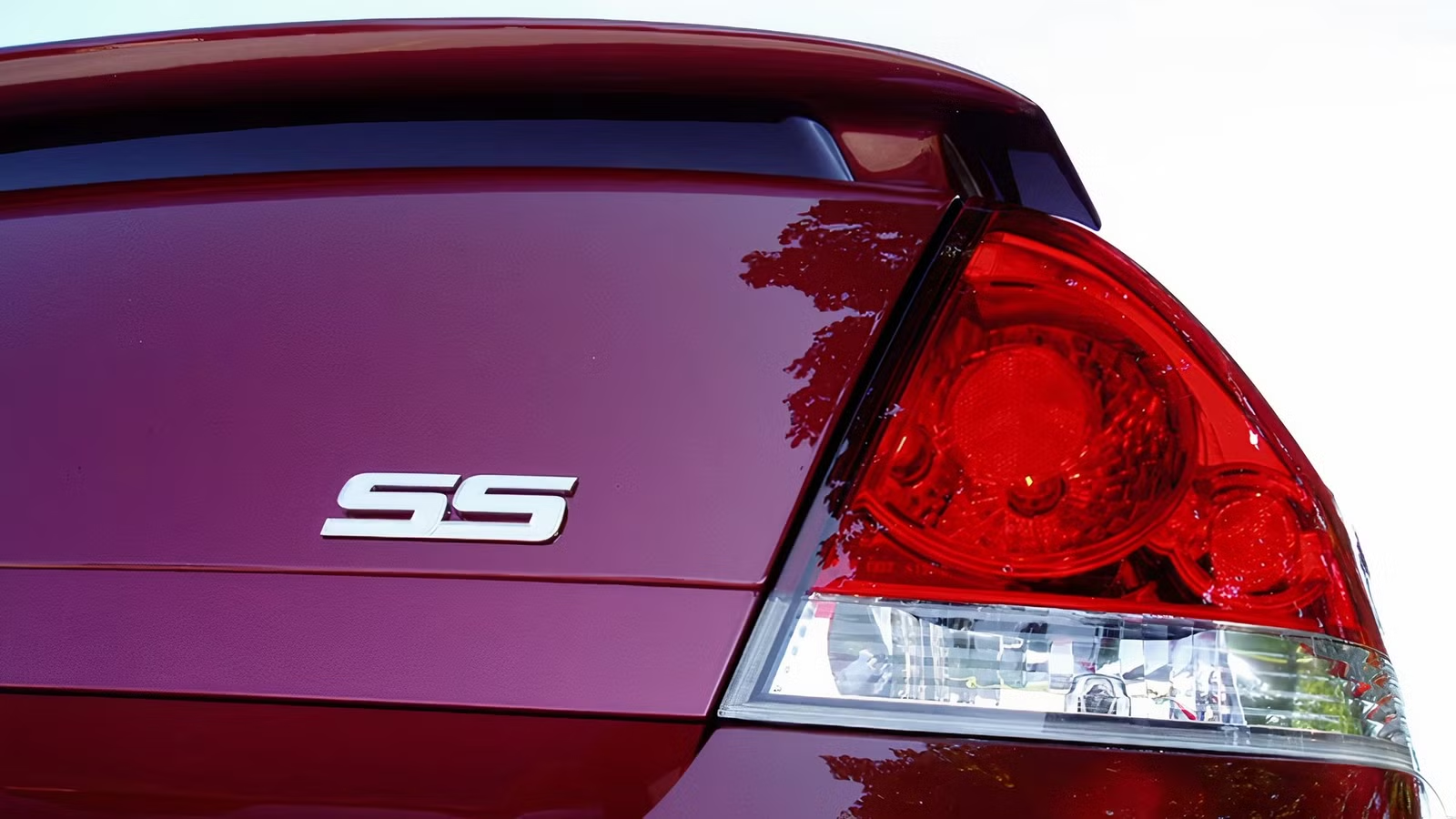
So, not only can it hold its own in a straight-line sprint, its looks also help fuel its return to popularity. Upon looking at it, you probably won’t even notice that a 5.3-liter V8 is hiding under the hood. Only upon closer inspection will you notice things like its unique five-spoke wheels, SS badges, and its small trunk spoiler. Another SS badge is found on the model’s steering wheel. The ultimate sleeper doesn’t call any attention to itself, and the ninth-gen Impala SS is extremely adept at this.
2006 Chevrolet Impala SS seat badge front viewChevrolet
Through sheer luck and an inability, or unwillingness, to develop something bespoke or truly “out there,” General Motors accidentally built one of the 2000s’ most under-the-radar sleeper sedans to ever hit the market.
How to Buy One Under $10k Without Inheriting Someone Else’s Problems
2008 Chevrolet Impala SS side angle in red while parkedMecum Auctions
If you’re after one of the cheapest LS-based performance sedans that General Motors ever produced, your choice has to be the ninth-gen Chevy Impala SS. At present, numerous examples are for sale that sport prices well under $10k.
Sources like CarGurus.com and AutoTrader have quite a few for sale right now. However, like many niche or performance models, average pricing can vary widely depending on condition, modifications, the number of previous owners, and odometer mileage.
If you are planning on pulling the trigger on a ninth-gen SS of your own, there are a couple of things you should get checked out before going for it. Its transmission, for example, is a known weak point. The 4T65-E HD automatic sometimes has issues with slipping or hard shifts, especially under hard throttle. Burned clutches and failed solenoids are the most common culprits.
2008 Chevrolet Impala SS rear angle in red while parkedMecum Auctions
In addition, the LS4’s Active Fuel Management (AFM) system is known to cause excessive oil consumption. For those not in the know, AFM allows the engine to shut down some of its cylinders under light load, allowing the Impala SS to save on some fuel. Make sure you check the oil level, and scan the tail pipes for any excess sooty or oily discharge.
The engine itself is known to leak oil from several places, and the car’s suspension and traction control systems are known weak points, as well. Bearing all that in mind, it’s always best to have a professional look over your prospective purchase.
Despite the issues, the ninth-gen Impala SS still serves as one of GM’s coolest performance sedans to come out of the 2000s, even with its front-wheel drive. While it hasn’t entered classic status just yet, its value may begin to rise soon, so scoop one up now if you’re gunning for one, because one day, it might be too late.
Sources: Chevrolet,MotorMatchup.com,RepairPal.com,CarGurus.com.
