

When it comes to reliability, maybe the closest thing you have to a crystal ball would be a recent study from Plante Moran, which rates OEMs based on their relationships with suppliers via a Working Relations Index, or WRI. And we know what you’re thinking, that this sounds like the most boring study ever put to record. Well, you’re right it is, but, the key findings are actually very interesting. Trust us.
So, we’re going to do you a solid, and dig through the study ourselves for the information that you can actually use when selecting your next new car purchase. This way, you don’t need to read the study at all. Sounds like a deal? Alright then, here’s what you need to know…
Everyone Had A Better Year In 2026 Than They Did In 2025
2026 Toyota Tacoma TRD PreRunner tire wheel rimToyota
To run down the key findings real quick, here’s everything worth knowing at a glance.
- Overall WRI scores across the board rose for the first time in the 26-year history of the study. This, despite “significant industry upheaval from market forces, trade and supply chain threats.”
- OEMs who saw the greatest increases in WRI score got there by focusing on “controllable” aspects of the supplier relationship.
- General Motors saw its highest-ever WRI score this year, at 318 points.
- Honda, at 360 points, and Toyota, at 409, both earned their highest scores since 2007.
- For all the shake-ups, the actual rank order remained the same this year as last year.
Plante Moran determines WRI scores by collecting responses and comments from executives of Tier-1 suppliers serving Ford, GM, Honda, Nissan, Stellantis, and Toyota.
The Six Cs Help To Determine Your WRI, Which Helps To Determine Long-Term Reliability
According to Plante Moran, the automakers earned the highest praise from their suppliers focused on the Six Cs.
- Commercial fairness (meaning that both sides share the risk, and the reward)
- Consistency
- Clear expectations
- Communication
- Continuity
- Collaboration
This all sounds like plain old “good business sense” to us. You want to keep your partners happy, and that means keeping communication channels open, listening to their input, and knowing how to develop a plan and stick to it.
Toyota Came In First (Big Surprise, Right?)
2026 Toyota Tacoma SR front 3/4 angle in whiteToyota
For reference, a WRI below 250 is considered Poor, 250 to 349 is Adequate, and 350 to 500 is considered Good to Very Good.
Rank
Automaker
2025 WRI
2026 WRI
YoY Improvement
1
Toyota
386
409
23+
2
Honda
347
360
13+
3
General Motors
310
318
8+
4
Nissan
249
255
16+
5
Ford
191
223
32+
6
Stellantis
141
163
22+
It’s not hard to guess how a higher WRI score correlates with better long-term reliability. We can throw around phrases like “defect mitigation” and “incentivized innovation,” but to put it in more relatable terms: you know when you get a recall notice, but the dealer doesn’t get the replacement part for months? That’s less likely to happen when the automaker has a good working relationship with its suppliers.
Related
Most Reliable Cars: 10 Vehicles That Will Last A Lifetime
These cars will outlast you.
The WRI isn’t just an arbitrary number. The automakers that participate in the study do track the numbers, as evidenced by the efforts made to improve over the last year. Down in the lower ranks, especially, you actually see Ford and Stellantis making some of the biggest strides, with Ford jumping 32 points, and Stellantis jumping 22 points.
In particular, Ford and Stellantis made big gains in commercial fairness (shortly after issuing an ultimatum to its suppliers, no less). That is, these brands have responded to hard times by sharing more of the risk with their suppliers, and the suppliers have noticed and commended the effort.
In Business, As In Marriage, Communication Is Everything
According to Plante Moran’s Dr Angela Johnson, principal in the firm’s automotive and mobility consulting practice, enhanced communication turned out to be one of the biggest factors in improving working relations.
“In 2026, all six automakers improved trust scores through enhanced communication, accessibility and their ability to solve problems. Also (…) we saw an emerging, collective recognition that working together is the best way to face perma-crisis challenges, innovate, and grow.” – Dr Angela Johnson, Plante Moran
Essentially, Plante Moran is couples therapy for parts suppliers and automakers. You raise happy kids in a peaceful, loving home, and you build happy cars when you and your suppliers are on the same page.
What Does This Mean For The Low-Scorers?
2026 Jeep Wrangler Moab 392 Hemi V8 engine topJeep
We’ve gone to bat for Stellantis in the past, noting that the brand builds a lot of cars that are subjected to more abuse than a typical car, truck, or SUV. Jeep Wranglers, for instance, aren’t the duds they’re sometimes made out to be, but they’re frequently driven off-road, heavily modified, and sometimes owned by people who spend more money on rubber ducks than they do on basic maintenance.
But, the numbers don’t lie. Jeep might not be directly responsible for the death wobble in your cousin’s lifted Rubicon, but it’s not your cousin’s fault that Jeep’s suppliers think the brand needs to work on its communication skills.
Are Low-Scoring Automakers Best Avoided?
The Jeep Wrangler Anvil 715 concept.Jeep
WRI is an important metric for predicting future dependability. If an automaker scores a high WRI, that means that its suppliers know what’s expected of them, the suppliers have a clear avenue of communication with the automaker, and there are fewer hiccups along the supply chain. But that’s not the only factor that affects reliability.
If we look at the latest JD Power dependability survey, we find some correlation with the Working Relations Index, but it’s not 1:1.
Rank
Automaker
PP100
1
Lexus (Toyota)
151
4
Cadillac (GM)
175
5
Chevrolet (GM)
178
8
Toyota
185
10
Nissan
194
16
Honda
211
17
Ram (Stellantis)
216
18
Lincoln (Ford)
217
19
Ford
228
20
GMC (GM)
229
21
Acura (Honda)
233
22
Infiniti (Nissan)
233
25
Jeep (Stellantis)
267
Where automakers are represented across multiple brands, we’ve included ranking sub-brands to give an idea of how they rank, according to JD Power. Note that the PP100 index means “problems per 100 units”. So, you need a lower score to earn a higher rank. For reference, the industry average is 204 problems per 100 units.
We find that the WRI generally tracks, with a Lexus brand on top, and a Stellantis brand on the bottom. But you also have Ram scoring higher than both Ford and its luxury sub-brand, Lincoln, which is the inverse of how these brands rank on the WRI chart. Lexus ranks at the top of the reliability list, but Toyota ranks below the GM brands Cadillac and Chevrolet.
Related
Nissan vs. Toyota: Which Japanese Auto Giant Does It Best
From sports cars to SUVs, these brands do it all – but which one does it best?
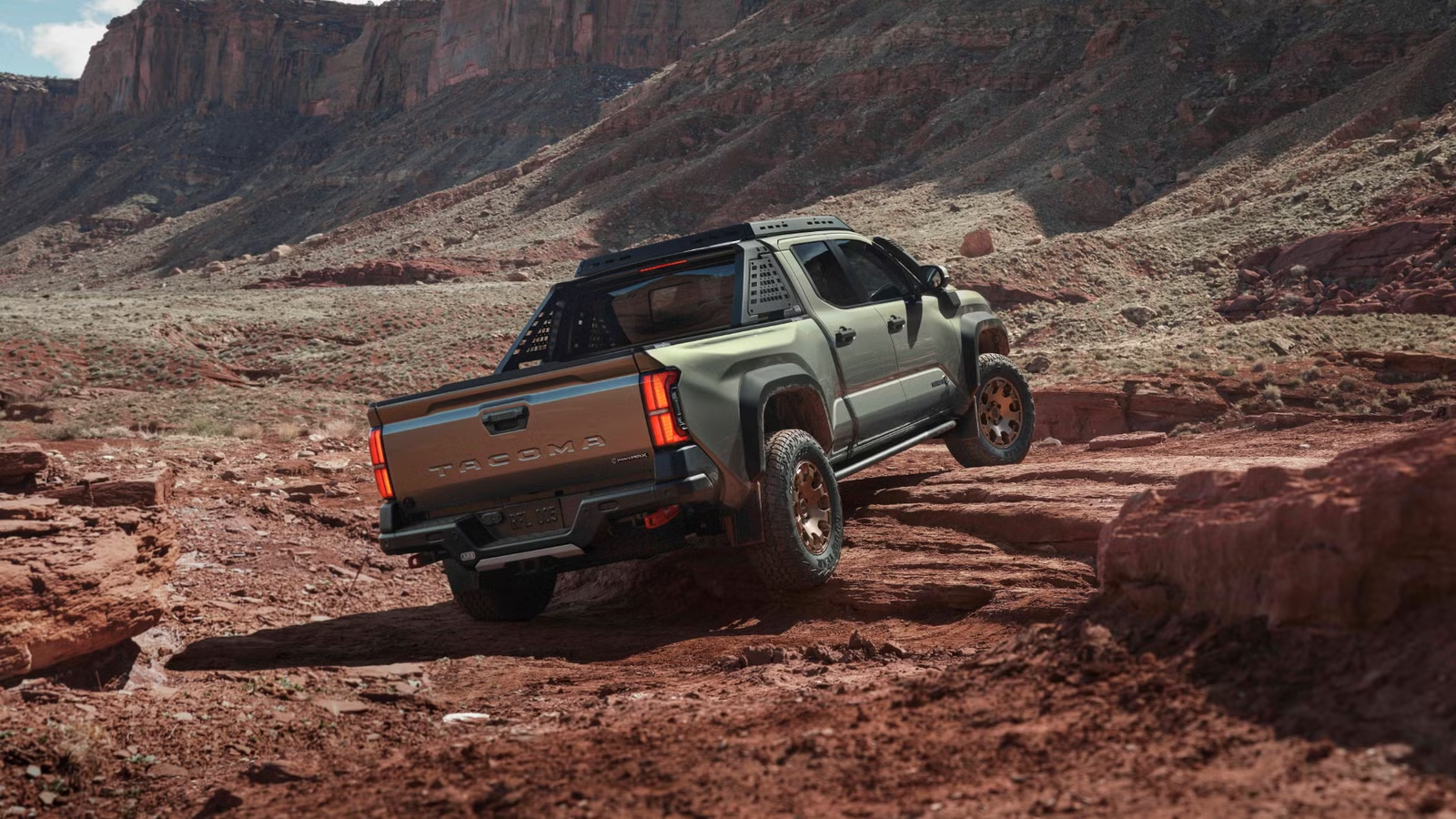
In short, you can go ahead take the WRI into account when buying a new car for the 2026 or 2027 model year, but it’s only one factor of many. The WRI won’t tell you, for instance, when an engine is likely to be recalled for machining debris, like what happened to Toyota when it introduced the new Toyota Tacoma in 2023.
There are a lot of known and unknown factors at play when it comes to reliability. An automaker’s relationship with its supplier is a big one, but it’s not the only one that counts.
Automakers Deserve Points For Trying
2026 Ram 1500 America 250Ram
Ultimately, we would argue that year-over-year improvements may be a more important factor than current WRI ranking. While Toyota and Honda have retained the top two spots for as long as Plante Moran has been running this survey, General Motors went from dead last to third place in that time. Stellantis fell from fourth place to the very bottom of the list.
A lousy WRI rating will tend to mean longer waits for replacement parts, but, as long as the number is on the way up, you might as well take every new car on a case-by-case basis.
Sources: Plante Moran, JD Power.
