

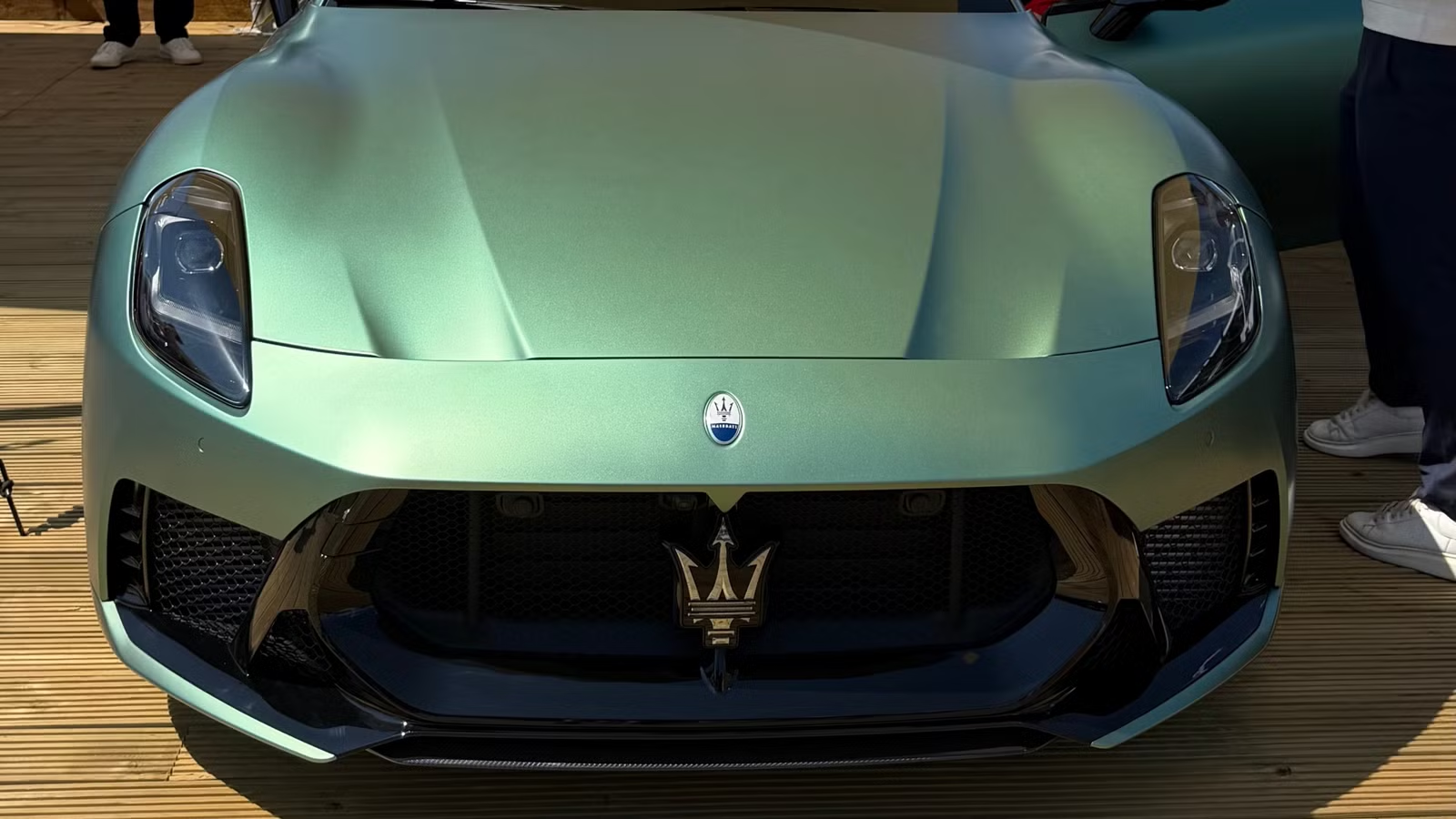
As a brand, Maserati is about style as much as it is about engineering. Sure, buyers expect a certain level of handling and the sweet sounds of V6 and V8 engines, but it is the design of the body and then the cabin that truly brings them in the door. Screens are a key element in modern vehicle design, and one Maserati has to work around, but that doesn’t mean the brand is happy about it.
Maserati Head of Design Klaus Busse spoke with CarBuzz recently about how the Italian automaker works screens into its vehicles without them taking over the car. And it was quite an interesting conversation.
Screens Low, Hands And Eyes High
Maserati Grecale Goodwood DisplayMichal Okonski/CarBuzz/Valnet
“We needed screens,” said Busse. Otherwise, there would be so many buttons that “you get the cockpit of a 747 – the old one.”
Maserati has taken a different approach to installing those screens than most brands. “We put the screens down,” he said. “You let your hand fall onto the screen. It’s this perfect ergonomic placement, so you can do your controls.”
Busse doesn’t want screens high up on the dash above the center console, which is where most of his competitors put them, even if they don’t have controls. “We deliberately have not placed the screen up here,” he said, “because it visually will always be in the corner of your eye, distracting you.”
Maserati Has Freedom From Other Brands
Maserati GranCabrio Trofeo GoodwoodMichal Okonski/CarBuzz/Valnet
Putting the screens low down sets Maserati apart from even its corporate siblings like Alfa Romeo. The Alfa Giulia, like the BMW X5 and other competitors, puts the screen poking out of the top of the dash. Maserati’s sit below the vents.
For better or worse, and despite the struggles it has caused, Maserati can do that because it has freedom inside the company to do its own thing instead of picking from the parts bin. “We are Maserati,” Busse said. “We’re part of a big family, sure, but in terms of what we design or develop, we are, Maserati”
Maserati wants its drivers to be driving, to form an attachment bond with their vehicle. “We want eyes on the road, hands on the wheel, and you enjoy,” Busse said.
The designer then quickly pivoted to one innovative new function Maserati has implemented with buttons instead of screens: The predictive use of the shift paddles for maneuvers like three-point turns instead of just for changing gears up and down.
Base Trim Engine
Nettuno 3L ICE
Base Trim Transmission
ZF 8-speed automatic
Base Trim Drivetrain
All-Wheel Drive
Base Trim Horsepower
523 HP @6500 RPM
Base Trim Torque
457 lb.-ft. @ 3000 RPM
Base Trim Battery Type
Lead acid battery
Infotainment & Features
7 /10
“If you do a three-point turn and your speed is low enough, the car recognizes that and says ‘you want to go to this functionality?’ You confirm, and then one pedal activates D and one pedal activates reverse, so you don’t even have to do this anymore. This is just another thing where we’re doing everything to let you enjoy the drive and hands on the wheel,” Busse said.
Busse summed up the fight between buttons for ease of use versus screens for simplicity with excellent brevity.
“Screens are needed, but not as the main protagonist.” That’s the philosophy that guides him as the company prepares to develop its next generation of vehicles.
