

JD Power has a rating for everything. From customer satisfaction to dependability and even innovation. The latest Tech Experience Index (TXI) Study awards automakers an overall Innovation Ranking on a 1,000-point scale, and we’re willing to bet that no automaker ranks where you’d expect.
For instance, did you know that Cadillac ranks as the most innovative luxury brand? Didn’t see that one coming, did you? And some of your favorites are likely ranked lower than you’d expect, too.
Why Scoring Below Average On Innovation Might Be Exactly What Drivers Want
2026 JD Power TXI StudyJD Power
The most surprising thing about the latest TXI study is that only six out of 27 brands beat the study average of 502 points out of 1,000. To put that in perspective, the average is skewed by high-scoring brands at the top, and all but one below-average brand (Ram) scored within 100 points of the study average.
Tesla, Rivian, Dodge, Jaguar, and Chrysler were all left out of the final tally for failing to meet certain eligibility requirements, but were given scores nonetheless, with the EV brands scoring predictably high.
Below the national average, some of the big surprises include Toyota, Land Rover, and every Asian luxury brand besides Genesis.
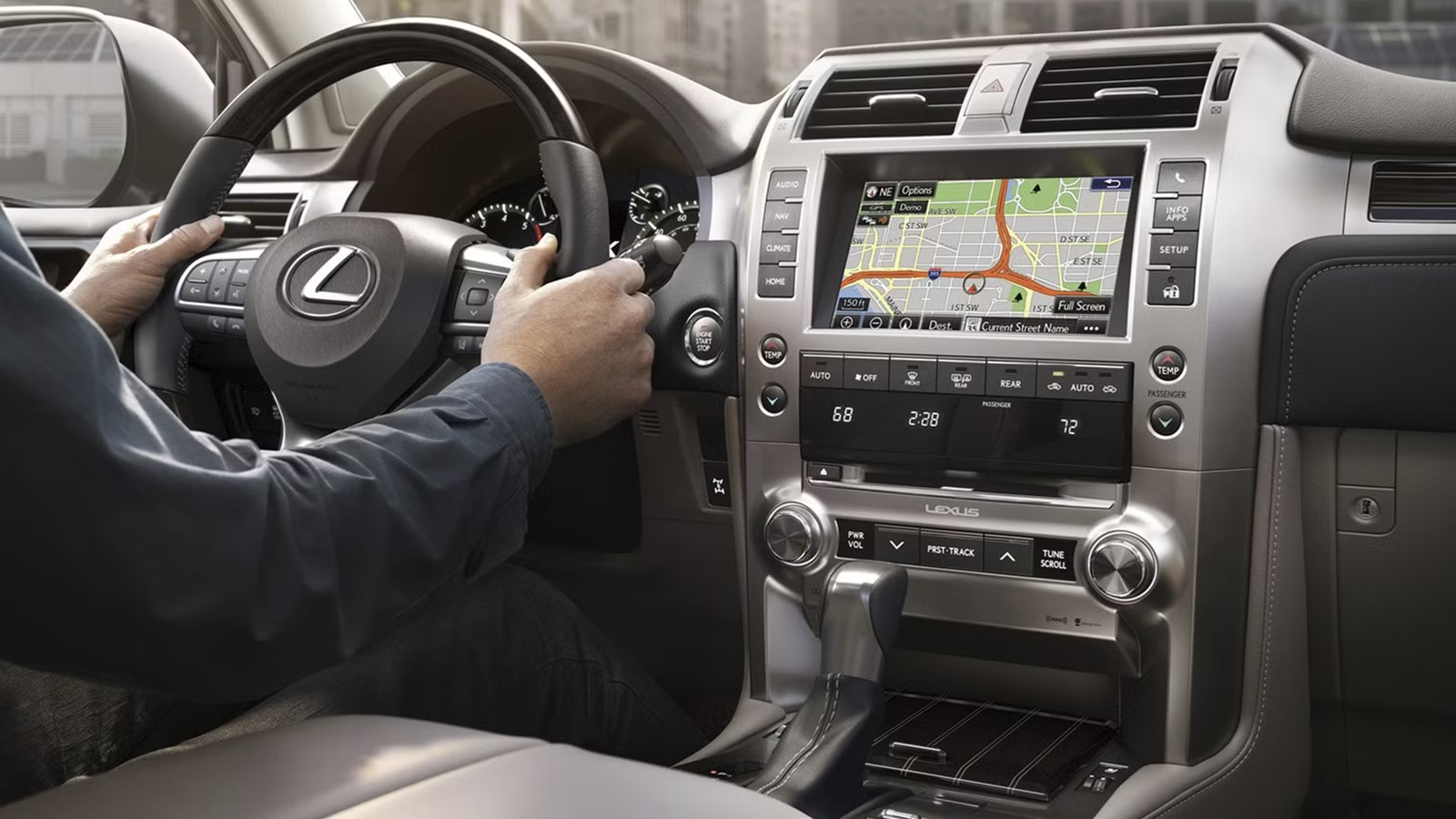
Lexus comes in at 500 points even, which is just two points below average. Toyota’s luxury division always earns high reliability scores, and a big part of that comes down to the automaker’s reluctance to add tech-for-tech’s-sake into its cars. In Lexus’s case, the mediocre ranking likely has less to do with technological missteps and more to do with the brand’s relative disinterest in cutting-edge gadgets.
Porsche, the ultimate driver’s brand, scores just 471 innovation points out of a possible 1,000, but innovative technology has never been the brand’s calling card. A weak innovation ranking isn’t necessarily a bad thing. You wouldn’t expect the world’s best powerlifter to also be the world’s fastest cyclist, right?
One In Three Drivers Have Never Touched Their Passenger Screen
2022 Lexus IS 500 F Sport Performance InteriorLexus
The TXI Study specifically looks at 40 automotive technologies divided into five categories:
- Comfort and convenience
- Connected vehicle
- Driver assist
- Electric vehicle
- Smart vehicle
In observing these categories, JD Power picked out some clear patterns. If there’s a key takeaway, it is that inconspicuous smart tech tends to deliver the strongest payoff. That is, smart tech that operates in the background and doesn’t get in the way.
“The technology customers value most is often the technology they barely notice, because it simply works.” – Doron Hikry, JD Power director of customer success
JD Power also concluded that “more automation doesn’t automatically improve the experience,” and that “passenger screens offer little appeal to owners.”
That last point is worth noting because it does seem like infotainment screens are getting bigger and more numerous every year. JD Power reports that passenger screens rank among the most problematic technologies in the index, and 35% of owners say that they’ve never even tried to use their passenger screens.
Excessive Gadgetry Only Hurts Your Reliability Rating
2027 Lincoln Corsair hybridLincoln
The TXI Study is more interesting when we cross-reference it with the JD Power Dependability Survey, which awards brands a score based on Problems Per 100 Vehicles (PP100), with an industry average of 204. You actually want a low score on this study, like golf.
Lexus may be middling in the innovation department, but the brand holds the lowest PP100 rating in the industry, with a score of 151. If we take a random five-year-old model, like, say, a 2021 Lexus ES, and look up its NHTSA page, we find that it only has 28 complaints on file, and not a single one of them is for electronics.
At the lower end of the scoreboard, Volkswagen ranks as JD Power’s least reliable brand, with a PP100 ranking of 301, and one of the least innovative brands, with a TXI of 440. The 2021 Volkswagen Jetta has 66 complaints on file with the NHTSA, with 12 of them being for the electrical systems, including four complaints for lane departure warning glitches, and eight for problems with the forward collision avoidance system.
Somewhere around the middle of the pack you have Nissan, scoring just above average for reliability, with a PP100 of 194, and well below average for innovation, with a TXI of 410. The 2021 Nissan Sentra has 129 complaints on file with the NHTSA (which sounds high, until you remember that this is one of the most popular cars in the country), but only eight of them are for problems with the engine. Of the remaining complaints, 38 are for electrical issues, with drivers reporting infotainment system failures and window and lock switches not working.
But if low innovation scores can coexist with great reliability, what happens to a brand that chases innovation without the engineering discipline to back it up?
Lincoln Proves That Innovation Isn’t Always A Good Thing
2021 Lincoln Nautilus finished in dark blue with tan interiorLincoln
Lincoln may be the most interesting case study across both of these JD Power surveys. The luxury brand earns an impressive TXI ranking of 522, but lands in the bottom half of the dependability rankings, with a PP100 score of 217.
The 2021 Lincoln Aviator has 38 complaints on file with the NHTSA, with just six of them being for the engine and 11 for electrical systems, with reports of malfunctioning cameras and infotainment systems, and at least one alarming complaint for a PHEV model that generated electrical burning smells, sparking noises, and smoke when plugged in. The car has been recalled twice for traction battery short circuits.
The Lincoln Aviator gives us a pretty clear example of a brand that’s innovating at the expense of dependability, and it offers a tidy contrast to the Lexus approach of incorporating proven technology only when it makes sense, and never to the detriment of reliability.
The Aviator’s story is a brand-level problem. But the same pattern plays out in every car with a feature you’ve never used – and probably never will.
The Real Cost Of Features You Never Asked For
2026 Kia K4 Hatchback GT-Line Turbo trim’s 30-inch screen interfaceKia
Remember your first car with a touchscreen? You might have thought it was the coolest thing you’d ever seen at the time. You can tap and swipe and scroll through your playlists, weather reports, traffic, you name it. But ever since a botched software update had you holding the power button for thirty seconds to restart the system every single time you got in the car, you’ve been missing the dials and switches you grew up with, right?
Every time JD Power runs a study like this, they discover the same thing: we don’t like technology we have to think about. We don’t want devices that require us to go watch an hour-long tutorial on YouTube just to figure out how to use them. We don’t like navigating through three or four sub-menus to find something that we used to adjust with the press of a button.
And if we don’t want to have to think about it, we definitely don’t want to be taking our cars into the shop to repair devices that we never asked for in the first place.
Cadillac Shows You Can Lead On Innovation Without Sacrificing Reliability
Cabin shot of a 2014 Cadillac ATS sedanCadillac
Cadillac is a good example of a brand that employs technology intelligently. The brand ranks first for innovation, and fourth for overall dependability, with a PP100 score of 175. Cadillac is pushing new technology, like Super Cruise hands-free driving and immersive theater-like audio, but the brand isn’t packing its cars with distractions or unnecessary features that keep breaking.
Innovation is neither a good nor a bad thing on its own. Technology innovation can be a positive when your tech works and when it’s unobtrusive, or a negative when it’s cumbersome to use or results in a long string of OTA updates and recalls.
Ultimately, this should help to illustrate that innovation isn’t really worth chasing for its own sake. You want to be at the top of the list on that dependability survey. But an innovation ranking? Unless it’s part of your brand identity, as in the case of Tesla and Rivian, that doesn’t seem like an accolade worth chasing.
Sources: JD Power 1, JD Power 2, NHTSA.
